
Israeli Wine Regions: A Guide to the Galilee, Golan, Judean Hills and Negev
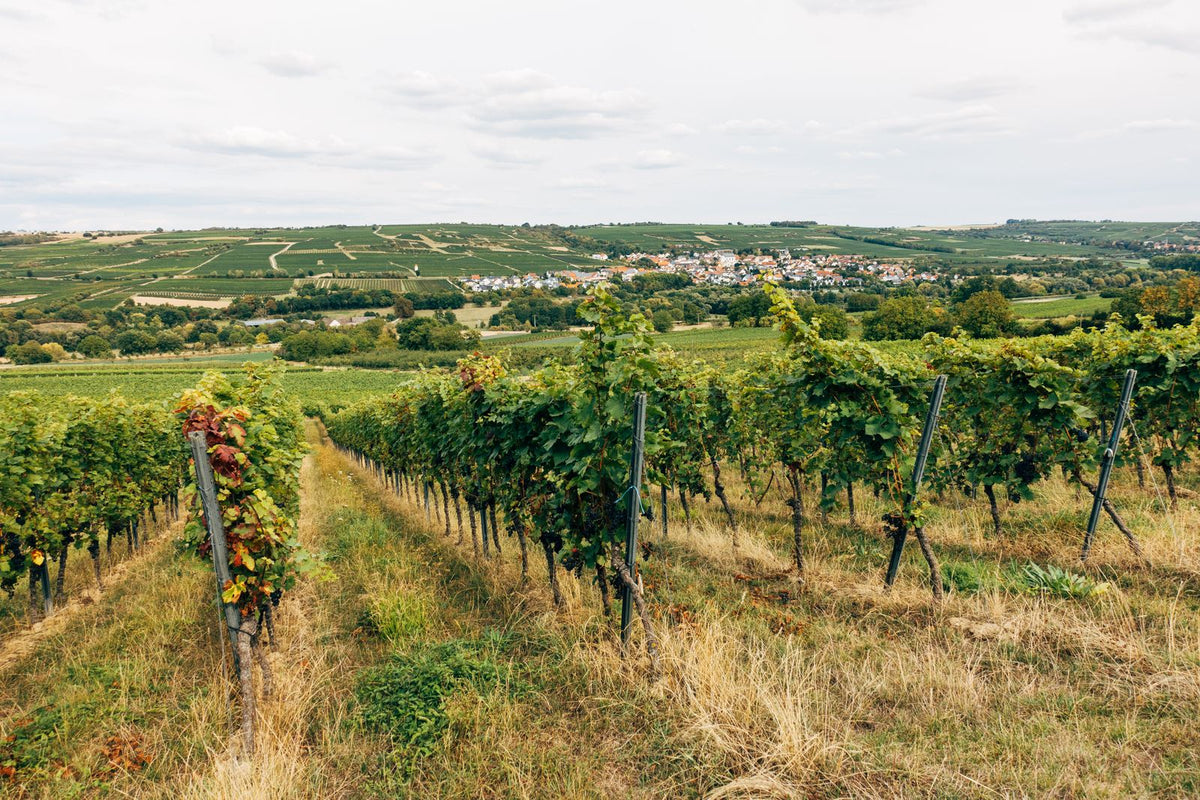
Israel is a small country that behaves like a large one where wine is concerned. You can drive from vineyards under snow on the slopes of Mount Hermon to vineyards in the Negev desert in about three hours. That range is the whole story.
Shop the bottles: see every bottle in Kosher Israeli Wine.
Here is what each region does, and who to look for.
The Galilee and Upper Galilee
If Israel has a heartland for serious red wine, this is it. Elevation, cool nights and limestone soils give fruit that ripens fully without losing acidity: the combination every red-wine region wants.
Expect structured Cabernet, Syrah and Bordeaux blends with real freshness underneath the ripeness. It is also where a lot of Israel's boutique movement took root.
Look for Dalton from Kerem Ben Zimra, Adir from the same village, Recanati, and Or Haganuz near Meron.
The Golan Heights
Volcanic basalt soil, high altitude, and the coldest growing conditions in the country. The Golan is where Israeli wine's modern era effectively began in the 1980s, and it remains the most reliably cool-climate region.
It suits varieties that struggle in heat (Chardonnay, Sauvignon Blanc, Gewürztraminer and Riesling) alongside Cabernet with unusual precision for the region's latitude.
Yarden, from Golan Heights Winery, is the benchmark; its El Rom Vineyard Cabernet comes from fruit grown at 1,100 metres, the highest Cabernet site in Israel. Odem Mountain and Matar, the kosher label of Pelter, are both worth knowing.
The Judean Hills
The region closest to Jerusalem, and arguably the most fashionable. Terraced limestone slopes, significant elevation, and a Mediterranean climate that suits both Bordeaux varieties and Rhône ones.
This is where Israel's fine-wine reputation was rebuilt. The wines tend toward elegance rather than power: more restraint, more minerality, less sun.
Domaine du Castel and Tzora Vineyards are the estates that changed perceptions of what Israel could do. Flam, Psagot, Katlav and Gush Etzion all work the same hills.
The Shomron and Mount Carmel
The historic centre of Israeli winemaking, this is where the industry restarted in the 1880s with Baron Rothschild's support, and the coastal Carmel range still holds some of the oldest plantings.
Warmer and lower than the hill regions, it produces rounder, more generous reds.
Tishbi has farmed at Zichron Ya'akov for four generations. Bat Shlomo works Mount Carmel, and Shiloh and Tura sit further inland in the Shomron hills.
The Negev
The most improbable of the lot. Growing wine grapes in a desert should not work, and for most of history it did not, but drip irrigation, high daytime-to-nighttime temperature swings and cool desert nights have produced genuinely distinctive wine.
Negev wines tend to be concentrated and aromatic, with an intensity that comes from the extremes.
Yatir, planted at the edge of the Yatir Forest, is the region's flagship and among Israel's most acclaimed wineries. Ramat Negev works even deeper into the desert.
The Judean Foothills and Samson
The lower-lying belt between the coastal plain and the hills. Warmer, more productive, and the source of much of Israel's everyday wine.
This is value territory rather than prestige, and there is nothing wrong with that. It is where a lot of very drinkable Shabbos wine comes from. Teperberg, Israel's oldest family winery, is based here.
Where to start
If you want to understand Israeli wine quickly, the fastest route is to taste across the extremes rather than within one style.
Try a Golan white and a Negev red side by side. Same country, roughly two hours apart, and they will taste like they came from different continents. Then add a Judean Hills red as the middle ground.
From there, browse by region: Israeli reds, Israeli whites, and Israeli rosé.
One last thing worth knowing: Israeli wine carries obligations beyond the usual kashrus requirements: orlah, terumos and maasros, and shmittah in its year. Every bottle here is certified, and we list the hechsher on each product page.
Ready to pick one? Browse Kosher Israeli Wine.