
The Glenmorangie Range: Original, Lasanta, Nectar d'Or
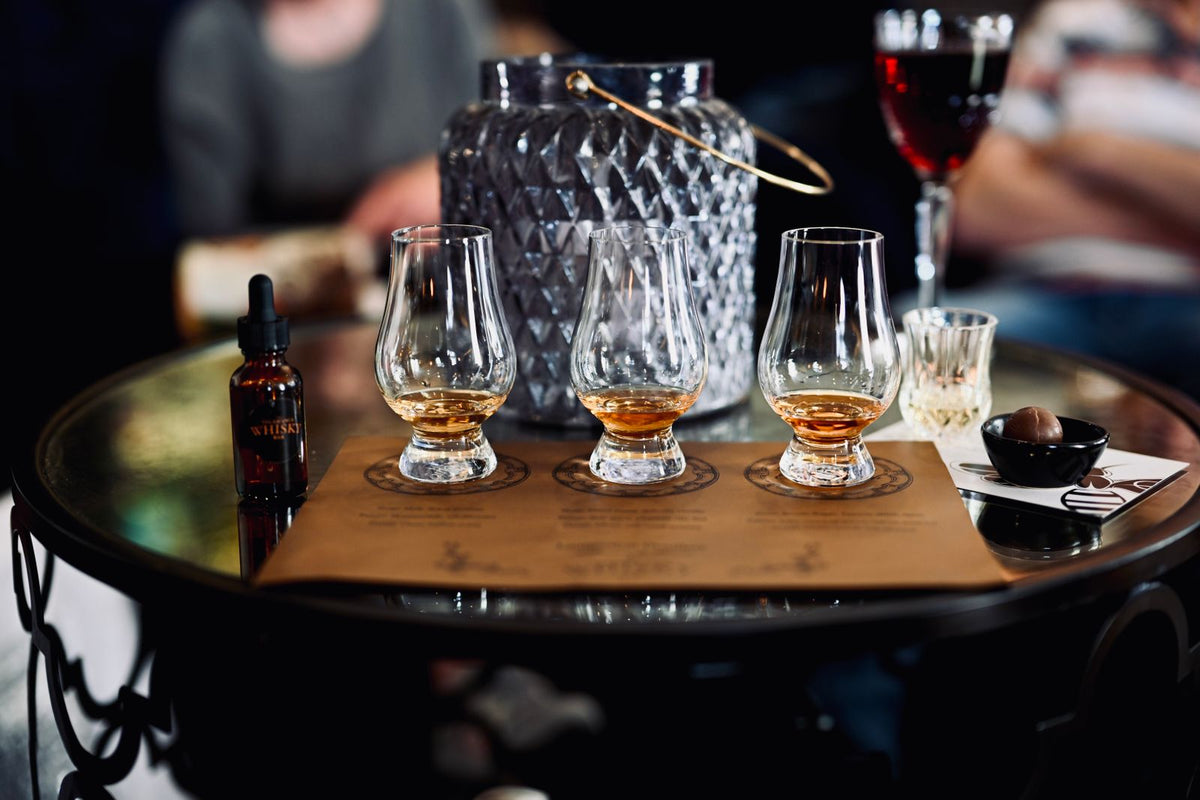
The Glenmorangie range is built from one spirit finished in different casks: Original 10 in ex-bourbon barrels, Lasanta 12 in sherry casks, and Nectar d'Or 12 in Sauternes casks. Same distillery, same light Highland character, three different endings.
That is a rare thing in Scotch, and it makes Glenmorangie the best teaching set on the shelf. Line up three glasses and you are not comparing distilleries or peat levels or ages. You are tasting exactly what a cask does to whisky, with every other variable held still.
What makes Glenmorangie taste the way it does?
The distillery sits at Tain, on the Dornoch Firth in the Northern Highlands, and its signature comes from the stills. They are the tallest in Scotland, standing about as high as a giraffe, which is the comparison the distillery itself likes to make. Height matters because only the lightest vapors make it to the top and over into the condenser. Heavier, oilier compounds fall back down.
The result is a spirit that is delicate, floral and citrus-leaning rather than heavy or smoky. It is unpeated. If you are coming from Islay, this will read as gentle. If you are new to single malt, this is one of the easiest doors in.
The Glenmorangie range, expression by expression
| Expression | Cask | Character |
|---|---|---|
| Original 10 Year | Ex-bourbon | Vanilla, orange peel, light and clean |
| Lasanta 12 Year | Sherry finish | Raisin, toffee, nutty and rounder |
| Nectar d'Or 12 Year | Sauternes finish | Honey, lemon curd, sweet spice |
| Signet | High-roast chocolate malt | Espresso, dark chocolate, the outlier |
Original 10 Year: the baseline
Glenmorangie Original 10 Year Single Malt Scotch is the reference bottle and the one to buy first. Ex-bourbon casks give vanilla and a soft cereal sweetness, and the tall stills keep it bright. It smells like orange zest and warm pastry. Nothing in it is difficult.
It is also the range's value proposition, sitting around forty dollars for a genuine ten-year Highland single malt. If it becomes a house bottle, the Original 10 Year in 1.75L is meaningfully better per ounce.
Lasanta 12 Year: the sherry one
Glenmorangie Lasanta 12 Year takes the same spirit and finishes it in sherry casks, which pulls it toward dried fruit, toffee and a nutty depth. It is the fullest of the three and the one most likely to convert someone who says they find whisky thin. The name is Gaelic for warmth, which is fair marketing for once.
Nectar d'Or 12 Year: the sweet, elegant one
Glenmorangie Nectar d'Or 12 Year finishes in casks that held Sauternes, the sweet white wine of Bordeaux. It comes out honeyed and lemony with a dusting of ginger, and it is the most distinctive bottle in the core range. Serve it after a meal rather than before. It does not want to compete with food.
Signet: the one that breaks the pattern
Glenmorangie Signet is not a cask experiment, it is a malt experiment. A portion of the barley is roasted the way coffee beans are roasted, which pushes the whisky toward espresso and bitter chocolate. It costs several times what the rest of the range does and it is a genuinely unusual whisky rather than simply an older one. Buy it as an occasion, not as a step up.
Which Glenmorangie should you buy first?
- New to single malt: Original 10. It is the whole point of the distillery, undecorated.
- You already like bourbon: Original 10 again, and you will recognize the vanilla immediately.
- You like Macallan or sherried styles: Lasanta.
- You want something to sip after dessert: Nectar d'Or.
- You want to understand cask finishing: buy the 10 and the Lasanta together and taste them side by side.
The rest of the shelf is in our Scotch collection, and the wider whiskey collection if you are comparing across categories.
How should you drink it?
Neat first, in a glass that narrows at the top so the aromatics gather. Then add water a few drops at a time. Glenmorangie's lighter spirit opens quickly with a little water, and you will find a point where the citrus and floral notes lift noticeably. Past that point it flattens, so go slowly and stop when it is best.
Skip ice for the Nectar d'Or and Signet. Cold mutes exactly the sweetness and roast character you paid for.
A note on kashrus
Cask-finished whiskies raise questions that plain ex-bourbon whiskies do not, because sherry and Sauternes casks previously held wine. Poskim differ on how to treat them, and the answer can depend on the specific expression. Our guide to whether your whiskey is kosher lays out the considerations. Check the bottle in front of you and ask your rav rather than relying on a general rule for the category.
Frequently asked questions
Is Glenmorangie peated?
The core range is not. Glenmorangie's house style is light, floral and unpeated, which is the opposite end of the spectrum from Islay. If smoke is what you are after, see what peated Scotch actually is.
What is the difference between Lasanta and Nectar d'Or?
The cask, and nothing else that matters. Lasanta finishes in sherry casks and lands on raisin and toffee. Nectar d'Or finishes in Sauternes casks and lands on honey and lemon. Both are twelve years old and both start as the same spirit.
Is Glenmorangie a good beginner whisky?
It is one of the best. The Original 10 is soft, sweet-leaning and free of the smoke and iodine that make some single malts a difficult first drink. It is also widely available and reasonably priced, so there is no risk in finding out.
Is Glenmorangie a single malt or a blend?
Single malt. Every bottle is the product of one distillery, made entirely from malted barley. Our comparison of single malt versus blended Scotch explains why the distinction shows up on every label.
How long does an open bottle last?
Years, in practical terms. Spirits do not spoil. What changes is the aroma, which slowly flattens once the bottle is more than half air. Keep it upright, corked, out of sunlight, and finish a bottle within a year or two of opening for the best of it.
Start with the Original. Everything else in the range is a variation on a theme you have to hear once first.