
Is Your Whiskey Kosher? Bourbon, Scotch, and What to Check
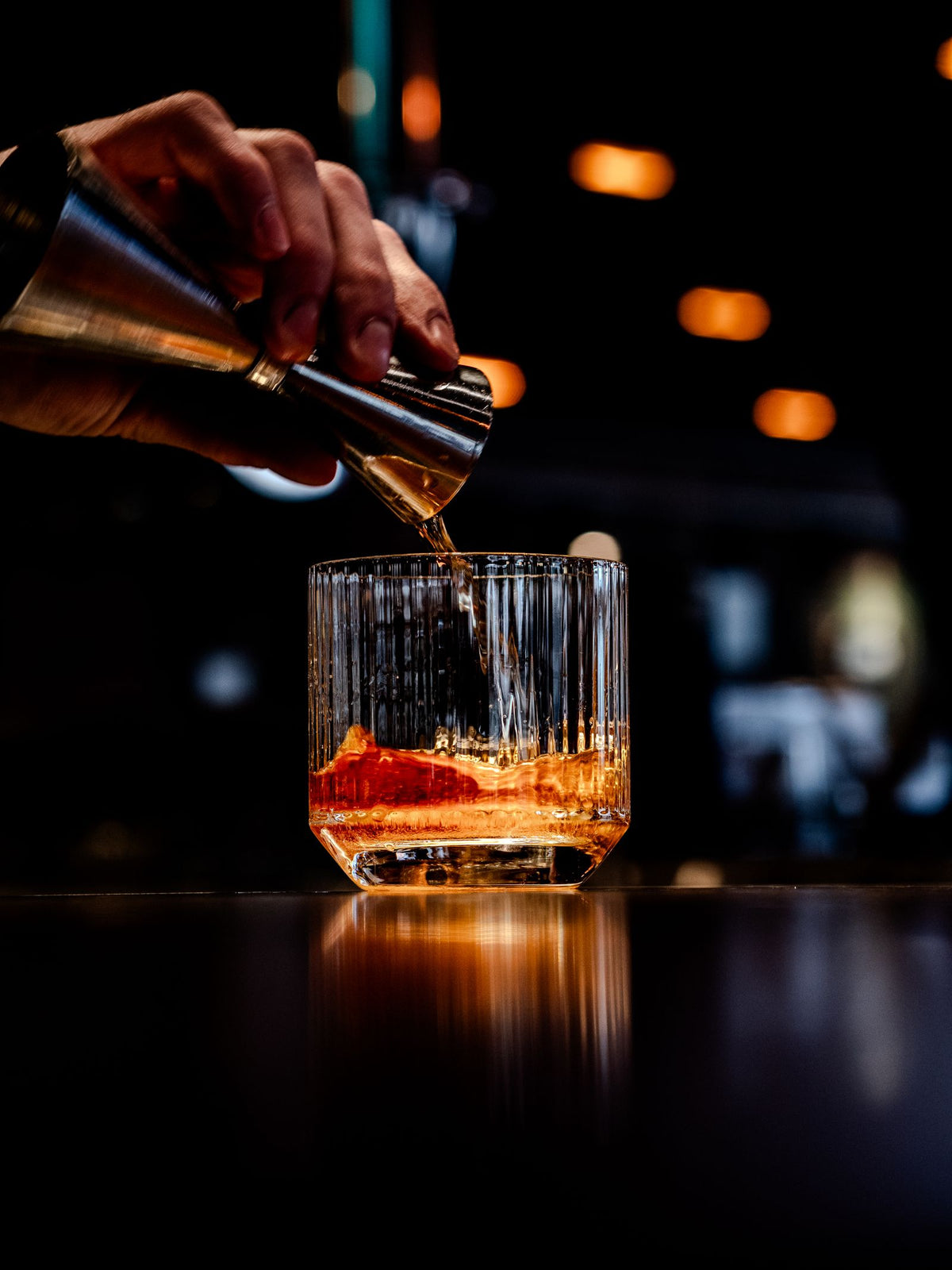
Plain, unflavored whiskey made from grain, water, yeast and oak is treated as kosher by most authorities, and the questions start when a whiskey is flavored, sweetened, or finished in a wine or sherry cask. That is the short version. The longer version is worth five minutes, because the details are where people get tripped up.
Shop the bottles: see every bottle in WHISKEY & SPIRITS.
Somebody hands you a glass at a kiddush. The bottle on the table has no symbol anywhere on the label, and the person next to you says it is fine, and the person across from you raises an eyebrow. Both of them think they are right. Here is what actually distinguishes one bottle from another.
Why is most whiskey considered kosher?
Because of what goes into it, which is almost nothing. Straight whiskey is grain, water, yeast, and time in a wooden barrel. There is no dairy, no grape product, and in a standard aging program no ingredient that raises a kashrus question at all. That is why so many whiskeys carry no symbol and are still widely accepted.
Bourbon is the clearest case. American law requires bourbon to be aged in new charred oak, which means the barrel has never held anything else. Basil Hayden Kentucky Straight Bourbon is a straight bourbon in that mold, and straight bourbon is the category with the fewest open questions in the entire whiskey aisle.
What is the issue with sherry cask and wine cask whiskey?
The barrel. Scotch producers routinely age or finish whisky in barrels that previously held sherry, port, madeira, or wine, and those are grape products. Since wine has its own kashrus requirements, a cask that held non-kosher wine becomes the question mark.
Poskim differ here, and they differ meaningfully. Some hold that the quantity absorbed and re-released is negligible and permit it. Others are strict, particularly where the label advertises heavy sherry-cask influence. This is not a question a wine shop should answer for you. It is a question for your rav.
What you can do is read the label carefully, because the industry tells you exactly what it did. If a bottle says sherry oak, port finish, madeira cask, or wine barrel finish, you now know there is something to ask about. If it says bourbon cask or ex-bourbon, the barrel previously held bourbon, which is a much simpler picture.
What should I check before buying a bottle?
- Is it flavored? Honey, cinnamon, apple, and any other flavored whiskey brings in added ingredients. Flavored whiskey needs certification. This is the single biggest category to be careful with.
- Is there a cask finish on the label? Sherry, port, wine, rum, and beer finishes all change the conversation. Bourbon cask does not.
- Is it a blend or a liqueur? Cream whiskeys and whiskey liqueurs contain dairy or other additives and are a completely different question from straight whiskey.
- Is it Passover? Pesach is its own analysis entirely, since whiskey is grain based. A whiskey acceptable all year is a separate discussion during Pesach.
- What does your rav say? The kashrus agencies publish updated spirit guidance, and rulings vary between communities. Ask once and you are set for years.
How the main whiskey categories compare
| Category | Typical aging | What to look at |
|---|---|---|
| Straight bourbon | New charred oak, required by law | Fewest open questions in the aisle |
| Single malt Scotch | Ex-bourbon casks, sherry casks, or both | Read the cask description on the label |
| Japanese whisky | Varies widely by producer | Cask program is often not disclosed |
| Flavored whiskey | Base whiskey plus added flavoring | Needs certification, no shortcuts |
| Cream and liqueur | Whiskey plus dairy or sweeteners | Entirely separate category |
What does a bourbon cask Scotch taste like?
Lighter and brighter than the sherry-aged style. Ex-bourbon barrels tend to give vanilla, green apple, and a soft toasted-grain sweetness rather than the dried-fruit richness people associate with heavily sherried whisky.
Glenmorangie Original 10 Year is the classic example of that lighter house style, and Glenlivet 12 Year sits nearby as one of the most widely poured single malts in the world. Glenfiddich 14 Year and Macallan 12 Year Double Cask round out the shelf at the next step up. Each of these tells you about its cask program on the label, which is exactly the information you need in hand before you ask your question.
Does whiskey need a hechsher?
Certification removes the guesswork, and where a whiskey carries reliable certification the analysis is done for you. Where it does not, the answer depends on the category, the cask, and on the psak you follow. A great many people drink uncertified straight whiskey on the strength of a ruling they received once, from a rav who knows their standards. That is the right way to arrive at the answer.
What we will not do is print a blanket ruling on a shop page. The honest service is to tell you what is in the bottle and what to ask.
Frequently asked questions
Is bourbon kosher?
Straight bourbon is the simplest case in whiskey, since American law requires new charred oak barrels that have never held anything else. Flavored bourbon is a different question and requires certification.
Is Scotch kosher?
It depends on the cask. Scotch aged only in ex-bourbon barrels raises far fewer questions than Scotch aged or finished in sherry, port, or wine casks. The label will usually tell you which, and your rav should tell you how to treat it.
Is flavored whiskey kosher?
Flavored whiskeys contain added ingredients beyond grain, water, yeast and oak, so they need proper certification. Treat honey, cinnamon, apple and similar bottlings as requiring a hechsher.
Does whiskey have grape products in it?
Not as an ingredient. The grape connection is indirect and comes from barrels that previously held wine, sherry, or port, which is why cask finishing is the central question rather than the recipe itself.
Is whiskey kosher for Passover?
Whiskey is made from grain, so Pesach is a separate analysis from the rest of the year, and a whiskey you drink in Cheshvan is not automatically usable in Nissan. Look specifically for Passover guidance rather than assuming.
Read the cask line on the label, note whether anything was added, and bring those two facts to the person who paskens for you. Our full whiskey collection is here when you know what you are looking for.
Ready to pick one? Browse WHISKEY & SPIRITS.