
How Much Wine Do You Actually Need for a Simcha? A Planning Guide
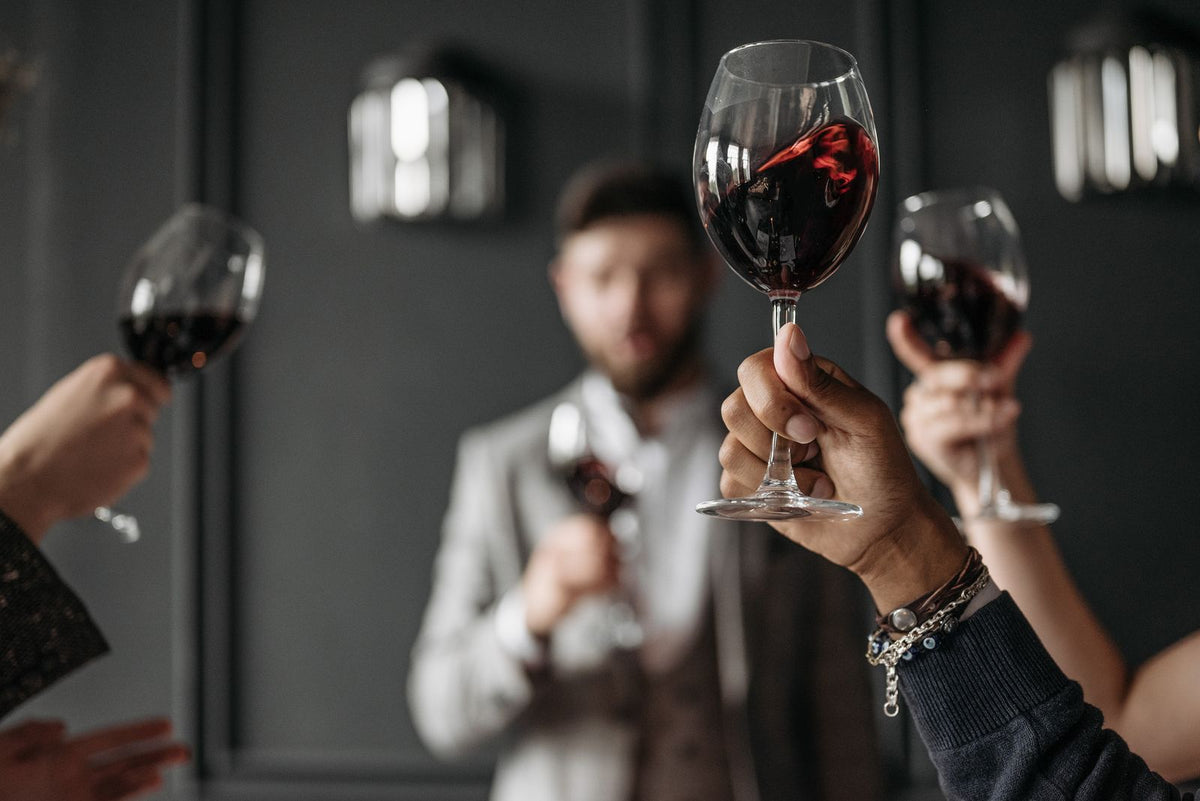
This is the question we get more than any other, usually a week before the event and usually from someone who has been given a guest count and no other information.
Here is how to work it out properly, with numbers you can actually use.
Start with the only figure that matters
Not your guest count. Your adult drinking count.
Children, teenagers, and adults who will not drink are not part of this calculation beyond a token amount for Kiddush. At a bar mitzvah with 150 guests, the number you are planning around might be 70. Getting this figure right matters more than any other decision here.
The baseline numbers
A standard 750ml bottle pours about five glasses at a normal restaurant measure, or four generous ones.
From there:
- A seated meal, moderate drinking: half a bottle per drinking adult. That is one bottle for every two people.
- A celebratory meal with dancing and a long evening: three quarters to a full bottle per drinking adult.
- A kiddush after davening: far less. People take a small cup, not a glass. One bottle covers six to eight people comfortably.
- A Shabbos meal at home: one bottle per four adults is usually right, plus the Kiddush wine itself.
Two worked examples
Bar mitzvah, 150 guests, roughly 70 drinking adults, seated dinner with dancing.
70 adults × ¾ bottle = 53 bottles. Round to five cases, which is 60 bottles. Split roughly 60% red and 40% white if the meal is meat.
Sheva brachos at home, 30 guests, 20 drinking adults, seated meal.
20 × ½ bottle = 10 bottles. Order 12, one case, and you are covered.
Always add a buffer, and here is why
Add roughly 20% to whatever number you land on.
The reason is asymmetry. Wine you did not open keeps indefinitely and gets drunk another week. Wine you ran out of at nine o'clock on a Sunday night cannot be fixed. The downside of over-ordering is that you own some wine. The downside of under-ordering is that your simcha runs dry in front of your guests.
This is doubly true for Yom Tov, when the stores are closed and there is no solving it at all.
Multiply for Yom Tov
People consistently under-buy for Yom Tov because they plan for one meal.
Rosh Hashana runs two days with multiple meals plus Kiddush at each. Pesach has two sedarim before you reach the rest of the week. Work out your per-meal number and multiply by the number of meals, then add the buffer on top of that total.
The mevushal question: do not skip this
If your simcha is catered, at a hall, or has hired staff pouring, this matters. A mevushal wine stays kosher even when it is opened and poured by someone who is not Jewish, which describes most catering staff.
Get this wrong and you have bought wine that cannot be served. It is the single most expensive mistake we see, and it is entirely avoidable, ask your caterer who will be handling the bottles, and if the answer is their own staff, order mevushal. Our wine for a simcha page is the place to start.
We wrote a full explanation of what mevushal means and when it applies, and as always, ask your rov about the specifics of your own situation.
When magnums make sense
For long tables and large kiddushim, 1.5L magnums are worth considering. One magnum equals two bottles, which means half as many openings, less handling, and usually a better price per glass.
Kesser Concord Grape Sweet and Manischewitz Concord are the classic sweet choices for Kiddush at scale. Farbrengen Melody is low in alcohol, which is genuinely useful when people are making Kiddush and then continuing with the day. Kesser Eminent Semi-Dry sits between sweet and dry. For the table itself, Kedem Chablis White Dry and Kedem Matuk Rouge cover white and red.
How to split red, white, and sweet
A reasonable starting point for a meat meal is 60% red, 30% white, 10% sweet or sparkling. For a dairy or fish menu, flip the red and white.
Always have more sweet wine than you think you need if the crowd skews traditional: at many tables the sweet bottle empties first and the dry one is still half full at the end of the night.
If you are not sure of the room, a mixed case takes the guesswork out. The Dry Wine Mixed Case and Sweet Wine Mixed Case each cover twelve bottles across a range, the Best Value Mixed Case is the budget-conscious option, and the Summer Rosé Case works for a warm-weather event.
The two mistakes that cost the most
Ordering too late. Before Yom Tov and through wedding season, the bottles that sell out are the popular ones, and a substitution chosen under pressure is rarely the one you wanted. Two to three weeks ahead is comfortable.
Buying singles instead of cases. Per-bottle pricing is better by the case, and shipping a case costs far less per bottle than shipping four bottles three separate times. If you are buying for an event, put the whole order together in one go.
The short version
Count drinking adults. Half a bottle each for a meal, three quarters for a celebration. Add 20%. Multiply by the number of meals. Order mevushal if anyone outside your household is pouring. Buy by the case, and order early.
If you would rather have a hand with it, send us your guest count and the style of the event through our contact page and we will work it out with you. We do this most weeks.