
How to Open Wine Without a Corkscrew
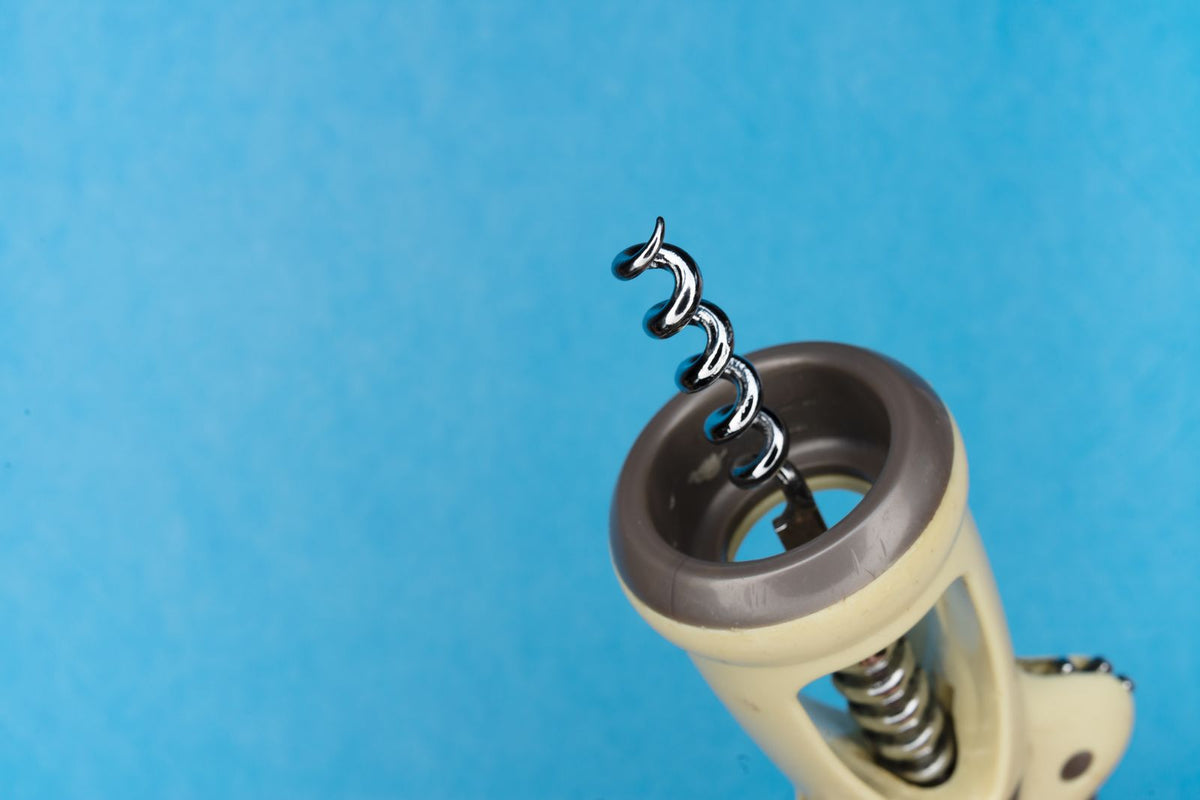
The safest way to open a wine bottle without a corkscrew is to push the cork in rather than pull it out, using the blunt handle of a wooden spoon. It takes about twenty seconds, it cannot shatter the bottle, and the only cost is a few cork crumbs floating in the wine. Every other method carries more risk, and some of them carry a lot more.
We have watched this go wrong in a parking lot before a kiddush, so here are the methods that actually work, ranked honestly by how likely they are to cost you the bottle.
The methods, ranked from safest to most dangerous
| Method | You need | Risk |
|---|---|---|
| Push the cork in | Wooden spoon handle | Very low |
| Screw and claw | Long screw, hammer or pliers | Low |
| The key twist | A sturdy key | Low to medium |
| Serrated knife | Bread knife | Medium |
| The shoe method | A shoe and a wall | Medium to high |
| Heat on the neck | A lighter or hot water | High, do not |
1. Push the cork in with a wooden spoon
Stand the bottle on a solid surface, put the handle end of a wooden spoon on the cork, and press down steadily with your body weight. The cork gives suddenly and drops into the wine. Do not do this fast, and do not do it while holding the bottle in the air.
Two warnings. Wine will splash up as the cork displaces liquid, so aim the neck away from anything you care about. And once the cork is in, it stays in, so pour through a small strainer if crumbs bother you. This method cannot break a bottle, which is why it sits at the top of the list.
2. The screw and claw
This is the real corkscrew, improvised. Drive a long wood screw most of the way into the cork with a screwdriver, leaving about half an inch above the surface, then hook the claw of a hammer under the screw head and lever it out. Slow and even. If you have pliers instead, grip the screw head and pull straight up while twisting slightly.
This is the only method that gets the cork out whole, and if you are opening something you actually care about, it is the one to use. The moment it clears the neck you get that first lift of cold fruit and a little cellar dust, which is half the reason anyone bothers with corks in the first place.
3. The key twist
Push a sturdy key into the cork at a forty-five degree angle, about halfway down, then turn the key and the cork together while pulling gently upward. The cork walks its way out in a spiral. It works, it is slow, and it is hard on the key.
4. The serrated knife
Work the tip of a bread knife into the cork at an angle, then twist the knife and the cork together while lifting. Same principle as the key, more leverage, more chance of a slip. Keep your other hand off the neck of the bottle entirely.
5. The shoe method
The famous one. Take off a flat-soled shoe, sit the base of the bottle inside it, hold both firmly, and strike the sole flat against a solid wall. Each hit pushes wine against the cork and walks it out a few millimeters. It takes eight or ten firm strikes.
It genuinely works. It also breaks bottles when people use a hard surface instead of a shoe, hit at an angle, or get impatient. Never do this against a tree, a curb, or a countertop, and stop the moment the cork is out far enough to grip by hand.
6. Heat on the neck
Some people run a lighter around the neck to expand the air inside and push the cork out. Do not. Rapid uneven heat on glass is exactly how glass cracks, and you are holding it while it happens.
What if the cork breaks halfway?
Stop pulling. A broken cork almost never comes out the way it went in. Switch to pushing the remainder in with the spoon handle and pour through a strainer. Fighting a crumbling cork with a knife is the single most common way people end up with glass in the wine.
The honest advice: plan the bottle around the trip
The best fix for this problem is not a technique. It is choosing the right bottle when you know a corkscrew is unlikely.
If wine is going to a picnic, a park, or a hotel room, bring something friendly and forgiving rather than the bottle you have been saving. Bartenura Moscato (750ml) is the classic here, sweet and served cold and nobody minds a few cork crumbs. For a red that travels well and costs little enough to risk, Barkan Classic Cabernet Sauvignon (750ml) or Teperberg Vision Cabernet Sauvignon (750ml) both sit around the price where a rough opening is not a tragedy.
Save the careful bottles for the table where a corkscrew lives. You can browse the full range in our kosher wine collection, and the reds specifically in the red wine collection.
Frequently asked questions
Can you push a cork into a wine bottle safely?
Yes. It is the safest of all the no-corkscrew methods because it applies steady downward force rather than leverage or impact. Stand the bottle on a hard surface, press slowly, and keep the neck pointed away from you since wine will splash as the cork drops.
Does the shoe method really work for opening wine?
It does, through hydraulic pressure. Each strike pushes liquid against the cork and forces it outward a little. It also breaks bottles more often than any other method on this list, so use a flat wall, a soft-soled shoe, and firm controlled hits rather than hard ones.
Is wine ruined if cork falls in?
No. Cork is inert and a floating cork or a few crumbs will not change the taste. Pour through a fine strainer or a piece of clean cloth if the pieces bother you, and drink the bottle the same night rather than storing it with the cork inside.
Can you use a screw to open wine?
Yes, and it is the best improvised method. A long wood screw driven into the cork, then levered out with a hammer claw or gripped with pliers, works exactly like a corkscrew. It is the only approach that reliably brings the cork out intact.
How should you store wine so this never happens?
Keep a spare corkscrew wherever wine gets opened, including the car glovebox if you bring bottles to other people's homes. Our guide to storing wine properly covers the rest, including why a cork dries out and starts crumbling in the first place.
Push it in, strain it, pour it. The wine does not know what you did to get there.