
How to Store Wine at Home (Without a Cellar)
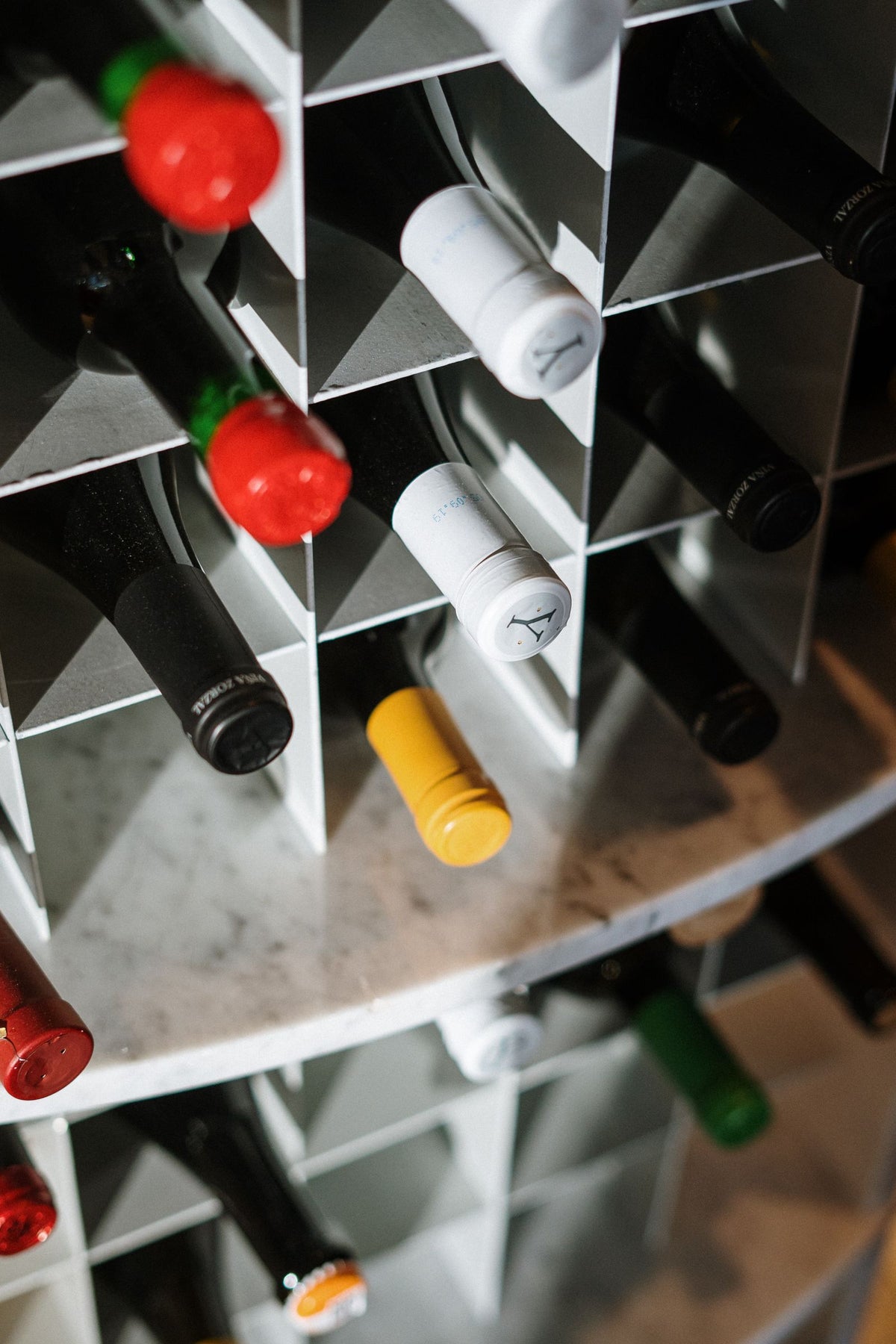
Cool, dark, still, and lying on its side. Hold a bottle somewhere between 50 and 65 degrees, keep it out of light, and stop moving it around, and you have solved almost all of wine storage without spending a dollar or owning a cellar. Everything else is refinement.
The reason this matters is not snobbery. Heat is the one thing that will actually ruin a bottle you paid for. Wine that has spent a summer above a radiator tastes flat and faintly stewed, like the fruit was boiled out of it, and no amount of decanting brings it back. That is a real loss and it is completely avoidable.
What temperature should wine be stored at?
Around 55 degrees Fahrenheit is the textbook number, and it is a good target. But the more useful rule is this: steady beats perfect. A closet that sits at a constant 68 degrees is a better home for your wine than a spot that swings from 55 to 80 every day. Repeated expansion and contraction pushes wine past the cork and pulls air in behind it, and that is what actually kills a bottle.
So do not chase 55. Chase consistency, and get as cool as your apartment reasonably allows.
Where should I put wine in an apartment?
| Good | Why | Bad | Why |
|---|---|---|---|
| Interior closet floor | Cool, dark, no swings | On top of the fridge | Warm and vibrating |
| Under a bed on an interior wall | Dark and stable | Kitchen counter | Heat and light all day |
| A low cabinet away from appliances | Insulated by the room | Near a radiator or vent | Direct heat |
| Basement, if you have one | Naturally cool and steady | A sunny windowsill | UV light degrades wine fast |
| A wine fridge, if you buy one | Purpose-built | The garage | Biggest temperature swings in the house |
The single best free storage spot in most apartments is the floor of an interior closet. It is dark, it is the most temperature-stable place in the home, nobody bumps it, and it costs nothing.
Should wine be stored on its side?
If it has a natural cork, yes. A cork that dries out shrinks, and a shrunken cork lets air in. Lying the bottle down keeps the wine against the cork and the cork swollen and sealed. This is the entire reason wine racks are built the way they are.
If the bottle has a screw cap, it does not matter and you can stand it up. Same for anything you are going to open within a few months, which honestly is most of what people buy.
Which bottles actually need this?
Here is the thing nobody selling wine racks will tell you: the large majority of wine sold is made to be drunk now. A bottle like Baron Herzog Jeunesse Cabernet Sauvignon is built for this month's table, and no closet is going to improve it. Buy it, chill it slightly, drink it. Storage is irrelevant.
Careful storage starts to earn its keep in the middle. Psagot Cabernet Sauvignon and Yarden Cabernet Sauvignon are structured reds with real tannin, the kind of bottles that hold up to a few years in a stable, dark place and reward the patience.
And at the top, storage stops being optional. Domaine du Castel Grand Vin is a serious bottle, and leaving a serious bottle in a warm kitchen for two years is the most expensive mistake on this page. If you are buying at that level, buy a shelf in a cool closet at the same time.
Most of the kosher wine shelf falls into the drink-it-now camp, and there is nothing wrong with that. Knowing which of your bottles is which is the whole skill.
Do I need a wine fridge?
Only if you keep more than a dozen bottles for more than a year, or if your home genuinely runs hot. A wine fridge holds a steady temperature and keeps out light, which is exactly the two things that matter, and if your apartment has no cool dark corner it is money well spent.
If you have a closet, skip it. A closet floor and a cheap rack do the same job for a fraction of the price. Do not let a wine fridge become the reason you never got around to storing wine properly.
One more thing worth knowing: humidity. Around 60 to 70 percent keeps corks healthy. Very dry air over years can dry a cork even in a bottle lying down. This is a slow problem and only matters for long holds, so unless you are keeping bottles for five years, do not worry about it.
What about after the bottle is open?
Different question entirely, and the answer is short. Recork it, put it in the fridge, and drink it within a few days. Cold slows oxidation for reds as well as whites, and you can always let a glass warm up in your hand. We wrote the full version in how long open wine lasts, and the related question of whether to refrigerate red wine catches most people out.
Frequently asked questions
Can I store wine in the refrigerator?
For a few weeks, yes. For months, no. A kitchen fridge runs colder than wine wants, around 38 degrees, and it is very dry, which dries corks over time. It is fine as a holding spot before a meal and poor as a long-term home.
Does light really ruin wine?
Yes, and faster than most people expect. Ultraviolet light breaks down compounds in wine and produces off aromas. It is the reason wine bottles are made of dark green or brown glass. A bottle in a sunny window is being damaged, not displayed.
How long can I keep an unopened bottle?
Everyday wine is at its best within one to three years of purchase. Structured reds can hold for several years in good conditions. Very few bottles improve past a decade, and the ones that do are usually expensive and built for it. When in doubt, drink it sooner.
Is it bad to move wine around?
Constant vibration is not good for wine held long term, which is why the top of the refrigerator is a bad spot. Carrying a bottle home from the store is fine. Just let it rest a day or two before opening if it has been shaken up.
Does a wine rack in the living room work?
It works if the room is cool, out of direct sun, and away from vents. A rack on an interior wall in a room you keep at a steady temperature is perfectly good storage for anything you plan to drink within a year or two.
Find the coolest dark corner in your home tonight and move your best bottle into it. That is the whole project.