
Russian Standard Vodka: Original, Platinum, and Gold
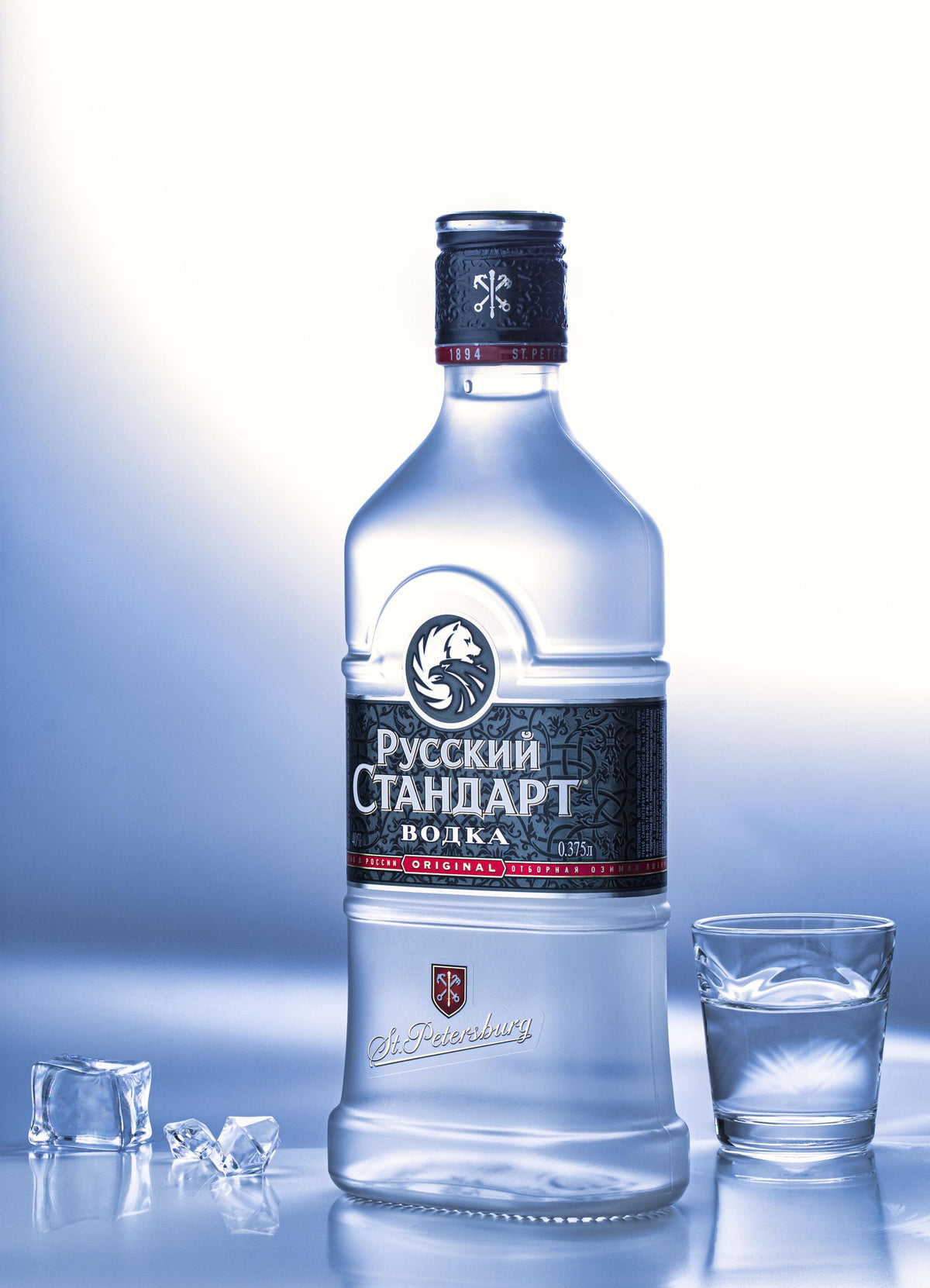
Russian Standard is the single most-visited bottle on this website. More people land on that page than on any wine we sell. So it is worth explaining properly: what is actually in the bottle, what separates the three labels, and which one is worth your money.
Short version. The red label is the everyday bottle and the one most people want. Platinum is the one to buy if you drink vodka neat and cold. Gold is flavoured, gently, and you should know that before you buy it.
What Russian Standard actually is
It is a wheat vodka made in St. Petersburg. Winter wheat from the southern steppe, glacial water from Lake Ladoga, distilled and then filtered before bottling. The company is young by vodka standards, founded in 1998, but the distillery it built in St. Petersburg is one of the largest in the country.
The 1894 on the label is not the founding date. It refers to the standard the brand takes its name from, the 40 percent alcohol specification credited to the chemist Dmitri Mendeleev and adopted as the Russian state benchmark. Whether Mendeleev personally set it is argued about by historians. What is not argued about is that 40 percent has been the number ever since, and every bottle in the range is bottled at exactly that.
If you want the wider background on how vodka is made and why the base grain matters less than people think, what vodka is made from covers it.
The three labels, side by side
| Bottle | What is different | Price |
|---|---|---|
| Russian Standard Original (1.75L) | The red label. Charcoal filtered. Clean wheat, a faint mineral edge, a little grain warmth on the finish | $69.99 |
| Russian Standard Platinum (750ml) | Silver filtration on top of the standard recipe. Rounder, quieter, softer through the middle | $39.99 |
| Russian Standard Gold (1.75L) | Siberian ginseng extract added. A faint herbal lift on the nose and a warmer, herbal finish | $74.99 |
All three are 40 percent. None of them is a different spirit from the others in any dramatic sense. This is a range built on filtration and one botanical, not on three separate recipes.
Which one should you actually buy
If you are mixing it, buy the red label. Filtration differences vanish the moment tonic or cranberry hits the glass, and the 1.75 litre works out to about forty dollars a litre, which is the cheapest way into the brand. This is the bottle for a kiddush, a bar cart, a party.
If you drink vodka neat out of the freezer, buy the Platinum. The silver filtration is not marketing noise, it shows up as a shorter, softer finish, and neat is the only way you would ever notice it. Georgians and Russians drink it this way for a reason, cold enough to be viscous, in a small glass, with something salty alongside.
Gold is the one to think about. Siberian ginseng, sometimes sold as golden root, is a real botanical addition and it puts a herbal note on the back of the palate. Some people love it. Some people buy it expecting a fancier version of the red label and are surprised. It is also the only one of the three where the added ingredient is worth checking against your own kosher standard, since plain grain vodka and flavoured grain vodka are not the same question.
Is it kosher
Plain, unflavoured grain vodka is widely accepted without a hechsher, and Russian Standard Original and Platinum are exactly that: wheat, water, filtration, nothing else. The Platinum is the bottle in the range that comes marked kosher.
Two caveats worth knowing. Gold has a botanical extract in it, which is a different conversation from plain vodka, so check it against whatever standard your family keeps. And none of the three is Kosher for Passover, because it is grain based. If Pesach is what you are buying for, Kosher for Passover spirits lays out what actually qualifies, and Dead Drop Artesian and Moses Vodka are two that do.
How it compares to what you already know
Against Grey Goose, the Russian Standard is drier and a little more assertive. Grey Goose is French, wheat, and deliberately soft. Russian Standard has more grain character showing, which is a plus neat and irrelevant in a cocktail. The litre of Grey Goose and the 750 of Platinum sit at almost the same price, and that is the honest comparison to make.
Against Tito's, it is a different style entirely. Tito's is corn, American, and rounder with a faintly sweet edge. Russian Standard is wheat and cleaner. We have written both of those matchups out in full: Grey Goose vs Tito's and Smirnoff vs Tito's.
If you want to go further up the shelf
There is a whole row behind Russian Standard. Beluga Noble at $32.99 is the obvious next step up, malt-based, Russian, and rested before bottling. Stoli Elit at $54.99 is made in Latvia rather than Russia, freeze-filtered, and about as polished as the category gets. Beluga Gold Line at $119.99 is a gift bottle, hammer and brush included, and it is bought as a gift far more often than it is bought to drink.
At the other end, Russian Elite at $29.99 does the job for a table where the vodka is going into something. The full vodka shelf has the rest, and what a bottle of vodka costs explains where the money actually goes as you climb.
How to drink it
Freezer. Not the fridge, the freezer, and leave it there permanently. Vodka will not freeze at 40 percent, it goes thick and cold and the alcohol burn drops away. Pour it into small glasses that have also been in the freezer.
Have something salty and fatty next to it. Smoked fish, pickles, herring, a piece of good bread. This is what zakuski means and it is not a garnish, it is half the point. A cold shot of clean wheat vodka against smoked salmon is one of the better things you can do at a kiddush, and it costs a fraction of what the whisky next to it costs.
The short version
Red label for mixing and for volume. Platinum if you drink it neat and cold. Gold only if you actually want the herbal note, because it is there and you will taste it. All three are 40 percent wheat vodka from St. Petersburg, all three are made to be drunk very cold, and none of them are for Pesach.