
What Wine Goes With Chicken?
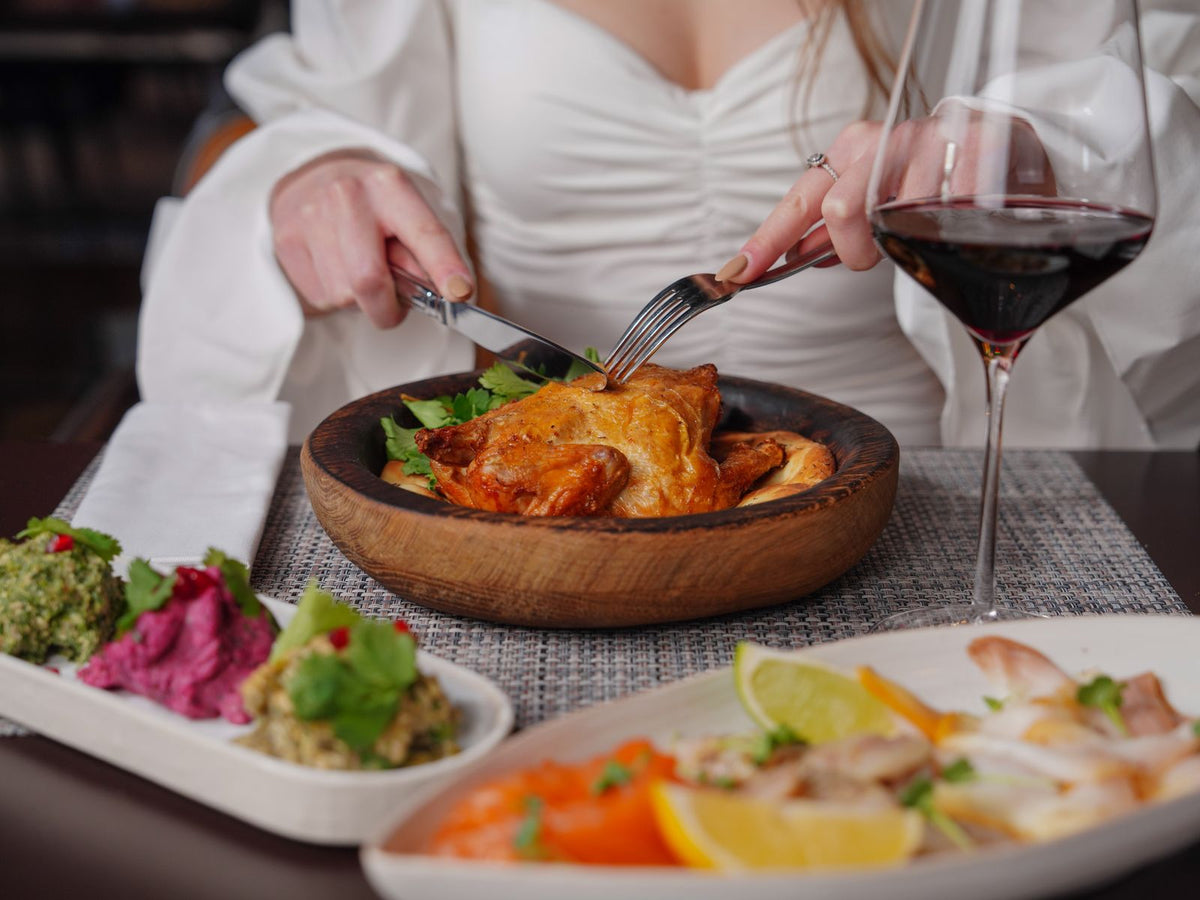
Chicken takes more wines than beef does, and the bird is not what decides the pairing. The cooking method is. Roasted, fried, grilled and saucy chicken each want something different, and the range runs from a sharp white all the way to a light red.
That is good news if you buy wine for Shabbos, because chicken is on far more tables than steak is. It is also why "white wine with chicken" is advice that falls apart the first time someone serves you chicken in a mushroom sauce.
Why chicken is easier to pair than beef
Beef brings fat and iron, and it wants tannin to cut through. Chicken is leaner and milder, so it does not fight anything. What it does instead is take on the character of whatever you cook it in - lemon, garlic, honey, paprika, soy, wine, schmaltz. Pair with the treatment, not the protein.
The one rule worth keeping: match weight to weight. A light dish wants a light wine. A heavy dish can carry a heavier one. Get that right and the specific grape matters much less than people pretend.
What wine goes with chicken, by how you cook it
| The dish | What to pour | Why it works |
|---|---|---|
| Roast chicken, plain or with herbs | Oaked Chardonnay | Roasting browns the skin; oak echoes that toasted note |
| Lemon, garlic or herb chicken | Sauvignon Blanc | Acid meets acid, and the wine stays sharp against the lemon |
| Fried or schnitzel | Dry rosé or sparkling | Bubbles and acid cut oil better than anything else |
| Grilled or barbecue | Light red, chilled slightly | Char wants a little fruit and a little grip |
| Mushroom or cream sauce | Pinot Noir | Earthy with earthy, and the tannin stays low enough not to clash |
| Honey, apricot or sweet glaze | Off-dry white | The wine has to be at least as sweet as the food, or it tastes sour |
Roast chicken: reach for Chardonnay
Plain roast chicken is the default Friday night main in a lot of homes, and an oaked Chardonnay is the classic answer. The oak gives vanilla and a toasted edge that lines up with browned skin, and the wine has enough body to sit next to a real meal without disappearing.
Gamla Chardonnay at about seventeen dollars is the easy weeknight version. If the chicken is the centerpiece and there are guests, Goose Bay Chardonnay or Yarden Chardonnay both step up without turning into an occasion.
Lemon and garlic: reach for Sauvignon Blanc
The moment lemon enters the pan, a soft wine tastes flat. You need acid to meet acid. Sauvignon Blanc is built for it - grassy, citrus-driven and sharp enough to stand up to the pan sauce.
Baron Herzog Sauvignon Blanc is the value pick at around fourteen dollars. Hagafen Sauvignon Blanc is a step cleaner and still under twenty. Pinot Grigio works here too if you want something quieter - Borgo Reale Pinot Grigio is a safe pour for a table where nobody agrees on anything.
Fried chicken and schnitzel: bubbles or rosé
Fat coats your palate. Acid and bubbles strip it back so the next bite tastes like the first one. A dry rosé does both jobs and does not look out of place at a weekday table.
Baron Herzog Rosé is about fifteen dollars and pours easily. Whispering Angel Côtes de Provence Rosé is the one people recognize by sight. Either beats a heavy red against anything fried.
Grilled, barbecue and mushroom sauce: go light red
This is where the "white wine with chicken" rule earns its retirement. Once there is char on the skin or mushrooms in the pan, a light red is the better pour. Pinot Noir is the specialist here - low tannin, red fruit, and an earthy note that lands right into a mushroom sauce.
Herzog Lineage Pinot Noir at about twenty dollars is the sensible starting bottle. Barkan Classic Pinot Noir is cheaper still. Serve it about twenty minutes out of the fridge - a light red tastes better slightly cool, especially in summer.
Sweet glazes: the wine has to be sweeter than the food
Honey chicken, apricot chicken and anything with duck sauce break dry wines. Sugar in the food makes a dry wine taste thin and sour by comparison. The fix is a wine with a little sweetness of its own - a semi-sweet white, or a Moscato if the glaze is genuinely sweet.
The one bottle that covers most chicken
If you want a single bottle on the table and no thinking, buy an unoaked or lightly oaked white with real acidity. It handles roast, lemon, fried and most sauces, and it will not embarrass itself against a light red dish either. Browse the full kosher white wine range and pick anything crisp in the fifteen to twenty-five dollar band.
If the meal is mixed - some chicken, some beef, a fish course - open one white and one light red rather than trying to find a compromise bottle. Two open bottles that each fit beat one that fits nothing. For a table doing beef as well, our guide to what wine goes with steak covers the other half of the meal.
Does the wine need to be mevushal?
Only if someone at the table needs it to be. If guests who are not shomer Shabbos will be handling the bottle or pouring, mevushal solves it. If it is just family, it makes no difference to the pairing. There is a fuller explanation in our guide to mevushal and non-mevushal wine.