
Dry vs Sweet Wine: How to Know What You Like
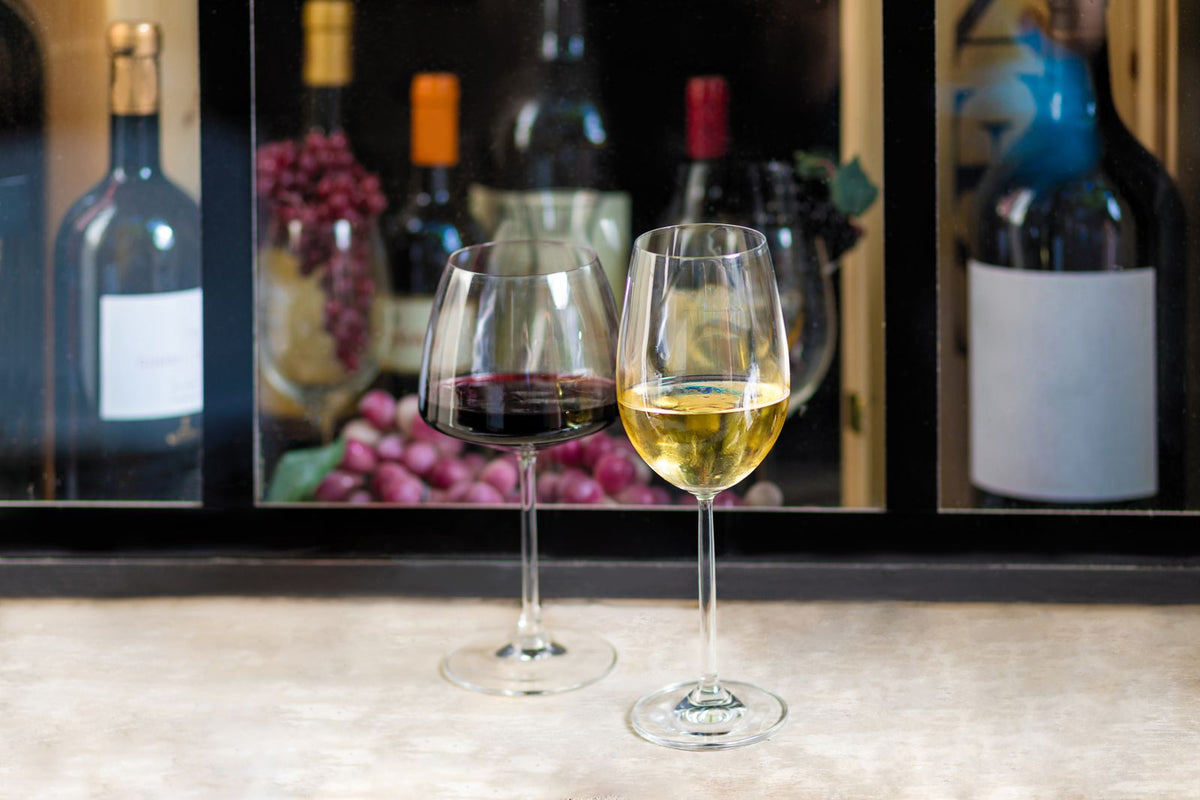
Dry wine has almost no sugar left in it, and sweet wine has some sugar left on purpose. That is the entire difference. Everything else people say about dry and sweet is either taste preference or marketing.
Shop the bottles: see every bottle in Semi-Sweet and Dry.
Here is the part nobody explains at the store. All wine starts sweet. Grape juice is loaded with sugar, and yeast eats that sugar and turns it into alcohol. If the yeast is allowed to finish the job, there is no sugar left and the wine is dry. If the winemaker stops it early, the leftover sugar stays in the bottle. Dry and sweet are not two different products. They are the same process, stopped at different moments.
What does dry wine actually mean?
Dry means the fermentation ran to completion. No sugar survived, so what you taste is fruit, acid, tannin and oak, with nothing sweet underneath to cushion them.
This is where most people get tripped up. A dry wine can still smell like blackberries and taste fruity. Fruity is not the same as sweet. Your nose reports the fruit, your tongue reports the sugar, and they disagree constantly. Baron Herzog Cabernet Sauvignon is a clean example. It is fully dry, and it still gives you dark plum and cassis on the nose. Nothing sweet arrives on the finish. That gap between what you smell and what you taste is the single most useful thing to notice while you are learning.
What does sweet wine actually mean?
Sweet means residual sugar, the sugar that never got fermented. It coats the tongue, softens acid, and makes a wine feel rounder and easier on a first sip.
Bartenura Moscato is the reference point almost everyone in a kosher home already owns, and it earns the spot. It drinks like cold peach and a little orange blossom, sweet but light on its feet, and it goes down easy at a kiddush table where half the room does not drink wine otherwise. That is not a lesser category. It is a different job.
The sugar scale, from bone dry to dessert
Wine sits on a spectrum, not a switch. Roughly, from driest to sweetest:
| Level | What it tastes like | Typical styles |
|---|---|---|
| Bone dry | No sweetness at all, crisp and firm | Sauvignon Blanc, most Cabernet |
| Dry | Fruit without sugar, clean finish | Chardonnay, Merlot, Zinfandel |
| Off-dry | A faint sweetness you notice on the finish | Some Rieslings, some Chenin Blanc |
| Semi-sweet | Clearly sweet, still refreshing | White Zinfandel, Black Muscat |
| Sweet | Sweetness leads, low alcohol, easy | Moscato, Asti |
Most of the wine world lives in the top two rows. Most of what sells at a simcha lives in the bottom two. Both facts are true at once, and neither is a judgment.
How do you figure out which one you like?
Stop guessing from labels and run a small experiment instead. Buy three bottles from three different rows of that table, open them the same evening, and pour a small glass of each.
You are not looking for the best one. You are looking for where your tongue relaxes. Try Baron Herzog Sauvignon Blanc at the dry end, Baron Herzog White Zinfandel in the semi-sweet middle, and the Moscato at the sweet end. Three bottles, under fifty dollars total, and you will know more about your own palate than a year of reading.
Two things to watch for while you taste:
- Where does the wine finish? Dry wines end and leave your mouth clean. Sweet wines linger.
- Are you reaching for food? Dry wine usually wants something on the plate. Sweet wine is content on its own.
Which is better with food?
Dry wine wins at the table more often, and the reason is simple. Sugar competes with the food, acid supports it. A dry red cuts through brisket fat and resets your palate between bites. Baron Herzog Old Vine Zinfandel does that job well and does not ask much of you.
Sweet wine has a real place, just a narrower one. It belongs with spicy food, with anything salty, with dessert, and with the moment before the meal when people are standing around and nobody wants a serious glass. A sweet red like Baron Herzog Jeunesse Black Muscat handles that opening stretch better than a dry Cabernet ever will.
Does dry mean higher quality?
No, and this is worth saying plainly because the wine world is snobbish about it. Some of the most expensive and most celebrated wines on earth are sweet. Sweetness is a style choice, not a shortcut.
What sweetness does do is hide things. Sugar covers rough edges, so a mediocre sweet wine is easier to get away with than a mediocre dry one. That is why the dry category feels more serious. It is less forgiving, not inherently better.
Is dry wine lower in sugar and calories?
Lower in sugar, yes, by definition. Lower in calories, usually only a little. Alcohol carries more calories than sugar does, and dry wines tend to be higher in alcohol because all that sugar got converted. A sweet wine at 8% and a dry wine at 14% are closer than you would expect.
Frequently asked questions
Is Moscato a sweet wine?
Yes. Moscato is made in a deliberately sweet, low alcohol style, which is exactly why it became the default bottle at kiddush and at simchas. We cover it in more depth in our guide to whether Moscato is sweet.
Is Cabernet Sauvignon dry?
Almost always. Cabernet is fermented to dryness as a rule, and any sweetness you think you taste is usually ripe fruit and oak rather than sugar.
What does semi-dry mean on a label?
It means a small amount of residual sugar, less than a sweet wine and more than a dry one. It sits between off-dry and semi-sweet, and the term is used loosely across producers. Our guide to semi-dry wine goes through what to expect.
Are red wines drier than white wines?
Usually, but not because of the color. Most reds are made in a dry style and whites cover a wider range, from bone dry Sauvignon Blanc all the way to dessert wine. There are sweet reds and there are severely dry whites.
Why does a dry wine taste fruity if there is no sugar?
Because aroma and sweetness are separate senses. Your nose picks up berry and stone fruit compounds from the grape, and your brain files that as sweet even though your tongue never received any sugar. Once you learn to separate the two, you can read a wine much faster.
Pour the three glasses. Your tongue will tell you in about a minute what a shelf full of labels never could.
Ready to pick one? Browse Semi-Sweet and Dry.