
What Is Arak? How to Drink the Anise Spirit of the Levant
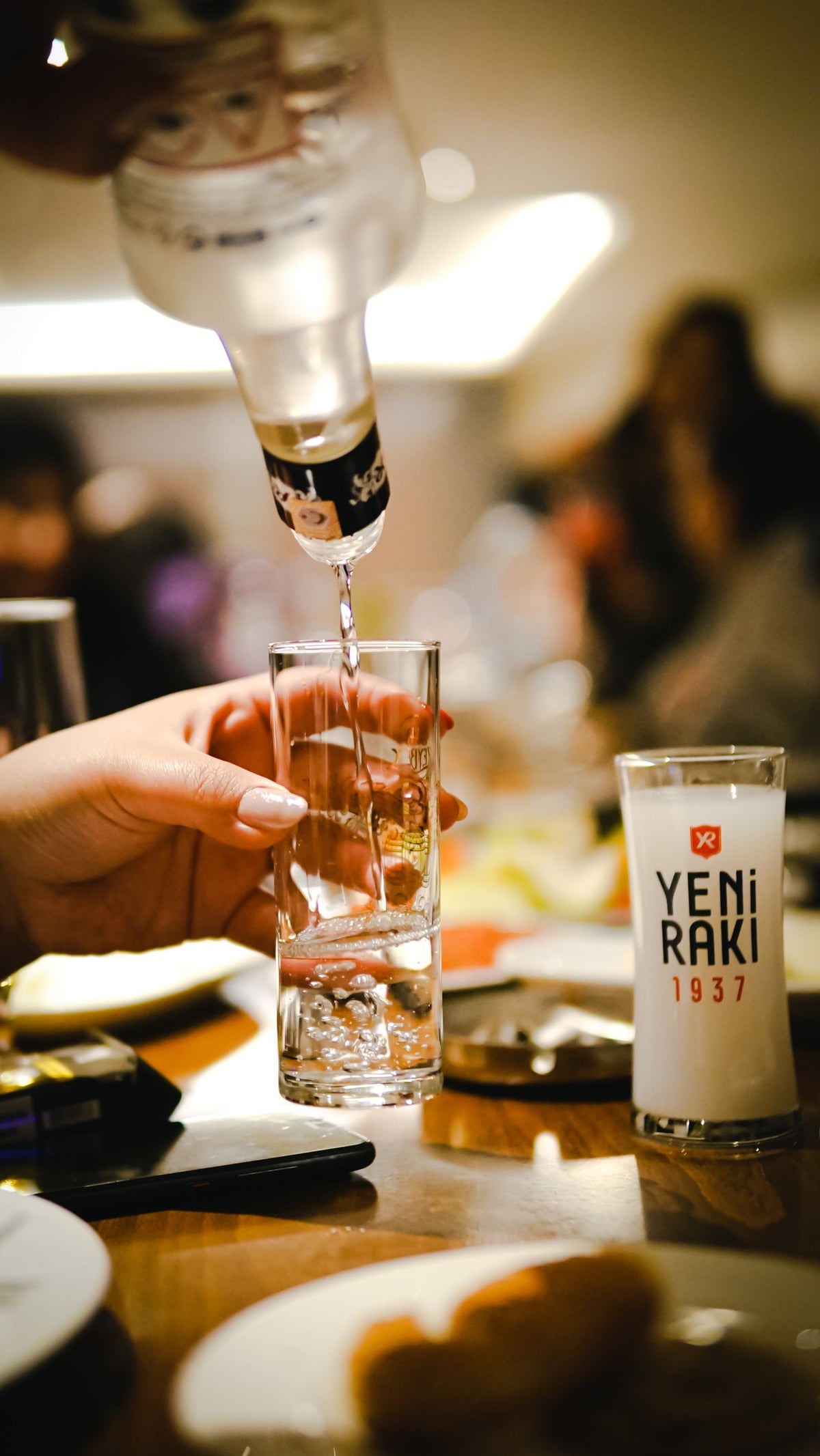
Pour arak into a glass and it is clear. Add water and it turns cloudy white in front of you. That transformation is the first thing anyone notices, and it is not a trick. It is chemistry, and it tells you the arak is real.
What it actually is
Arak is a distilled spirit flavoured with aniseed, traditional across the Levant: Israel, Lebanon, Syria, Jordan and the surrounding region. It is typically strong, dry and unsweetened, and it is drunk with food rather than before or after it.
The traditional method starts with grapes: the wine is distilled, then redistilled with aniseed, sometimes more than once. Some modern araks are made on a grain or sugarcane base instead, and flavoured versions have become popular in their own right.
Why it goes cloudy
The anise oil in arak, anethole, dissolves happily in alcohol but not in water. At full strength it stays invisible. Add water and the alcohol level drops below the point where the oil stays dissolved, so it separates into microscopic droplets that scatter light. The glass turns opaque white.
Wine people call the same effect a louche. It is the reason arak is sometimes called lion's milk, a name it shares with Turkish raki.
Arak, ouzo, raki, pastis: what is the difference?
They are cousins, all built on anise, and they differ mostly by origin and treatment.
Arak is Levantine, dry, and usually unsweetened. Ouzo is Greek and generally lightly sweetened. Raki is Turkish, often made from grape pomace. Pastis is French, from Marseille, and includes liquorice root alongside anise. Sambuca is Italian and noticeably sweet.
If you like one, you will probably get on with the others. If anise is not for you, none of them will change your mind.
How to serve it, and the one rule
The traditional ratio is one part arak to two parts water, though many people prefer it lighter.
The rule worth knowing: water first, ice second. Pour the arak, add the water, watch it turn white, and only then add ice. Drop ice straight into neat arak and the anise oils seize on contact with the cold surface, leaving unpleasant crystals clinging to the cubes rather than a clean milky glass.
Serve it cold, in a small straight glass, alongside food. It belongs with mezze: hummus, olives, grilled fish, salads, anything salty and sharp. At a Sephardic table it is as much a fixture as wine.
The kosher angle
Here is a point specific to arak that catches people out.
Because traditional arak is distilled from grapes, it is a wine derivative, which means it carries the same supervision requirements as wine, not the looser ones that apply to plain grain spirits. A grape-based arak needs proper certification. Araks made on a grain or cane base sit in a different category.
Flavoured araks add another layer, since the flavourings themselves need certification, and most flavoured versions are not Kosher for Passover even when the base spirit would be. We list the hechsher and Passover status on every product page, and for anything specific, ask your rov.
Where to start
If you have never had arak, begin with a traditional unflavoured one and serve it properly: water first, then ice. Joseph Gold and Askalon are both straightforward classics and among our best sellers.
If you already know arak and want something different, the flavoured range has become genuinely interesting. Zachlawi makes fig, black cherry and pistachio versions. And we have just brought in Mountain Peeks Cinnamon Honey Arak, distilled in Mountaindale, New York with real cinnamon and honey: cRc certified, parve, and unlike anything else on the shelf. Keep that one refrigerated; the honey in it is real.
Browse the full range of kosher arak and ouzo: traditional bottles, the flavoured Zachlawi and Miami range, and arak hard seltzer in cans.