
What Is Malvasia? The Sweet Sparkling Red Next to the Blue Bottle
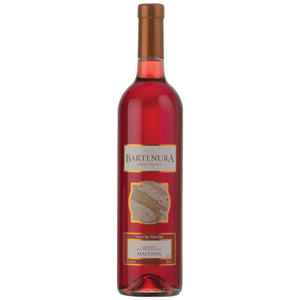

Malvasia turns up on a kosher shelf as one specific thing: a sweet, lightly fizzing red wine, low in alcohol, served cold. People find it next to the blue bottle and have no idea what they are looking at, because almost everything they know about red wine says it should be dry, still and room temperature.
It is none of those. That is the whole appeal.
Malvasia is a family, not one grape
Malvasia is a very old group of related grape varieties grown all over the Mediterranean, in Italy, Greece, Croatia, Spain and Madeira. Some are white, some are pink-skinned, some are red. The name comes from Monemvasia, a fortified town in southern Greece that shipped the wine across medieval Europe. Shakespeare's "malmsey" is the same word worn down by English mouths.
So "Malvasia" on a label does not tell you one grape the way "Merlot" does. It tells you a family. What matters is what the producer did with it, and in the sweet sparkling style that reaches America the answer is consistent.
What Malvasia di Casorzo is
If you have searched for this wine you probably typed Malvasia di Casorzo, and it is worth knowing what those words mean. Casorzo is a village in Piedmont, in northwest Italy, near Asti. Malvasia di Casorzo is a protected Italian appellation for a sweet, gently sparkling red made from a dark-skinned Malvasia, and it is a close cousin of Brachetto and of the Moscato tradition that produced Asti.
It is a regional specialty, not a mass category. The style is the point: low alcohol, a soft fizz, red fruit, and a floral rose-petal lift that you notice before you taste anything.
The bottle on our shelf
Bartenura Malvasia is the red sister to the blue bottle, and it is the one almost everybody means.
It pours bright ruby, sits at 5% alcohol, and has a soft sparkle rather than a Champagne-style pressure. Ripe strawberry, red cherry and rose petal on the nose. Sweet and light across the palate, with a clean berryish finish. OU on the listing.
Five percent matters more than it sounds. That is roughly a third of a normal red. A glass at a kiddush or at the end of a long Shabbos lunch does not land the way a Cabernet does, which is exactly why it gets poured at eleven at night and at tables where people are still making l'chaims.
How to serve it
Cold. As cold as you would serve the Moscato, straight from the refrigerator, and over ice at the end of a meal is not a crime. Warm, the sweetness goes thick and the fizz goes flat.
Use a white wine glass, not a big red bowl. You want the aroma concentrated and the wine to stay cold in your hand.
With food it belongs at the end: fruit, cheesecake, chocolate. A sweet red next to milk chocolate is one of the easiest pairings there is, and we went through the rest of them in what wine goes with chocolate.
Is Malvasia the same as Moscato?
No, and the difference is simple. Moscato is made from the Muscat grape, Malvasia from the Malvasia family. They land in the same place because they are made the same way, fermentation stopped early so sugar and a little carbon dioxide stay in the bottle, which is why both come out sweet, fizzy and low in alcohol.
In the glass, Moscato leads with peach, orange blossom and grape. Malvasia in this style leads with strawberry, cherry and rose. If you like one you will very likely like the other.
We covered the sweetness question properly in is Moscato sweet, and whether Moscato is white or red in is Moscato white or red.
If you like it, these are the neighbors
| Bartenura Malvasia | See today's price | Sweet sparkling red, 5%. The benchmark. |
| Teperberg Sweet Red Moscato | See today's price | The Israeli red Moscato. Juicier, less floral. |
| Zion Red Moscato | See today's price | Sweet red, the cheapest way in. |
| Rashi Black Muscat | See today's price | Semi-sweet, darker and more grapey. |
| Farbrengen Melody Natural Sweet Red | See today's price | Still, not fizzy. Sweet red at its plainest. |
Bartenura makes more than the blue bottle, and the Malvasia is the proof. The full family, Moscato, Asti, Prosecco, Sparkling Rosé and this one, is laid out in our Bartenura brand guide.
Who should buy it
Buy the Malvasia if you are feeding a table where half the room says they do not like red wine, if you want one bottle that works for both kiddush and dessert, or if you want something that will make people ask what it is. It is a low-risk way to surprise a room.
Do not buy it expecting a dinner red. It will not stand up to brisket and it is not trying to.
More in kosher Moscato, the wider Italian red wine shelf, and the best sweet whites if the sweet end is where you live.
Free shipping on orders $150+ in the lower 48.