
What Is Pinotage?
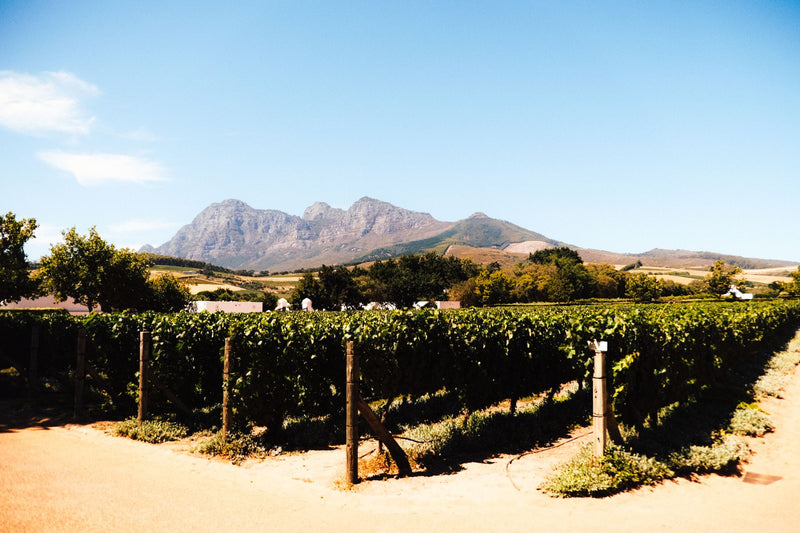
Pinotage is South Africa's own red grape, and it is the most argued about variety in wine. People who love it love it loudly. People who hate it describe burnt rubber and nail polish. Both camps are describing real bottles, which is the confusing part.
The short version: badly made Pinotage is genuinely unpleasant, well made Pinotage is a smoky, blackberry filled, medium bodied red that costs less than its quality suggests, and the kosher bottles on our shelf are all in the second camp. Here is the grape, the history, and the three bottles worth knowing.
Where it came from, and why nobody else grows it
In 1925 Abraham Perold, the first professor of viticulture at Stellenbosch, crossed Pinot Noir with Cinsault. He was after a wine with the perfume and elegance of Pinot Noir and the toughness of a grape that could actually survive a Cape summer. Pinot Noir is famously fragile. Cinsault was the Cape workhorse, and at the time South Africans called it Hermitage.
Pinot plus Hermitage gives you Pinotage. That is the entire etymology.
Perold planted four seeds in his garden and then moved house, and the story goes that the seedlings were nearly cleared away by a groundskeeper before somebody rescued them. The first commercial bottling did not appear until the early 1960s. South Africa has roughly 90% of the world's plantings to this day, which is why Pinotage is shorthand for South African wine the way Malbec is for Argentina.
What it tastes like
Blackberry and dark plum up front, then smoke. The smoky, slightly savory note on the back of the palate is the grape's signature and it shows up whether or not the wine ever saw oak. Alongside it you often get a dusting of coffee or cocoa, and a warm, earthy quality that older textbooks politely call rustic.
Body is medium to medium full. Tannins are present but rounded, nothing like the wall of grip you get from a young Cabernet. Acidity sits in the middle. It is an easy wine to drink without being a sweet or simple one.
| If you like | Pinotage will feel |
|---|---|
| Merlot | Similar weight and softness, but smoky and darker fruited |
| Zinfandel | Close relative in spirit. Ripe dark fruit, less sweetness, more smoke |
| Pinot Noir | Its parent, but Pinotage is darker, heavier and far less delicate |
| Shiraz | Comparable savory weight, with coffee and smoke instead of black pepper |
What is Pinot Noir covers the parent grape, and it is worth reading just to see how little the child resembles it.
The three kosher Pinotages to know
Kosher Pinotage is not a crowded category, which makes the choice simple.
Cape Jewel Pinotage at $15.99 is the one to start with. Western Cape fruit, clean and fruit forward, ripe blackberry with a curl of woodsmoke on the finish, and it carries both OU and CRC. For a grape that has a reputation for going wrong, getting it this clean at this price is the whole argument.
J. Folk Pinotage at $19.99 is the friendliest of the three. Red cherry and plum, silky through the middle, none of the polarizing smoky notes the grape can throw. If somebody at your table has been burned by a bad Pinotage before, this is the bottle that changes their mind.
Sydney Back Pinotage at $19.99 is the serious one. This is Backsberg's kosher label, grown in Paarl and aged in oak, and it gives you the full version of the grape: concentrated blackberry, real smoke, tobacco, grippy but rounded tannins and that earthy warmth only Pinotage does. Beth Din of South Africa and OU.
Every one of them is mevushal
This is the part that matters more than the tasting notes. All three are mevushal, and so is most kosher South African wine.
That makes Pinotage one of the most useful reds you can buy for a function. A mevushal bottle can be opened and poured by anybody, which is the whole problem a caterer, a hall, a shul kiddush or a sheva brachos is trying to solve. The usual mevushal shortlist is a short one, and most of it is Cabernet or Merlot. A smoky South African red at $15.99 to $19.99 gives the table something it has not had before without costing more.
Mevushal vs non mevushal explains what the process is, what it does to the wine, and when you actually need it.
The rest of the Cape shelf
If the Pinotage lands, the rest of the South African rack is built the same way: honest fruit, modest prices, mevushal. Sydney Back Merlot at $19.99 and J. Folk Shiraz at $19.99 are the two reds to try next, and on the white side the Cape's real specialty is Chenin Blanc: Cape Jewel Reserve Chenin Blanc at $15.99 and J. Folk Chenin Blanc at $19.99.
The full Cape Jewel range runs across nine bottles, almost all at $15.99.
How to serve it, and what to eat with it
Serve it around 62 to 65 degrees. Pinotage shows its smoke best slightly cool, and a warm glass pushes the earthy side forward in a way that does it no favors. Twenty minutes in the fridge before dinner is enough.
It does not need decanting, though the Sydney Back opens up over an hour.
Food is where the grape earns its keep. Smoke goes with smoke: grilled meat, barbecue, a roast with a hard sear on it, brisket, lamb chops, burgers, anything off a fire. It also handles spice better than most reds, so it works with a Moroccan or South African style stew. What wine goes with steak and what wine goes with cholent both apply directly.
If you are putting together a case under twenty dollars a bottle, the best kosher wine under $20 is where this sits, and the best red wine for beginners is the softer end of the same shelf. Browse all kosher red wine to go wider. Free shipping on orders $150+ in the lower 48.