
What Wine Goes With Cholent?
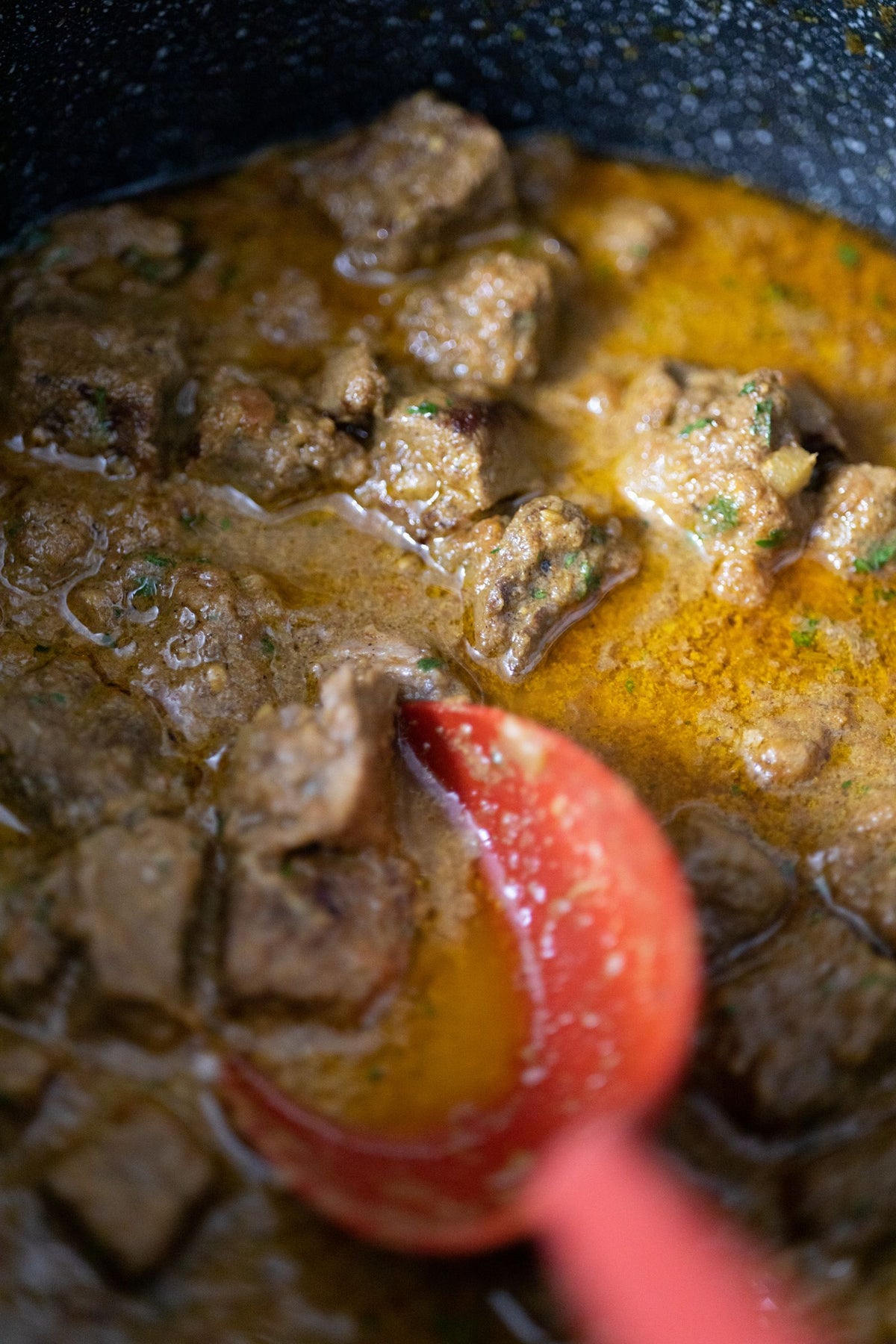
Cholent needs a big, fruity, low-acid red, and it needs it slightly cool. Almost everything else you would happily drink on Friday night gets steamrolled by it.
This is the one meal of the week where the food is genuinely harder on the wine than the wine is on the food, and most people never think about it. The Friday night bottle gets all the attention. Shabbos day gets whatever is left open on the counter, which is usually the wrong wine served at the wrong temperature.
Why cholent is so hard to pair
Four things are working against you at once.
It is fatty. Flanken, marrow bones, kishke, chicken thighs and a long cook time mean there is fat coating your mouth before the wine ever arrives. Fat softens tannin, which sounds good until you realise it also flattens anything delicate into nothing.
It is salty. Salt makes a wine taste more bitter and more acidic than it is. A sharp, high-acid red that tastes lively on its own turns thin and sour next to a salty bowl.
It is starchy and sweet. Beans, barley, potatoes and often a spoon of honey or ketchup in the pot. That background sweetness makes a bone-dry, tannic red taste harsh by comparison.
It has been cooking for eighteen hours. Every flavour in it is deep, round and browned. Nothing in the bowl is bright. A wine built on freshness has nothing to answer with.
What to look for instead
The wine has to be as loud as the food. Three things to aim for:
Fruit forward. Ripe, jammy, obvious fruit. Blackberry, plum, black cherry. It needs to survive being eaten alongside something that tastes of gravy.
Full bodied but soft. Weight without a wall of tannin. Big tannin plus salt plus fat is a fight nobody wins.
Moderate acid. Enough to cut the fat, not so much that the salt turns it sour.
In grape terms that points straight at Shiraz, Zinfandel, Petite Sirah and Mediterranean red blends of Grenache, Syrah and Mourvedre. All four are ripe, generous and built on fruit rather than structure.
What not to open
Pinot Noir is the classic mistake. It is a beautiful grape and it disappears completely into a bowl of cholent. Same for a light, high-acid Chianti unless there is real tomato in the pot, and for anything crisp and white.
A big, tannic, young Cabernet Sauvignon Reserve is the other mistake, in the opposite direction. It has the weight, but the tannin turns rough against the salt. Save it for a steak, where our steak pairing guide explains why it works.
Mevushal matters more at the day meal
Friday night is usually family. Shabbos day is when the crowd shows up: guests, kids, the shul kiddush, people you have never met pouring for themselves at the other end of the table.
If there is any chance of that, buy mevushal. It is flash-heated at the winery, which means it stays kosher no matter who handles the bottle. The quality gap that used to exist between mevushal and non-mevushal has largely closed, and most of the bottles below are mevushal for exactly this reason. mevushal vs non-mevushal covers the full picture if you want it.
Serve it cooler than the room
This is the single easiest fix and almost nobody does it.
The dining room on Shabbos day is warm. The cholent is hot. A red wine sitting on that table all morning is somewhere near seventy-five degrees, and at that temperature the alcohol dominates and the fruit goes flat and syrupy.
Put the bottle in the fridge for twenty minutes before the meal. Sixty to sixty-five degrees is the target. The difference is not subtle, and should you refrigerate red wine makes the case at length.
Ten bottles that hold up
| Bottle | Why it works |
|---|---|
| Weinstock Red Blend | Semi-dry, soft, mevushal. The safest bottle for a mixed table |
| Teal Lake Shiraz | Australian Shiraz, jammy and warm, mevushal. Built for this |
| Barkan Classic Shiraz | Galilee Shiraz, ripe and peppery, mevushal. Best value on the list |
| Baron Herzog Old Vine Zinfandel | Lodi Old Vine Zinfandel, mevushal. Jammy enough to beat the gravy |
| Teperberg Vision Shiraz | Judean Foothills Shiraz, dry and dark, Badatz |
| Binyamina Yogev Cabernet Shiraz | Cabernet Shiraz blend, mevushal. Weight from the Cab, fruit from the Shiraz |
| Carmel Private Collection Shiraz | Private Collection Shiraz, mevushal. The reliable middle of the road |
| Jezreel Valley Alfa | Argaman and Carignan, mevushal. Rustic and earthy, cholent's natural partner |
| Gush Etzion Spring River G.S.M. | Grenache Syrah Mourvedre from Gush Etzion. Herby and full |
| Mony Petite Sirah Reserve | Petite Sirah Reserve, inky and thick. The biggest wine here |
If you want one bottle and no thinking, take the Barkan Classic Shiraz. Fifteen dollars, mevushal, ripe enough for the pot and good enough that nobody asks what it is.
What about a bottle for the whole table
Cholent is a crowd food, so plan for volume rather than one special bottle. The wines under $20 shelf is the right place to shop, and Shabbos wines is built for exactly this meal. If you are counting for a big kiddush, how many glasses are in a bottle does the arithmetic.
And the whiskey question
Plenty of people never touch wine with cholent, because the kiddush club got there first. A peaty single malt against a bowl of cholent is a real pairing, not a joke: the smoke and the browned meat pull in the same direction, and the alcohol cuts the fat in a way no wine can.
If that is your table, what peated Scotch is explains why it works, and single malt vs blended covers the shelf.
The short version
Go big and fruity, not fine and structured. Shiraz, Zinfandel, Petite Sirah or a Mediterranean blend. Buy mevushal if guests are pouring. Chill it twenty minutes before you sit down. Then stop worrying about it and have another portion.
For the wider rules, wine and food pairing, simplified and pairing kosher wine with meat cover the rest of the table.