
Pairing Kosher Wine With Meat: A Practical Guide
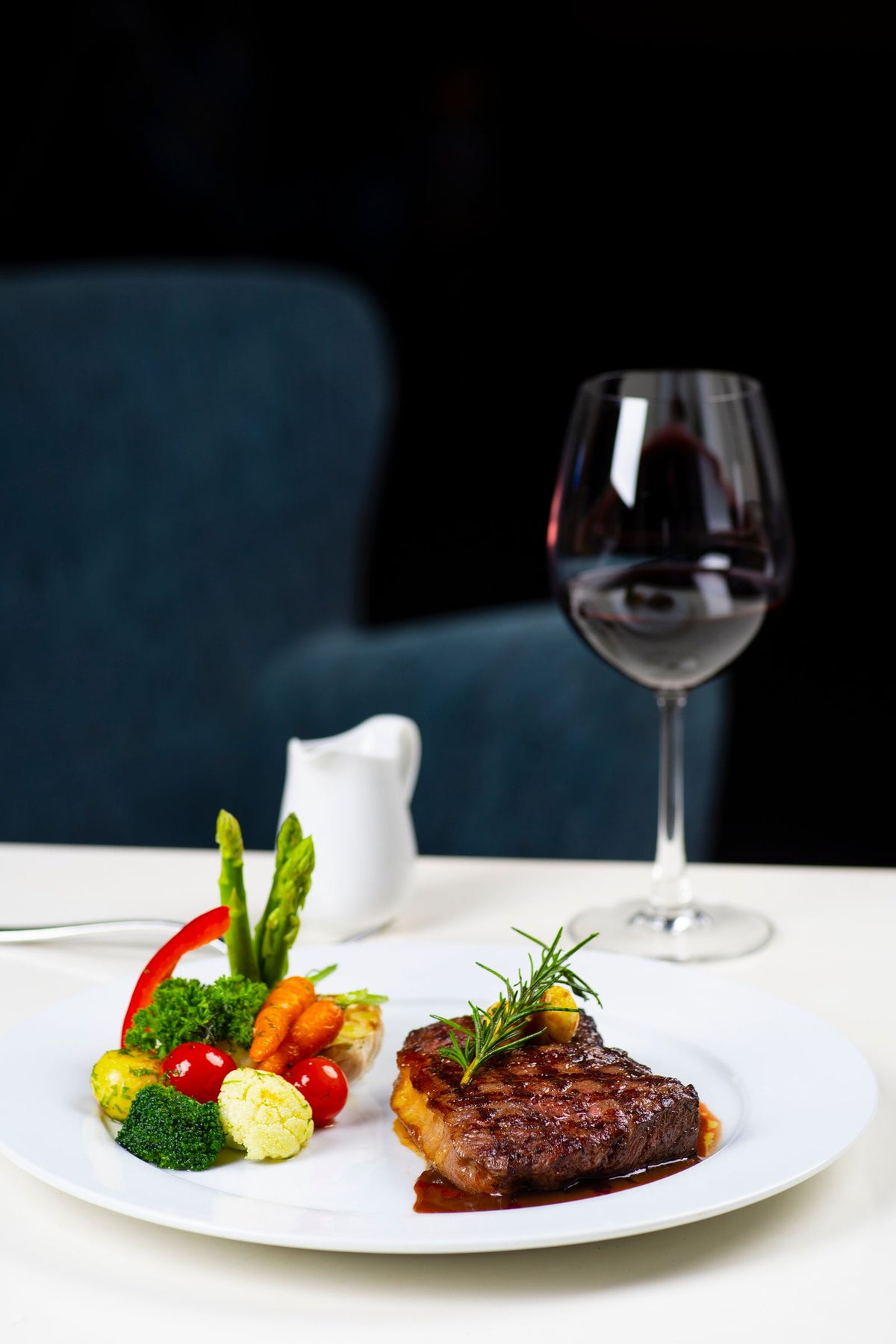
Match the weight of the wine to the weight of the meat, and match its acidity to the fat. A brisket wants a soft, generous red. A rare steak wants tannin and structure. Roast chicken wants something lighter than most people pour. That is nearly the whole discipline.
Fleishig pairing has one advantage over the way most wine writing is done: there is no cheese to hide behind. No dairy course, no butter sauce, no cream to smooth over a mismatch. It is meat, salt, fat and heat, and the wine either meets it or it does not.
The two rules that do the work
Weight matches weight. A delicate wine under a heavy dish disappears. A heavy wine over a delicate dish flattens it. Before you think about grape, think about how substantial the plate is.
Tannin cuts fat. Tannin is the drying grip you feel on your gums from a big red. Against a fatty cut it stops feeling harsh, because the fat softens it and it clears the palate for the next bite. This is why Cabernet and steak is not a cliché but a mechanism. It is also why the same Cabernet feels aggressive next to plain roast chicken.
Everything below is those two rules applied.
The pairing table
| Dish | Pour | Why |
|---|---|---|
| Brisket, cholent, short ribs | Soft Cabernet or Merlot | Slow-cooked and sweet-edged, wants fruit not grip |
| Steak, rib eye, London broil | Structured Cabernet | Fat and char need tannin to cut through |
| Roast chicken | Light red or full white | Lighter than people expect, big reds bury it |
| Lamb | Syrah or a herbal Cabernet | The gaminess wants something savory back |
| Deli, pastrami, corned beef | Juicy, low-tannin red | Salt and spice, so keep the tannin down |
| Grilled or barbecued | Fruit-forward red | Char and smoke want ripe fruit opposite them |
Brisket, and why most people over-buy for it
Brisket is the dish people reach for their best bottle for, and it is usually the wrong call. A long-braised brisket is soft, a little sweet from the onions and whatever went into the pot, and it has no sharp edges left. A serious structured Cabernet has nothing to push against, and it ends up tasting austere next to the sweetness.
What works is generous fruit and moderate tannin. Herzog Lineage Cabernet Sauvignon (750ml) at $19.99 is built for this table: ripe, round, easygoing, without the grip that fights a braise. It is also priced so that you can open two.
At the value end, Baron Herzog Jeunesse Cabernet Sauvignon (750ml) at $13.49 does the same job with a softer edge. For a Friday night where the wine is one part of a long meal rather than the event, it is honestly enough.
Steak, where you should spend
This is the pairing that rewards a better bottle. A rare rib eye has fat, char and salt, and all three want tannin against them. Here the structured wine that felt austere next to brisket comes alive.
Dalton Single Vineyard Cabernet Sauvignon Meron (750ml) at $39.99 has the backbone for it, with dark fruit and a firm, dusty finish that resets your palate between bites. Adir Kerem Ben Zimra Cabernet Sauvignon (750ml) at $39.99 sits at the same price with a slightly more herbal, savory profile, which suits lamb even better than beef.
If it is a real occasion, Shiloh Secret Reserve Cabernet Sauvignon (750ml) at $46.99 is the step up. Note that it is non-mevushal, so keep it for a table where you control the pouring.
The mistake nobody warns you about
Roast chicken is not a red-wine dish by default, and Friday night pours it a Cabernet anyway. Chicken is lean, mild and often lemony or herbed, and a big red simply sits on top of it. A lighter red served slightly cool, or a full-bodied white, does far more for the plate.
The other quiet mistake is temperature. Room temperature in a warm dining room is too warm for red wine, and warm red tastes flabby and alcoholic. Twenty minutes in the fridge before the meal fixes more bad pairings than changing the bottle would. We cover this in do you refrigerate red wine.
If you are buying one bottle for a mixed table
Buy a soft, fruit-forward Cabernet in the $20 range. It will not be the perfect match for anything on the table and it will be a good match for all of it, which at a Shabbos table with six dishes is the smarter goal. Perfection is for two people and one dish.
More on the grape itself in what is Cabernet Sauvignon, the broader principles in wine and food pairing basics, and the full range on the red wine shelf.
Frequently asked questions
What wine goes with brisket?
A soft, fruit-forward Cabernet or Merlot. Brisket is slow-cooked and slightly sweet, so a heavily structured wine tastes austere next to it. Herzog Lineage Cabernet at $19.99 is a reliable match.
What red wine goes best with steak?
A structured Cabernet Sauvignon. The tannin cuts the fat and char, which is the whole mechanism behind the pairing. Dalton Meron or Adir Kerem Ben Zimra both work at around $40.
Can you drink white wine with meat?
With chicken and lighter poultry, yes, and often it is the better choice. With beef and lamb a red will usually serve you better, because white wine has no tannin to cut the fat.
Does kosher wine pair differently from other wine?
No. The grape, the structure and the weight behave the same. The only practical difference is whether a bottle is mevushal, which affects handling at the table rather than taste.
What one bottle works for a whole Shabbos table?
A soft Cabernet around $20. It will not be perfect with any single dish but it will be good with all of them, which is what a table with six dishes actually needs.
Weight to weight, tannin against fat, and chill the red a little more than feels right. The rest is dinner.