
What Is Chianti? Italy's Everyday Red, Explained
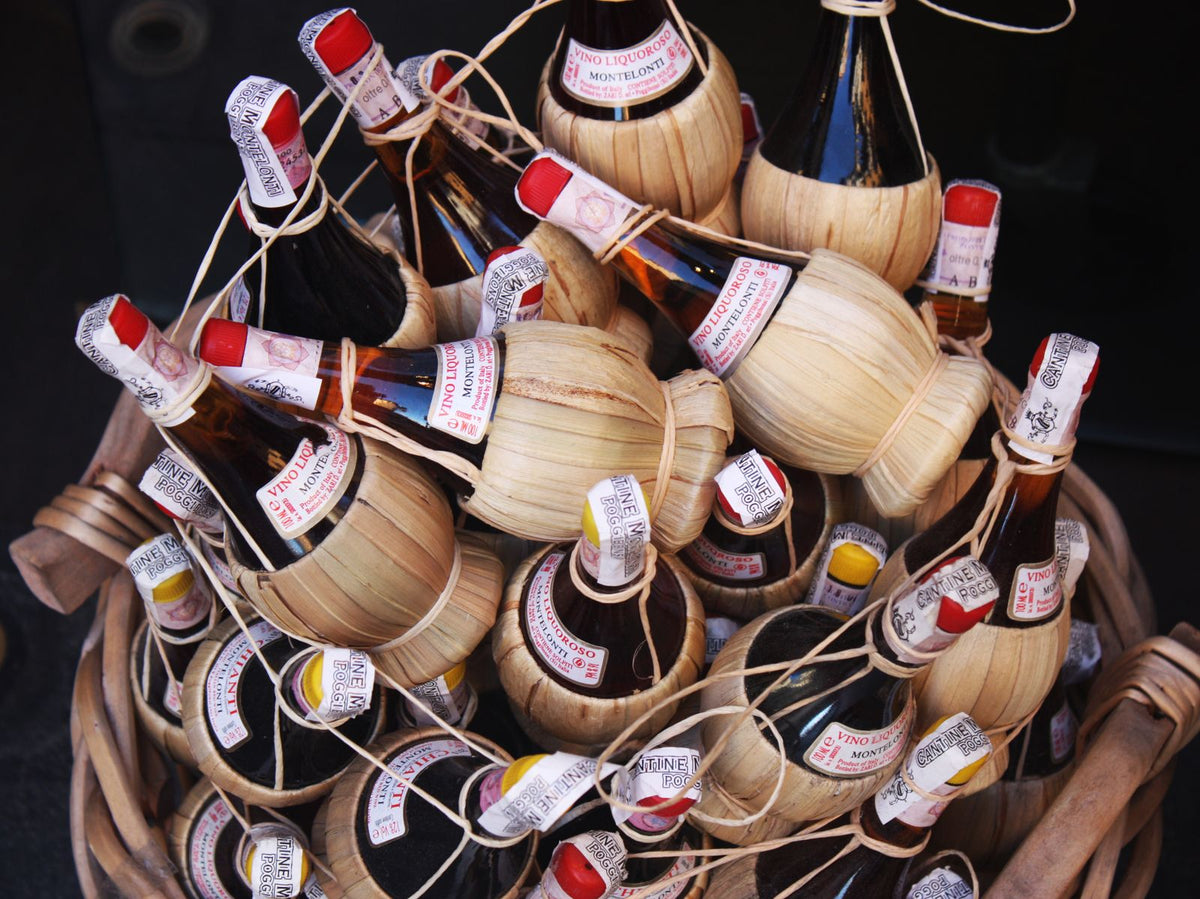
Chianti is a place, not a grape. That one fact clears up most of the confusion around it. The grape inside the bottle is Sangiovese; Chianti is the stretch of Tuscany between Florence and Siena where it is grown.
It is the red most people have already tasted without knowing what it was, usually next to a plate of pasta, and it is one of the best value reds on any shelf.
What Chianti tastes like
Sour cherry is the signature. Not sweet cherry, sour cherry, the kind that makes your mouth water. Around it you get dried herbs, a little tomato leaf, sometimes leather or earth in the older bottles.
What sets it apart from most New World reds is the structure. Chianti is high in acid and firm in tannin, and it is not especially fruity. On its own it can taste lean, even a bit severe. Put food in front of it and it transforms, which is the whole point of the wine.
If you like Cabernet Sauvignon for its grip but find it heavy, Chianti is the lighter, brighter cousin. If you like Merlot for being soft and round, Chianti will feel sharp by comparison.
Reading the label: Chianti, Classico, Riserva, DOCG
The words on a Chianti label are not marketing. Each one narrows down where the wine came from and how long it was aged.
| On the label | What it actually means |
|---|---|
| Chianti | The wide zone. Mostly Sangiovese, made to drink young |
| Chianti Classico | The original historic heartland, a smaller area with stricter rules |
| Colli Senesi and other sub-zones | A named district inside the wider zone, often better than plain Chianti |
| Riserva | Aged longer before release, usually deeper and firmer |
| DOCG | Italy's top tier of origin law, with rules on grape, yield and ageing |
In plain terms: Classico is the better postcode, Riserva is the longer wait, and DOCG is the guarantee that somebody checked. None of them is a promise of a great bottle, but together they tell you what kind of wine you are holding.
The straw basket
The round bottle in a woven straw jacket is the fiasco, and it is the most recognisable wine packaging ever made. It was a practical thing once, because the glass was hand blown with a round bottom and the straw let it stand up.
By the middle of the last century it had become shorthand for cheap Chianti in restaurants, and serious producers dropped it for exactly that reason. Today the good bottles come in a standard Bordeaux shape. If you see a fiasco now, it is usually nostalgia rather than a quality signal.
What to eat with Chianti
Chianti is the classic tomato wine, and that is not a coincidence. Tomato sauce is acidic, and a low acid wine tastes flat and flabby next to it. Chianti has acid to spare, so the two meet as equals.
Pasta with a red sauce, meatballs, pizza, lasagne, eggplant, grilled meat with rosemary, roast chicken with herbs. It is also excellent with a cholent that has tomato in it, and it handles a spice rub better than a soft red would. For the bigger picture, see wine and food pairing, simplified.
Serve it slightly cool, around sixty degrees, not room temperature. A warm room makes the alcohol stand out and dulls the cherry note that makes the wine worth drinking.
Kosher Chianti worth buying
The kosher Chianti shelf has grown a lot, and it now runs from ten dollar weeknight bottles to real Chianti Classico.
Start with Bartenura Ovadia Estates Chianti Colli Senesi DOCG at about fourteen dollars. Colli Senesi is a named sub-zone near Siena, so you are getting a step above generic Chianti for very little extra. Borgo Bella Chianti around sixteen dollars is the straightforward everyday version, and Cantina Gabriele Chianti sits in the same bracket.
For Classico, Terra di Seta Chianti Classico at around twenty four dollars is the benchmark; the estate sits inside the Classico zone and makes nothing else. Casa Al Vento Aria Chianti Classico DOCG is the other one to know at a similar price, and Cantina Giuliano Chianti DOCG around twenty two dollars is a small producer worth trying.
If you want the Tuscan character without the Chianti name, Bartenura Rosso Toscano at about eleven dollars is the cheapest way in. More from that producer in our Bartenura guide.
Browse the full Sangiovese and Chianti selection, or the wider Italian red wine range.
Chianti in one line
It is a high acid, sour cherry red from Tuscany that is unremarkable on its own and excellent with food. Buy it for a meal, not for sipping, and it will outperform bottles at twice the price. If you are still working out which reds suit you, our beginner's guide to red wine is the place to start.