
How Many Glasses Are in a Bottle of Wine?
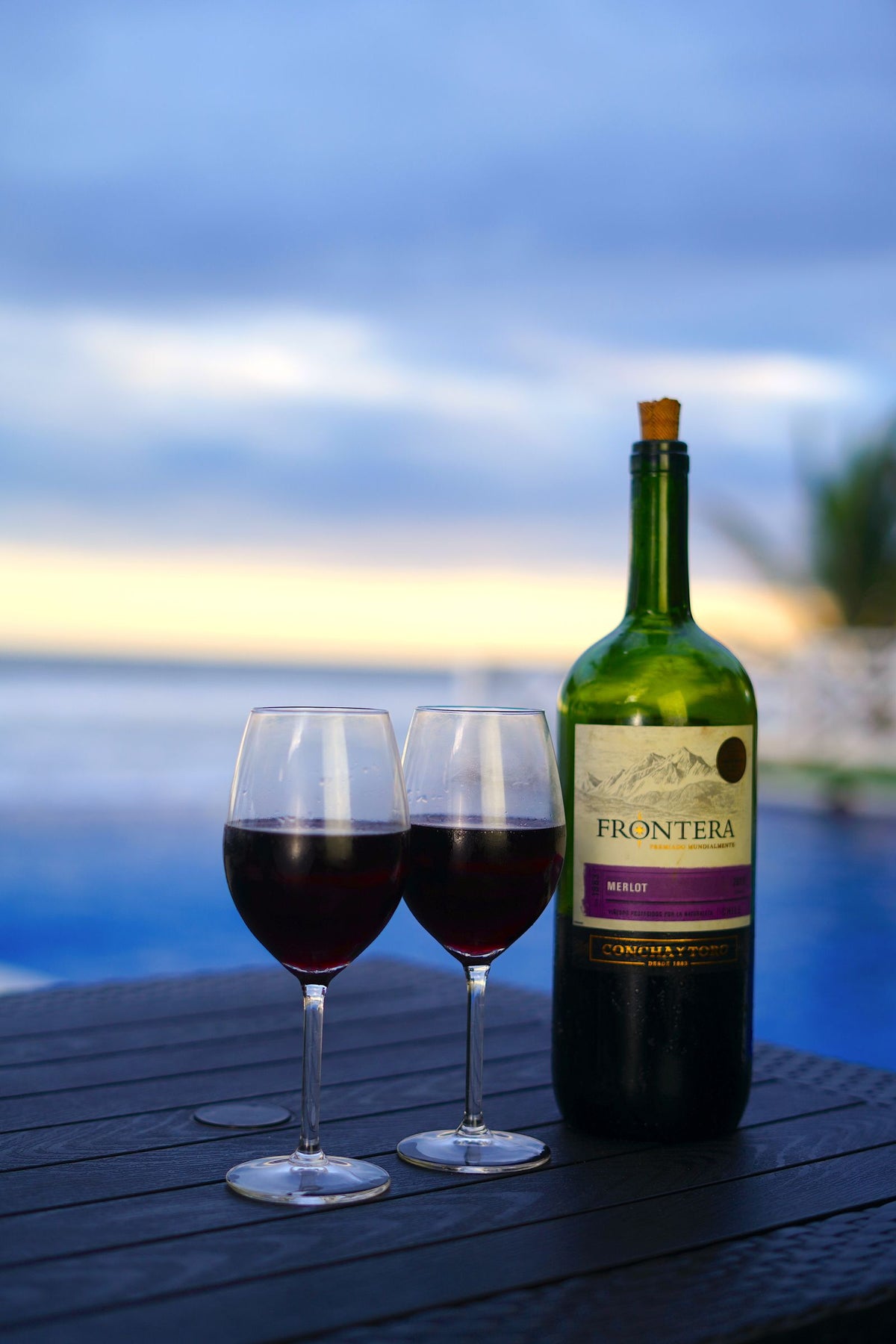
A standard 750ml bottle of wine holds five glasses. That is five pours of five ounces each, which is the standard serving size, and it is the number to plan every table around.
Restaurants will tell you four, because a restaurant pours six ounces. A generous host at a long Shabbos table will get three. The bottle has not changed. Only the hand holding it has.
How many glasses are in a bottle of wine?
A 750ml bottle contains just over 25 ounces of wine. Divide by the pour and you get your answer.
| Bottle size | Total volume | Glasses at 5 oz | Common name |
|---|---|---|---|
| 187ml | 6.3 oz | 1 | Split |
| 375ml | 12.7 oz | 2 to 3 | Half bottle |
| 750ml | 25.4 oz | 5 | Standard |
| 1.5L | 50.7 oz | 10 | Magnum |
| 3L | 101 oz | 20 | Double magnum |
The number changes with what you are drinking, though, and this is where most planning goes wrong.
Does the type of wine change how many glasses you get?
Yes, significantly, because the correct pour is different for each style.
- Still wine, red or white. Five ounces. Five glasses per bottle.
- Sparkling. Four ounces into a flute. Six glasses per bottle.
- Dessert and late harvest. Two to three ounces. Eight to twelve glasses per bottle.
That last line is the one people never account for, and it changes the math completely. A single bottle of Herzog Late Harvest Chenin Blanc serves a table of ten after dinner without anyone feeling shorted, because dessert wine is poured into a small glass by design. One bottle is a whole course.
The same works in reverse with bubbles. Bartenura Prosecco Brut gives you six flutes rather than five, which is exactly why sparkling is the efficient choice for a toast where everyone needs a glass in hand at the same moment.
How many bottles do you need for your table?
The working rule: half a bottle per drinking adult for a meal, which is two to three glasses each. Round up, never down.
So for eight people who drink, four bottles. For twelve, six. This assumes a meal of real length, food on the table, and people talking rather than drinking quickly.
Adjust for the room. A crowd that mostly takes one polite glass needs far less. A long yom tov meal that runs four hours needs more, because consumption tracks time at the table more than it tracks anything else.
For a full simcha rather than a family meal, the arithmetic gets more involved, and our simcha wine planning guide works through the whole calculation.
When the large format is the smarter buy
A 1.5L bottle is two standard bottles in one piece of glass, and for a long table it is the better decision for reasons that have nothing to do with price.
You open once instead of twice. The wine stays consistent from the first pour to the last. And a big bottle on a table reads as abundance, which matters more at a yom tov meal than most people admit. Kesser Eminent Semi-Dry (1.5L) pours ten glasses and sits in the middle of the table like it belongs there.
Large format also tends to cost less per ounce, which is a quiet argument for buying one big bottle instead of two small ones when the wine is going to be finished either way.
When the half bottle is the smarter buy
Two glasses is sometimes exactly the right amount, and a half bottle stops you from opening 750ml you will not finish.
It is the honest answer for a table of two, for a weeknight, and for anyone who wants the wine without the leftover. If you do end up with half a bottle, it keeps better than most people assume, and our guide to how long wine lasts after opening explains how long you have. Bartenura Moscato (375ml) is the version of this that gets bought most, because sweet wine is often what one or two people at a table want while everyone else is drinking something dry.
How many glasses for kiddush?
Kiddush requires a revi'is, and the exact volume of a revi'is is a matter of differing halachic opinions, so the number of kiddush portions in a bottle depends on which shita you follow. Ask your rav rather than a wine article.
The practical takeaway for buying: kiddush pours are typically larger than a tasting pour and smaller than a full glass of wine, so a bottle covers a good number of them. If you are stocking for a shul or a large table, buy on the assumption of fewer portions per bottle rather than more.
What is a standard pour, really?
Five ounces, which is less wine than most people's instinct. Poured into a normal wine glass it looks modest, and that is correct. The glass is oversized on purpose, so the wine has room to open and so you can swirl without wearing it.
If you want a reliable calibration, pour five ounces of water into your usual glass once and look at where it sits. Most people are pouring seven or eight without knowing it, which is why the bottle keeps running out at three glasses.
An easy everyday bottle to practice on is Baron Herzog Jeunesse Cabernet Sauvignon, soft and dark and priced so that using one bottle to learn your own pour is not an expensive lesson.
Frequently asked questions
How many glasses of wine are in a 750ml bottle?
Five, at the standard five-ounce pour. Six if it is sparkling served in flutes, and eight to twelve if it is a dessert wine served in small glasses.
How many bottles of wine for 20 guests?
Around ten bottles for a full meal, assuming most guests drink. Reduce it if a meaningful share of the room does not, and increase it if the meal will run long.
Is a bottle of wine a lot for one person?
A full bottle is five standard servings, which is well beyond a single sitting for most people. Two glasses over a long meal is a normal amount, and that is roughly two fifths of a bottle.
How many glasses in a magnum?
Ten at the standard pour. A magnum is exactly two standard bottles, which makes the planning arithmetic simple.
Why do restaurants pour six ounces?
Because a by-the-glass program is priced around four pours per bottle rather than five. It is a pricing decision, not a serving standard.
Five glasses a bottle, half a bottle a person. Everything else is adjustment.