
Cabernet Sauvignon vs Merlot vs Pinot Noir: A Plain Guide to the Big Three Reds
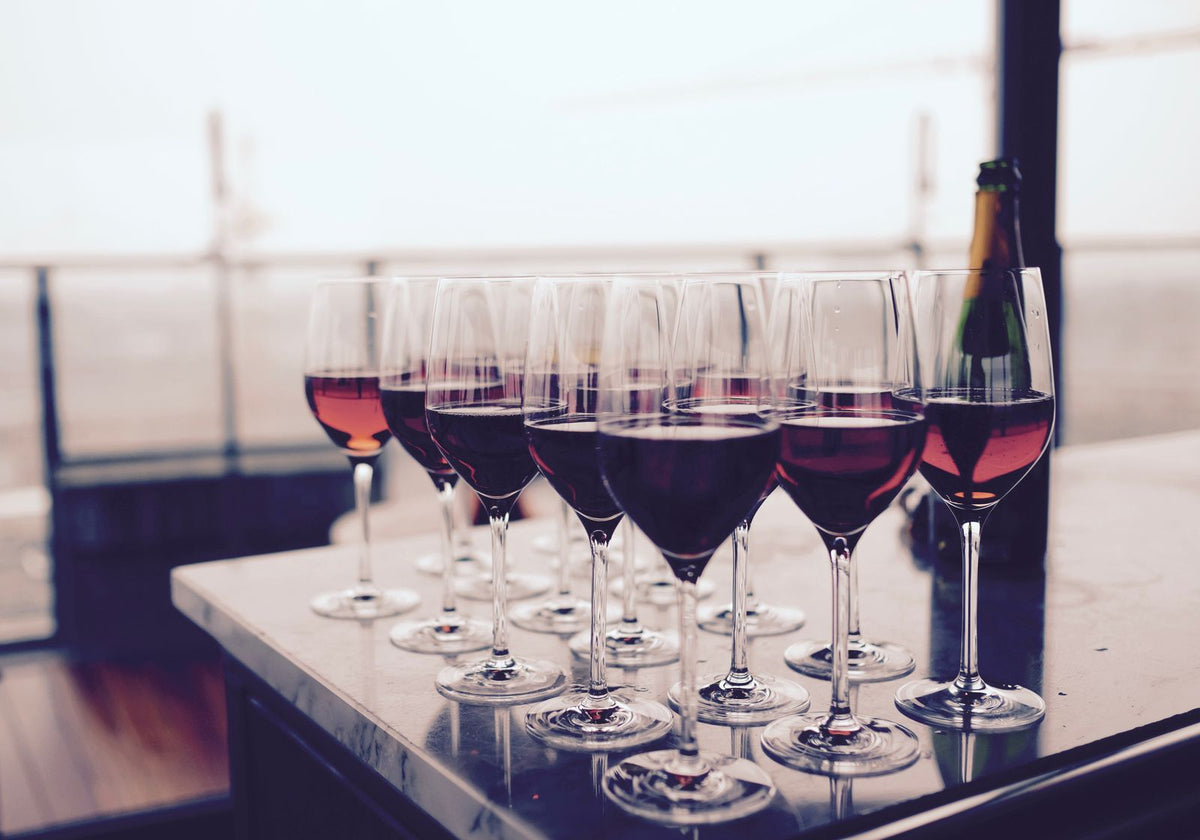
Three grapes account for most of the red wine people actually drink. They are genuinely different from one another, not marketing different, but different in the glass, on the table, and in what they do to a meal.
Here is the short version, then why it works that way.
The one-line answer
Cabernet Sauvignon is the structured one: firm, tannic, built to age.
Merlot is the soft one: plush, round, easy to drink young.
Pinot Noir is the delicate one: light, perfumed, and more about elegance than power.
If you want the crudest possible shorthand: Cabernet has bones, Merlot has flesh, Pinot Noir has perfume.
Cabernet Sauvignon: the structured one

Cabernet berries are small and thick-skinned, and since colour and tannin both live in the skin, that single fact explains most of what Cabernet is. More skin relative to juice means more tannin, deeper colour, and more grip.
Expect blackcurrant and cassis, cedar, tobacco, and often a graphite or pencil-lead note. It is firm rather than fruity, and the tannin gives it a drying quality that makes it feel serious.
That tannin is also why Cabernet ages. Wines that seem tight and unyielding in their youth soften and open over years. This is the grape behind the great Left Bank Bordeaux and the best Napa reds, including Château Pontet-Canet, a Fifth Growth Pauillac, if you want to see what the grape looks like at the very top.
Closer to everyday, Shiloh Secret Reserve Cabernet from the Judean Hills is serious Israeli Cabernet, Adir Kerem Ben Zimra comes from the Upper Galilee, and Herzog Lineage Cabernet is the mevushal California option for a table where someone else may be pouring.
Drink it with: steak, brisket, lamb, anything grilled or roasted. Tannin and protein are made for each other: fatty meat softens tannin, and tannin cuts through fat.
Merlot: the soft one

Merlot is the other half of the Bordeaux story and the grape most unfairly maligned. Larger berries, thinner skins, less tannin, so where Cabernet grips, Merlot yields.
Expect plum, black cherry, and often a chocolate or mocha note. The texture is round and generous, and crucially it is enjoyable young. You do not need to wait for a Merlot to come around.
That approachability is exactly why it gets dismissed by people who equate difficulty with quality. It is also why it is the better choice at a table full of people who do not think of themselves as wine drinkers.
Psagot Merlot from the Judean Hills is French-oak aged and properly built. Shiloh Secret Reserve Merlot is the richer end. Metzuda Merlot Sataf and Domaine Ventura Merlot are both boutique Judean Hills bottlings.
Drink it with: roast chicken, cholent, pasta with meat sauce, softer cheeses. It is the more forgiving food wine of the two.
Pinot Noir: the delicate one

Pinot Noir is the opposite of Cabernet in almost every respect. Thin skins mean pale colour and low tannin. Instead of power you get aromatics (red cherry, raspberry, strawberry) and with age an earthy, forest-floor quality that is the whole reason people chase it.
It is also famously difficult to grow. Thin skins are vulnerable to rot, it buds early and risks frost, and it is unforgiving of heat. That difficulty is a large part of why good Pinot Noir costs what it does.
Burgundy is its home, and Domaine de Montille's Bourgogne is a genuine Côte d'Or example. New Zealand has become the other great source: Goose Bay Small Batch and O'Dwyers Creek are both from Marlborough, the latter mevushal. Hagafen Napa Valley Pinot Noir and Barkan Classic Pinot Noir are the accessible mevushal options.
Drink it with: salmon, turkey, duck, mushrooms, lighter chicken dishes. Pinot Noir is the one red that genuinely works with fish, which makes it the useful bottle when the menu is not meat-heavy.
Why Cabernet and Merlot are almost always blended

This is the part that makes the whole picture click.
Cabernet gives structure, tannin, and the ability to age, but on its own it can feel hollow in the middle and severe when young. Merlot gives flesh, roundness, and immediate pleasure, but on its own it can lack backbone.
Put them together and each covers the other's weakness. That is the Bordeaux blend, and it is arguably the most successful idea in the history of wine: Cabernet-dominant on the Left Bank, Merlot-dominant on the Right.
Israel has adopted it wholeheartedly. Domaine du Castel Grand Vin is the benchmark, Flam Classico is the everyday-serious version, Lewis Pasco BDX is the winemaker-driven take, and Bat Shlomo Betty's Cuvée comes off Mount Carmel. Psagot Edom is the flagship blend from the Judean Hills.
If you are unsure which of the two you prefer, a blend is not a compromise. It is usually the better wine.
Worth a detour: Primitivo, the big red the big three miss

If you like Cabernet's power but want more fruit and less grip, Southern Italy's Primitivo, the same grape California calls Zinfandel, is worth knowing. It delivers dark berry richness at full volume with softer tannins than Cabernet, which makes it a crowd-pleaser at a Yom Tov table.
Masso Antico Le Anfore Primitivo is the standout kosher example: organically grown in Puglia's Salento and aged in crushed-terracotta amphorae alongside French and American oak. It is kosher for Passover, and it has been one of the wines our customers keep coming back for.
So which should you buy?
Meat is the centre of the meal: Cabernet Sauvignon, or a Bordeaux blend.
Chicken, cholent, or a mixed table: Merlot.
Fish, turkey, or a lighter menu: Pinot Noir.
You are buying a gift or something for the cellar: Cabernet. It is the one that rewards keeping.
Guests who say they do not like red wine: Pinot Noir first, Merlot second. Both are far gentler than Cabernet, and tannin is usually the thing people are objecting to without having the word for it.
One last note worth knowing: if someone at your table might be pouring who is not part of your household, check whether the bottle is mevushal. We wrote a full guide to what mevushal means and when it matters, and several of the wines above come both ways.