
Scotch vs Whiskey: Spelling, Grain, and Geography
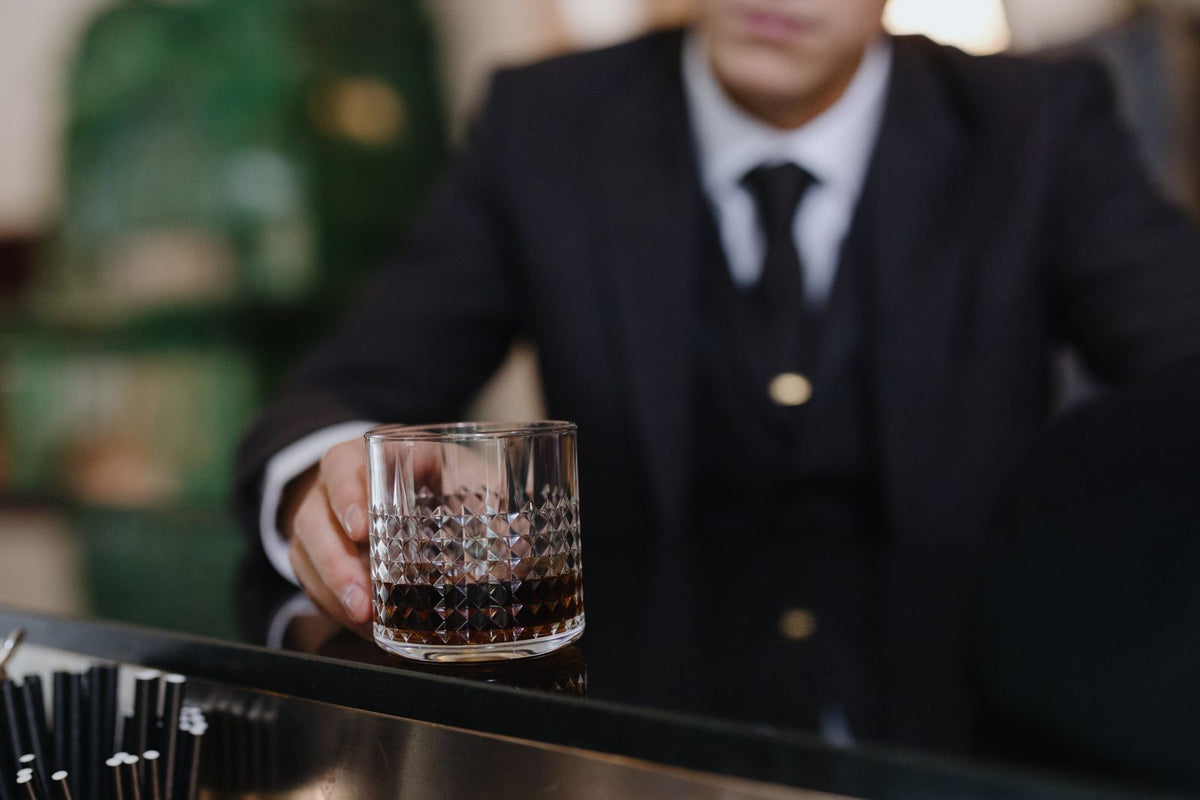
All Scotch is whisky, but only whisky made in Scotland can be called Scotch. The spelling changes too, and the reason for that is geography rather than quality: Scotland drops the e, Ireland and America keep it.
Walk the shelf and you can read a bottle's passport before you read the label. A bottle that says whisky came from Scotland, Canada or Japan. A bottle that says whiskey came from Ireland or the United States. It is a small tell, and it is remarkably reliable.
What makes a whisky a Scotch?
Scotch is not a marketing word. It is protected by law, and the rules are short enough to memorize:
- Made entirely in Scotland. Distilled and matured there, start to finish.
- Aged at least three years in oak casks, in Scotland.
- Made from water, cereals and yeast. Nothing else goes in except water and caramel coloring.
- Bottled at 40% alcohol or higher.
Notice what is missing. There is no rule requiring a new barrel, which is the opposite of American bourbon law. Scottish distilleries are free to reuse casks, and they overwhelmingly do, buying up used bourbon barrels from Kentucky and sherry casks from Spain. That single freedom is why Scotch tastes the way it does.
Whisky or whiskey: which spelling is right?
Both, depending on the country. There is no correct version in the abstract.
| Country | Spelling | Plural |
|---|---|---|
| Scotland | whisky | whiskies |
| Japan | whisky | whiskies |
| Canada | whisky | whiskies |
| Ireland | whiskey | whiskeys |
| United States | whiskey | whiskeys |
A useful trick if you keep forgetting: the countries with an e in their name (Ireland, United States) use the e. It is not the historical reason, but it works every time.
Does Scotch taste different from other whiskey?
Yes, and two things drive it. Barley instead of corn, and used casks instead of new ones.
Barley gives Scotch a cereal and honey backbone where corn gives bourbon its caramel sweetness. And because the cask has already surrendered some of its sugar and vanilla to a previous spirit, Scotch picks up wood more slowly and more subtly. It arrives drier. Glenmorangie Original 10 Year is the clearest teaching bottle for this. Pale, soft, a little vanilla and citrus, and no sugar rush anywhere in it.
Then there is peat, which is Scotland's alone. Some distilleries dry their malted barley over burning peat, and the smoke fixes itself into the grain. It smells like a bonfire on a wet beach. You either love it immediately or you do not, and there is very little middle ground.
The five Scotch regions, and what each one tastes like
Scotland divides its whisky into five legal regions. The boundaries are geographic, and the flavor generalizations are loose, but they are still the fastest way to navigate a shelf.
| Region | Character | Known for |
|---|---|---|
| Speyside | Fruity, honeyed, often sherried | The largest concentration of distilleries |
| Highland | Broad, from floral to full bodied | The biggest region by area |
| Islay | Peated, smoky, coastal | The divisive island style |
| Lowland | Light, gentle, grassy | Easy entry point |
| Campbeltown | Briny, oily, distinctive | The smallest region |
Speyside is where most people should start. Glenlivet 12 Year is the classic entry, orchard fruit and a soft finish, and it explains the whole region in one glass. If you want the sherry cask side of Speyside, Aberlour 12 Year pushes toward dried fruit and spice.
Islay is the other direction entirely. Lagavulin 16 Year is the benchmark peated Scotch, deep and smoky and slow, and it is worth trying once even if you suspect you will not like it. Knowing where your limit is makes every other bottle easier to buy.
Is Scotch better than bourbon or Irish whiskey?
No. It is older in reputation and narrower in flavor, and it asks more of the drinker.
Bourbon is sweeter and more forgiving, which makes it the easier first bottle. Irish whiskey sits in between, softer and rounder. Scotch rewards patience, and it punishes the person who was expecting sweetness. If you are moving over from bourbon, do not start with an Islay. Start Speyside and work outward. Our guide to bourbon vs whiskey lays out how the whole family fits together.
Why does age matter so much on a Scotch label?
Because the number is a promise about the youngest whisky in the bottle, not the average. A 12 year Scotch may contain older whisky, but nothing in it is younger than twelve years.
What it does not promise is quality. Older costs more because the distillery lost a percentage of the barrel to evaporation every year it waited, and because they had to be patient. Wood can also overrun a spirit if it sits too long. An excellent 12 year beats a tired 21 year, and it happens more often than the pricing suggests.
Frequently asked questions
Is Jack Daniel's a Scotch?
No. It is made in Tennessee, so it can never be Scotch regardless of how it is produced. Scotch is a geographic protection first and a style second.
Is Japanese whisky a Scotch?
No, though it is built on the Scottish model. Japanese distillers learned the method in Scotland and use malted barley and similar stills, which is why the two taste like relatives. It still cannot be called Scotch.
What does single malt mean?
Malted barley from one single distillery. It does not mean one barrel, and it does not automatically mean better than a blend. It means the whisky came from one house.
Should Scotch be drunk neat or with ice?
However you enjoy it, though a few drops of room temperature water genuinely open up the aroma. Ice does the opposite, numbing the spirit and closing it down. Try a splash of water first before you reach for the ice.
Is Scotch kosher?
It depends on the bottle and the cask, and it is a real question rather than a formality, since many Scotches are finished in wine casks. Our guide to whether your whiskey is kosher covers what actually needs checking before you buy.
Read the spelling, then read the region. Two glances and you already know most of what the bottle is going to do.