
What Is Margaux Wine? Giscours, Lascombes and Labegorce
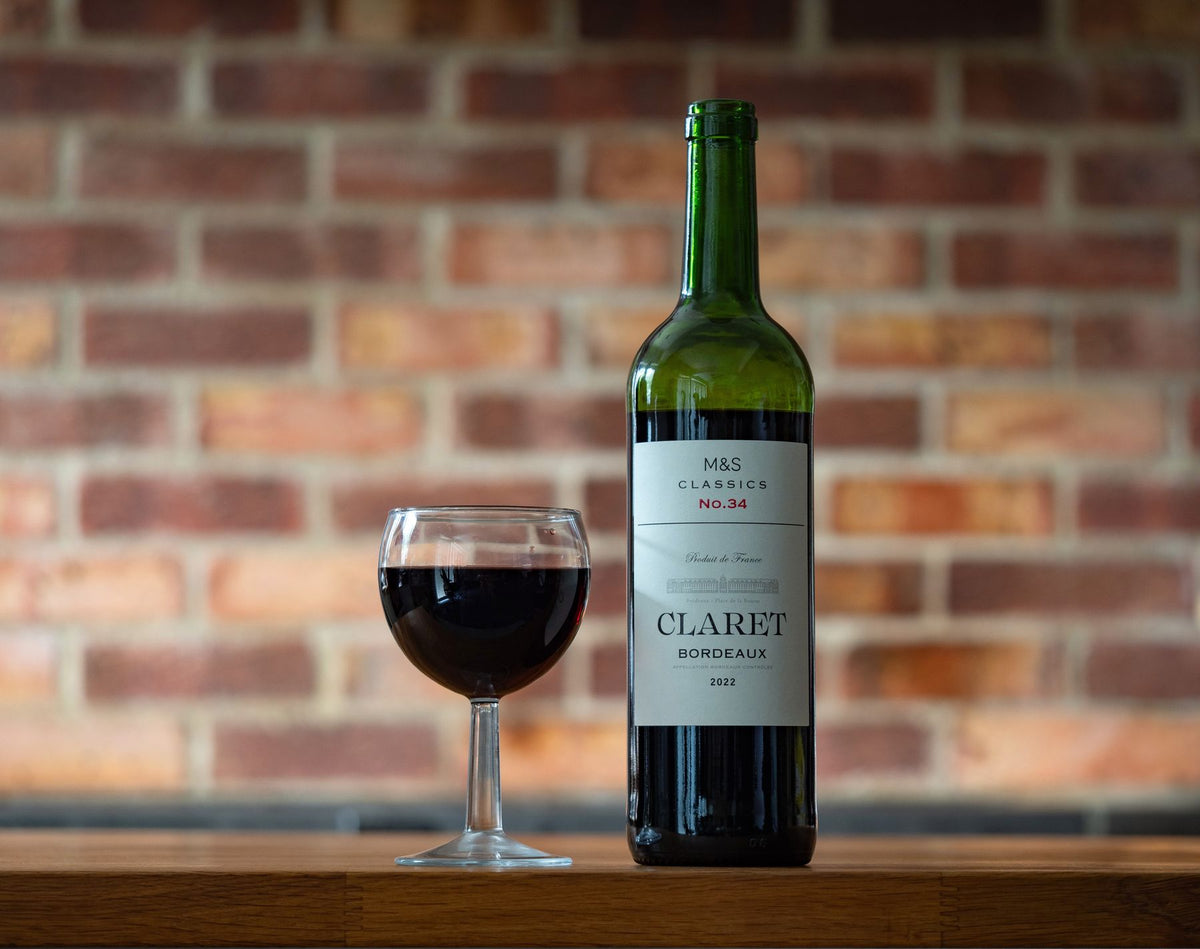
Margaux is not a grape and it is not a château. It is a village, and the vineyard land around it, on the left bank of the Gironde about fifteen miles north of the city of Bordeaux.
It is also the name that turns up on the most expensive bottles a kosher wine shop sells, which is why people end up here. Three of them are on our shelf. Here is what the word actually promises.
Where Margaux sits
Bordeaux splits into a left bank and a right bank, divided by the river. The right bank (Saint-Émilion, Pomerol) is Merlot country. The left bank is Cabernet Sauvignon country, and the left bank's best land is a strip called the Médoc.
The Médoc has four communes that matter above the rest: Saint-Estèphe, Pauillac, Saint-Julien and Margaux. Margaux is the southernmost of the four and the largest by area. Its soil is gravel: deep beds of it, dumped there by the river over a very long time. Gravel drains hard and holds the day's heat into the night, which is exactly what Cabernet Sauvignon needs to ripen this far north.
If any of that is new, start with what Bordeaux wine actually is: the blend, the five permitted grapes, and why the label tells you a place instead of a grape.
What Margaux tastes like
Of the four great Médoc communes, Margaux is the perfumed one. Pauillac is powerful and Saint-Estèphe is firm; Margaux is the one people reach for the word elegant to describe, and for once the word is doing real work.
Expect blackcurrant and dark cherry, violets and rose on the nose, cedar and pencil shavings from the barrel, and a texture that is silkier and finer-boned than the neighbours. The tannin is there, it is still Cabernet, but it arrives as fine grain rather than grip.
It is a dry red. Nobody asks whether Margaux is sweet twice.
The 1855 classification, briefly
In 1855 the Bordeaux brokers were told to rank the châteaux of the Médoc for the Paris Exposition. They did it by price, because price was the honest record of what the market already thought. The list came out in five tiers, from First Growth down to Fifth, and it has barely changed in a hundred and seventy years.
Margaux has more classified growths in it than any other commune: twenty-one of them. Château Margaux itself, confusingly, is one of the five First Growths and shares its name with the whole appellation. Every other classified estate in the village is a Second Growth or below.
So when a Margaux label says Grand Cru Classé, that is what it is pointing at: a place on an 1855 list. It is a strong signal and it is not a guarantee, because the list is old and the estates have changed hands many times since. It is worth reading alongside what Grand Vin means, which is a different claim entirely and often confused with this one.
The three Margaux on our shelf
- Château Giscours, $129.99: a Third Growth, and one of the largest estates in the appellation. Cabernet-dominant, French oak, built to age. Marked Kosher for Passover.
- Château Labégorce, $139.99, not on the 1855 list, and worth understanding rather than dismissing. Labégorce is one of the estates that made its reputation after the classification was frozen, so the ranking simply never had a chance to record it. Non-mevushal.
- Château Lascombes Grand Cru Classé, $149.99: a Second Growth, the highest rank on our Margaux shelf. OU, and marked Kosher for Passover.
Twenty dollars separates the three. That gap is not a quality ladder: at this level it is style, estate size and the weight of the classification, and the ranking on the label is not a promise about the bottle in front of you.
What you are paying for at a hundred and thirty dollars
A fair question, because it is a great deal of money for a bottle of wine and the honest answer has three parts.
Land, first. Classified Médoc gravel is some of the most expensive agricultural soil on earth and the price of the dirt is inside the price of the bottle.
Selection, second. These estates make a first wine and a second wine, and the barrels that do not make the grade get sold under the other label. Somebody has to pay for the barrels that were rejected, and that somebody is whoever buys the first wine.
Kashrus, third, and this is the part specific to our shelf. A kosher run at a classified Bordeaux estate is a separate, supervised production: a small quantity, made once, with all of the labour and none of the scale. That is real cost and it is why kosher Margaux is dearer than the same château's standard bottling.
How to serve it
Decant it. An hour is enough, ninety minutes is better. These wines are built with tannin and they arrive tight; air is what opens the perfume that you paid for.
Serve it cooler than a warm room: around 62 to 65 degrees. Bordeaux served at 72 tastes of alcohol and very little else.
Food: lamb, roast beef, standing rib, duck. It is a Yom Tov bottle and a simcha bottle. It is not the wine to open alongside anything spicy or sweet, which will flatten it.
Margaux for less
If the appellation is out of reach this week, the same left bank and the same grapes are available a good deal lower down, and the shape of the wine survives the drop.
- Château Les Riganes Bordeaux, $16.99: the everyday one. Also in a 1.5L magnum at $59.99 for a table of twelve.
- Château Bellerives Dubois Bordeaux, $18.99.
- Château Haut Vallon Bordeaux, $39.99.
- Château Peyrat-Fourthon Haut-Médoc, $74.99: the same Médoc, one step out from the classified communes. The closest thing to a Margaux without the postcode.
- Château Lafitte Grand Vin de Bordeaux, $89.99.
The full kosher Bordeaux shelf runs to sixty-five bottles, and the wider French red wine shelf to about eighty. There is also a guide to kosher French wine as a whole if you want the map before the bottle.
We ship anywhere in the country.