
What Does Grand Vin Mean on a Wine Label?
You see "Grand Vin" on the front of a bottle and it looks like it means something official. It does mean something - but not what most people assume, and it is not a classification anybody polices. Here is what it actually tells you.
The short answer
Grand Vin is French for "great wine". On a label it means the estate's flagship bottling - the wine the property considers its best, as opposed to its second or third label. It is an internal ranking, not a legal grade.
Nobody awards it. There is no committee, no appellation authority, no minimum standard behind the words. A producer decides which of its wines is the Grand Vin and prints it.
Where the idea comes from
Bordeaux. A château there typically makes more wine than it wants to put its top name on. The oldest vines and the best barrels go into the flagship. Younger vines, less concentrated lots, and anything that did not make the cut go into a second wine under a different name.
That is not a trick. It is quality control in reverse - the second wine exists so the first one can stay good. And second wines are often the smart buy, because they come off the same vineyard, made by the same team, at a fraction of the price. If you want the background on the region that started this, what is Bordeaux wine is the place to go.
What Grand Vin does not mean
It is not Grand Cru. Grand Cru is a real classification in Burgundy and Alsace, attached to specific vineyard land. Grand Vin is attached to nothing but the producer's own judgment.
It is not a guarantee of price or age. A modest estate's Grand Vin can cost less than a famous estate's second wine.
It does not tell you the grape or the style. That is on the back label, or it is not on the bottle at all.
A real example on our shelf
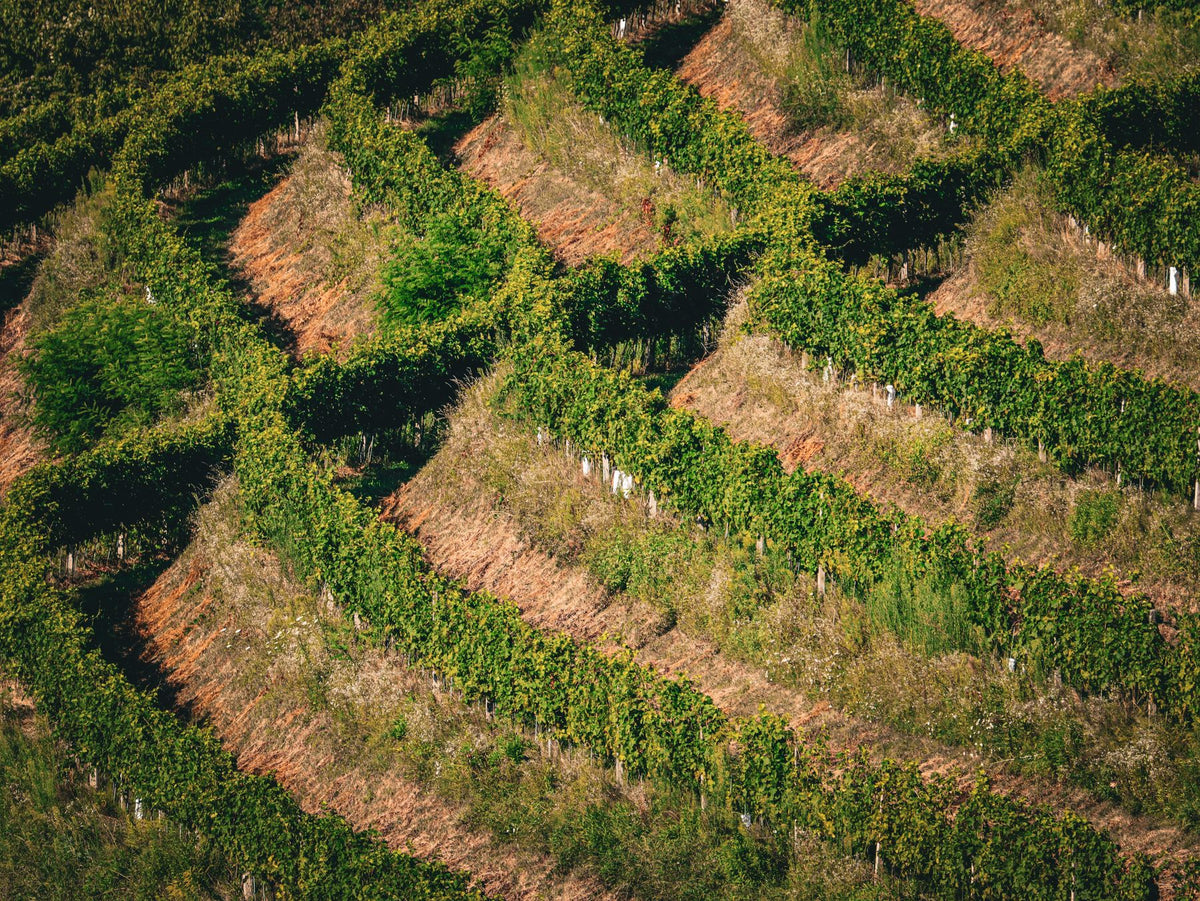
The clearest one we sell is Domaine du Castel, in the Judean Hills west of Jerusalem, which runs exactly the Bordeaux structure.
Domaine du Castel Grand Vin at $112.99 is the flagship - a Bordeaux blend off the terraces at Ramat Raziel, bottled at the estate. It is the wine that changed how the world looked at Israeli wine. Cassis, graphite and cedar with a floral lift, tightly structured, with a long mineral finish. Decant it an hour ahead or lay it down; it is built to be kept. Note what the label says instead of an appellation: Jérusalem, Haute Judée - because Israel does not have an appellation system to name.
Petit Castel at $64.99 is the second wine, and it is the textbook case for why second wines are worth buying. Same Bordeaux blend, hand-harvested from low-yielding vines, sixteen months in French oak. Blackcurrant, dark plum, cedar and graphite, full-bodied and polished, with a savoury tobacco-leaf finish. "Little" only by name.
La Vie Rouge at $29.99 goes a step further down and is the one to pour midweek without thinking about it - fruit-led, bright, aged largely in concrete so the fruit reads clean and forward.
The estate's whites and rosé sit outside that ladder: C Blanc at $59.99 is the lighter, fresher of their two Chardonnays, and Rosé du Castel at $36.99 is a dry, taut rosé off the same hills. The full set is in the Domaine du Castel collection.
How to use this when you are buying
Treat "Grand Vin" as a signal about where a bottle sits inside one producer's range, and nothing more. It tells you this is the top of their ladder. It tells you nothing about how they compare to the estate next door.
And when you find a producer whose Grand Vin is out of your reach, look for their second wine before you look elsewhere. That is usually the best-value bottle on the whole shelf.
More Israeli reds worth the money are in best Israeli red wine, another Judean Hills estate is covered in the Yatir winery guide, and the whole Israeli red shelf is here.