
Does Wine Go Bad? How Long an Unopened Bottle Actually Lasts
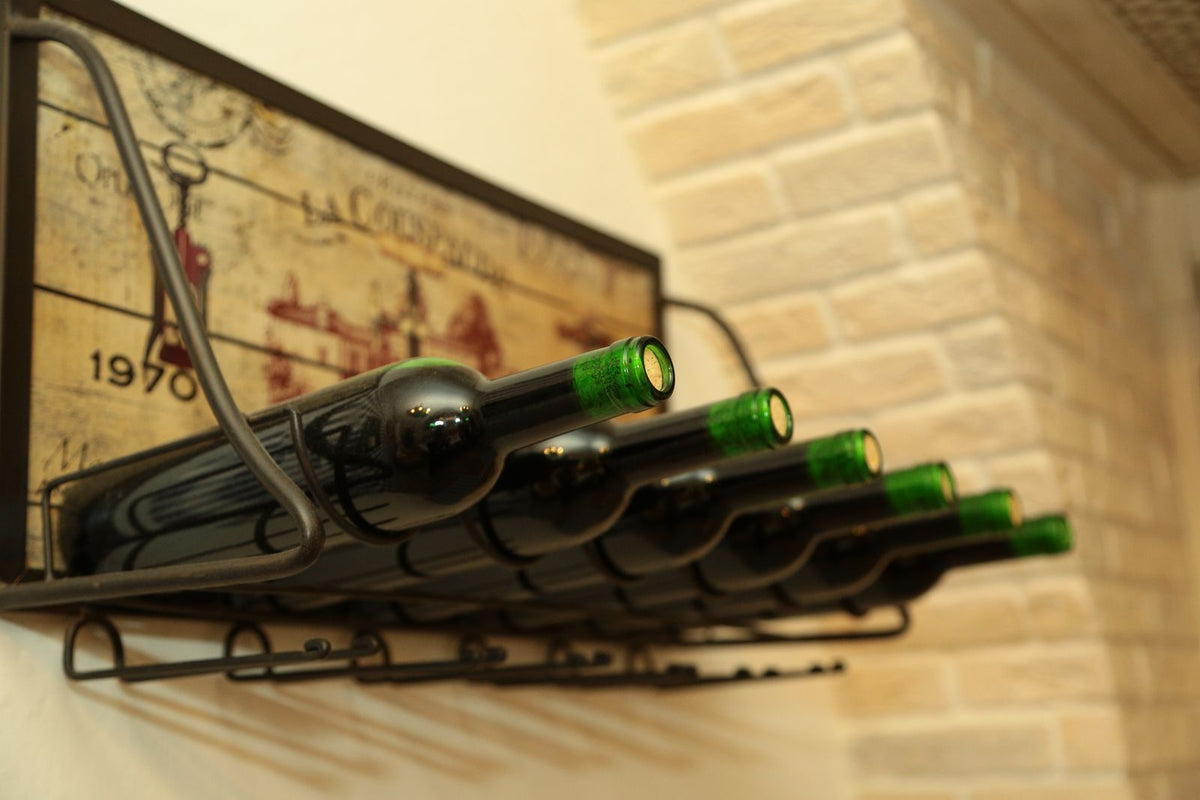
An unopened bottle of wine does not go bad the way milk goes bad. It fades. There is no point where it becomes unsafe. There is a long, slow slope where the fruit drops away and eventually there is nothing left worth drinking.
The practical answer for most people: the bottle in the back of your closet is almost certainly fine, and the bottle you have been saving for eight years because it felt too nice to open is probably past its best.
The year on the label is not an expiry date
This trips up more people than anything else. The four-digit year on a wine label is the vintage, the year the grapes were picked. It is not a use-by date and it is not a bottling date.
A 2019 on the label means the grapes grew in 2019. Whether that is old or young depends entirely on what kind of wine it is. For a light rosé, 2019 is ancient. For a serious Cabernet, 2019 is just getting started.
Some kosher bottles carry no vintage at all, especially the everyday ones, because they are blended across years to taste the same every time. That is deliberate, and it tells you the wine is meant to be drunk now rather than kept.
How long each style really lasts
These are windows from the vintage year, assuming the bottle was stored somewhere reasonable.
| Style | Drink within |
|---|---|
| Rosé | 1 to 2 years. Freshness is the entire point |
| Light whites: Pinot Grigio, Sauvignon Blanc | 2 to 3 years |
| Fuller whites: oaked Chardonnay, dry Riesling | 3 to 5 years |
| Sparkling, non-vintage | 3 to 4 years |
| Everyday reds under $25 | 3 to 5 years |
| Serious reds: Reserve Cabernet, Bordeaux, top Israeli reds | 8 to 15 years, sometimes longer |
| Sweet reds and Concord wines | 2 to 4 years. Sugar holds them, but the fruit still tires |
| Port and fortified | Effectively indefinite unopened |
The important line in that table is the everyday reds one. Around ninety percent of the wine sold anywhere falls in that band, which means around ninety percent of wine is meant to be drunk within a few years and gains nothing from waiting.
Ageing is a feature of a small number of expensive, tannic, concentrated wines. what tannin is explains why tannin is what lets a wine survive the wait, and why a soft, fruity bottle has nothing to stand on after five years.
What actually ruins a bottle
Time is rarely the real culprit. Four other things do the damage, and heat does most of it.
Heat. A bottle left in a hot car, a garage in August, or a cupboard above the oven can be finished in a single afternoon. Above about eighty degrees the wine starts to cook: the fruit turns stewed and flat, and the flavour never comes back. Sustained warmth over months does the same thing more slowly.
Big temperature swings. Constant warming and cooling makes the wine expand and contract against the cork, which pushes air in. Steady and slightly too warm beats swinging between cool and hot.
Light. Direct sunlight and even strong fluorescent light break down a wine over months. This is why bottles are green and brown in the first place, and why the clear ones need more care.
A dried cork. Store a corked bottle standing upright for years and the cork dries, shrinks and lets air in. On its side, the wine keeps the cork swollen. Screw caps and synthetic corks do not care either way.
how to store wine at home covers how to handle all four without owning a cellar.
How to tell if a bottle has turned
You can usually tell before you taste it.
Look at the colour. A red that has gone brown at the edge, or a white that has gone deep gold or amber when it should be pale, has been oxidised. Look through the neck against a light.
Check the cork. If wine has seeped up the side of the cork or pushed the cork slightly proud of the bottle, the bottle got hot at some point.
Smell it. Three smells are the giveaway. Vinegar or nail polish remover means it oxidised. Wet cardboard or a damp basement means a faulty cork, what people call corked. Stewed prunes and no freshness at all means it got cooked.
Taste it. A faded wine is not offensive, it is just empty. Thin, short, no fruit. That is not spoilage, it is a wine that outlived its window.
Is it dangerous to drink?
No. Wine has alcohol and acid in it, and neither is a friendly environment for anything that would make you ill. The worst outcome from an old bottle is that it tastes bad and you pour it out.
Old wine that has turned to vinegar is, quite literally, vinegar. Unpleasant, not harmful.
Does mevushal wine last differently?
Not really, and this comes up a lot. Mevushal wine is flash-heated at the winery for a matter of seconds and cooled straight down. That process is over long before you buy it, and it does not extend or shorten the life of the bottle in your closet.
A mevushal red and a non-mevushal red made from the same fruit will fade on roughly the same schedule. mevushal vs non-mevushal explains what the process is and where it actually matters, which is who may pour, not how long it keeps.
Where the sulfites come in
Sulfites are the preservative that stops wine oxidising, and they are the reason a bottle can sit for years at all. Wines with lower sulfite levels fade faster. That is the trade, and it is worth knowing before buying anything sold as low sulfite or no added sulfites. sulfites in wine goes through what they do and what they do not do.
Once you open it, the clock speeds up
Everything above is about sealed bottles. The moment the cork comes out you are on a different timescale entirely: two or three days for most reds, a bit less for whites, and weeks for port. how long open wine lasts has the full breakdown.
What to buy if you want something that keeps
If the point is to have wine in the house that will still be good in a few years, buy the styles that are built for it.
A structured Cabernet like Herzog Special Reserve Napa Valley Cabernet Sauvignon will hold for a decade and improve for part of it. our Bordeaux guide explains why the classic blend was designed to age. At the other end, Porto Cordovero Fine Ruby Port is fortified, which means it will outlast almost anything else you own, opened or not, and what port wine is explains why.
And if the point is simply to have wine to drink, buy the everyday bottles now and drink them now. Something like Kedem Burgundy Royale Dry at under eight dollars is at its best this year, not in 2032. The wines under $20 shelf is full of wine in exactly that category, and there is no prize for waiting.
The short version
Unopened wine fades, it does not spoil. Most bottles are best inside five years. The year on the label is the harvest, not an expiry. Heat is what really kills wine, not time. If it smells of vinegar, wet cardboard or stewed prunes, pour it out, and know that nothing worse than disappointment was ever going to happen.