
Manischewitz: The Full Story
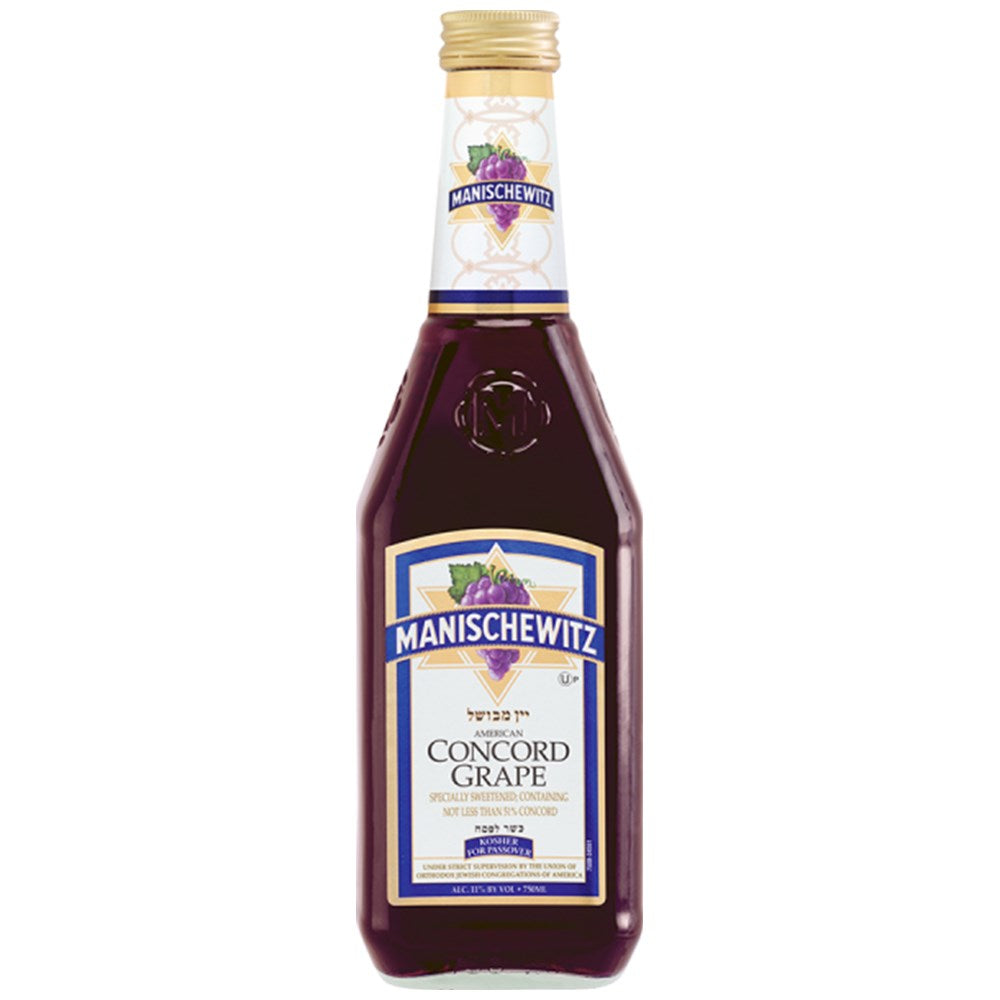
Manischewitz is a sweet American wine made from Concord grapes, and it is almost certainly the first kosher wine you ever tasted. It is not a serious dry wine and it has never pretended to be. It is a sweet, grapey, deliberately unsubtle bottle that has held its place on Jewish tables for close to a century, and understanding why it tastes the way it does makes it a lot easier to enjoy honestly.
Every year someone tells us they have outgrown Manischewitz. Then Rosh Hashana comes and a bottle goes in the cart anyway, usually for a grandmother, sometimes for a grandchild, occasionally for the person insisting they have outgrown it. There is a reason it survives.
What is Manischewitz wine actually made from?
Concord grapes. That single fact explains nearly everything about how the wine tastes.
Concord is a native North American grape, not a European wine grape. It is the same variety behind grape juice and grape jelly, and it carries a distinctive aroma that wine people call foxy, a musky, jammy, unmistakably American note. Concord is also naturally very high in acid and low in sugar, which means fermented dry it would be sharp and almost undrinkable. Sweetening it is not a shortcut. It is the only way the grape becomes a pleasant wine at all.
So Manischewitz tastes like cold grape juice with a warm edge, thick and syrupy, finishing where jam finishes. That is not a flaw in the winemaking. That is the grape, handled the way this grape has to be handled.
Why did Manischewitz become the famous kosher wine?
Three things stacked up in its favor, and they compounded over generations.
The name came first. The Manischewitz company began in Cincinnati in the late 1800s as a matzo bakery, and by the time wine carried the label the name already meant kosher to American Jews. Trust transferred.
The grape came second. Concord grew well in the American northeast and was cheap and plentiful, at a time when kosher wine production in America needed a grape that was both.
Advertising came third. The Sammy Davis Jr. campaigns of the 1960s pushed Manischewitz well past the Jewish market and into American culture generally, which is why non-Jewish shoppers still recognize the bottle on sight.
The result is a wine that became a memory before it ever had to become good. Most people are not drinking Manischewitz for the wine. They are drinking it for the seder table it sat on.
Which Manischewitz should you buy?
The Concord Grape is the one people mean when they say Manischewitz, and it comes in two sizes that serve genuinely different purposes.
| Bottle | Size | Roughly | Buy it for |
|---|---|---|---|
| Manischewitz Concord Grape | 750ml | $10 | Kiddush at home, one or two people |
| Manischewitz American Concord Grape | 1.5L | $20 | Yom tov, a full table, the seder |
For a normal Shabbos table the Manischewitz Concord Grape Wine (750ml) is the sensible size. For Pesach, where four cups times a full table adds up fast, the Manischewitz American Concord Grape (1.5L) is the bottle that actually finishes the night. We wrote a fuller breakdown of that math in our guide to how much wine the four cups really take.
What if you want something like Manischewitz but a little better?
This is the request we get most, usually phrased as sweet but not that sweet. There is a whole tier of kosher wine that sits exactly there, and it costs about the same.
- Kedem Concord Grape (1.5L) is the closest neighbor, same grape and same intent, a touch cleaner on the finish.
- Rashi Light Red Concord (750ml) is lighter and less syrupy, a good bridge for someone who finds Manischewitz heavy.
- Kedem Cream Malaga (750ml) moves away from Concord entirely into a rounder, raisin-sweet style that older guests tend to love.
If you want to browse the whole sweet end of the shelf, most of it lives in our red wine collection, and the full range including the dry side is in the kosher wine collection.
How should you serve it?
Cold. Colder than you think. Manischewitz served at room temperature is heavy and cloying, and the same bottle at refrigerator temperature is bright and much easier to drink. Sweet wine hides behind cold the way iced tea does.
Two other things worth knowing. It keeps well once opened, better than a dry red, because sugar is a preservative, so a bottle in the fridge is still fine several days later. And a splash of seltzer over ice turns it into something genuinely refreshing in the summer, which is not a fancy suggestion but it works.
Frequently asked questions
Is Manischewitz a real wine?
Yes. It is fermented grape wine made from Concord grapes and sweetened, which is a legitimate and necessary style for that grape. It is not a dry table wine and it is not trying to be one.
Why is Manischewitz so sweet?
Because Concord grapes are naturally high in acid and low in sugar. Fermented dry, Concord is sharp and unpleasant. Sweetening balances the acid and turns it into something drinkable, which is why virtually every Concord wine on the market is sweet.
How long does an open bottle of Manischewitz last?
Longer than a dry wine. Sugar acts as a preservative, so a corked bottle in the refrigerator generally stays good for a week or more. Our general guide to how long open wine lasts covers the other styles.
Is Manischewitz good for Pesach?
It is one of the most common seder wines in America, largely because it is sweet, familiar, and easy to drink four cups of. Always check the current-year certification on the bottle you are buying, since Pesach status is printed per production run rather than assumed by brand.
What is the difference between Manischewitz and Kedem?
Very little in the Concord bottlings. Both are sweet American Concord wines aimed at the same table. Kedem carries a much wider range beyond Concord, including dry reds and whites, while Manischewitz is best known for the one style.
Pour it cold, pour it without apology, and let the person who says they have outgrown it take the second glass. They usually do.