
Sauvignon Blanc vs Chardonnay vs Pinot Grigio: How to Tell Them Apart
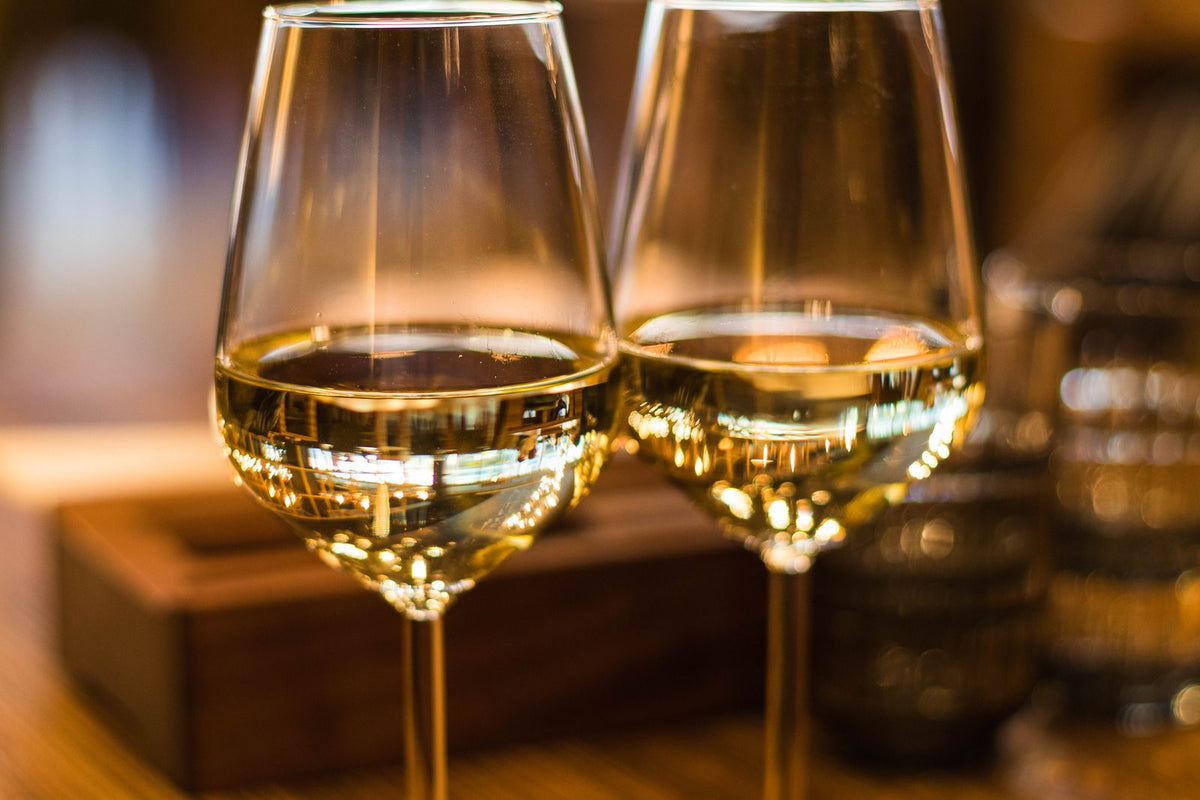
These are the three white wines almost everyone has heard of, and the three most people order without being entirely sure what separates them. They are not interchangeable. Poured side by side they taste so different that most people can pick them out blind after one round of practice.
Here is the short version, then the useful detail.
The one-line answer
Sauvignon Blanc is the loud one: sharp, zesty, grassy, and unmistakable.
Chardonnay is the chameleon: it can be lean and mineral or rich and buttery, depending entirely on how it was made.
Pinot Grigio is the easy one: light, crisp, quiet, and hard to object to.
If you remember nothing else: Sauvignon Blanc has an opinion, Chardonnay takes on whatever shape the winemaker gives it, and Pinot Grigio stays out of the way.
Sauvignon Blanc: the loud one

Sauvignon Blanc is the most immediately recognizable white grape in the world. It is high in acidity and intensely aromatic, and it carries a green, herbal character (cut grass, bell pepper, gooseberry) alongside sharp citrus. In warmer sites it swings toward passionfruit and grapefruit.
You either love that green streak or you do not, and that is fine. It is the reason Sauvignon Blanc is the most polarizing of the three.
Where style changes: New Zealand, and specifically Marlborough, produces the most expressive version: pungent, tropical, almost shouting out of the glass. Goose Bay Sauvignon Blanc is exactly that, and it is the bottle we hand people who say they want to understand what Sauvignon Blanc actually tastes like. In the Loire Valley, the same grape turns flinty and restrained.
Israel has become genuinely good at it. Bat Shlomo and Tabor Adama both make crisp, citrus-driven versions. Covenant Red C is the more serious California take. For everyday drinking, Carmel Selected and Baron Herzog are both mevushal and both hold up on a Shabbos table.
Drink it with: goat cheese, salads, herbs, grilled fish, anything with lemon on it. The acidity cuts through richness, which is why it works next to fried food.
Chardonnay: the chameleon

Here is the thing most people are never told: Chardonnay does not have a strong flavour of its own. It is a relatively neutral grape, which is precisely why it is planted everywhere. What you taste is mostly the place it grew and the decisions made in the cellar.
Two of those decisions matter most.
Oak. Aging in oak barrels adds vanilla, toast, and spice, and gives the wine a rounder texture. No oak, and the wine stays lean and citrus-driven.
Malolactic fermentation. This is the process that softens sharp malic acid into gentler lactic acid, and it produces the creamy, buttery quality people either adore or complain about. It is the single biggest reason two Chardonnays can taste like different grapes entirely.
So when someone says they do not like Chardonnay, they almost always mean they do not like oaked, buttery Chardonnay. The unoaked version is a different wine.
What to try: Yarden Chardonnay from the Golan is the balanced middle: some richness, still fresh. Covenant Lavan from Sonoma Mountain is the more serious California expression. Odem Mountain Volcanic Chardonnay comes off volcanic soil at altitude and leans crisp and mineral. Matar Chardonnay is the boutique choice. And Carmel Selected Chardonnay is the mevushal everyday bottle.
Drink it with: roast chicken, salmon, creamy sauces, potato dishes. Richer Chardonnay handles richer food, this is the white you bring when the menu is heavier.
Pinot Grigio: the easy one

Pinot Grigio is light, dry, crisp, and deliberately understated. Green apple, pear, lemon, sometimes a faint almond note on the finish. It does not have Sauvignon Blanc's green pungency or Chardonnay's weight, and that restraint is the entire point.
This is the wine for a table where nobody agrees, or an afternoon where you want something cold and undemanding. It asks nothing of you.
What to try: Borgo Reale and Branizzi are both Italian and both mevushal: the classic, crisp northern Italian style. Baron Herzog Pinot Grigio is the California version, a touch riper.
Drink it with: honestly, anything light. Fish, salad, pasta, cheese, or nothing at all.
The Pinot Grigio and Pinot Gris question
This one causes real confusion, and the answer is simple: they are the same grape. Grigio is the Italian name and Gris is the French one. What differs is the house style each tradition built around it.
The Italian approach picks earlier and keeps the wine light, crisp, and neutral. The Alsatian approach picks later and produces something noticeably fuller: richer texture, more perfume, sometimes a hint of sweetness and spice.
If you want to taste that difference for yourself, Yarden Pinot Gris is made in the fuller style and is nothing like a standard Italian Pinot Grigio, despite being the same grape.
So which should you buy?
Work backwards from the table rather than the label.
Fish, salad, or anything with lemon and herbs: Sauvignon Blanc.
Roast chicken, salmon, or a richer meal: Chardonnay.
A mixed crowd, a hot afternoon, or you simply want something cold and easy: Pinot Grigio.
You have no idea what people like: Pinot Grigio is the safest bottle on any table. Sauvignon Blanc is the one most likely to divide the room, and Chardonnay depends entirely on which style you land on.
If you are stocking up rather than buying one bottle, one of each is the honest recommendation. They cover completely different ground, and having all three on hand means you are never trying to make one wine do a job it was not built for.