
What Wine Goes With Fish?
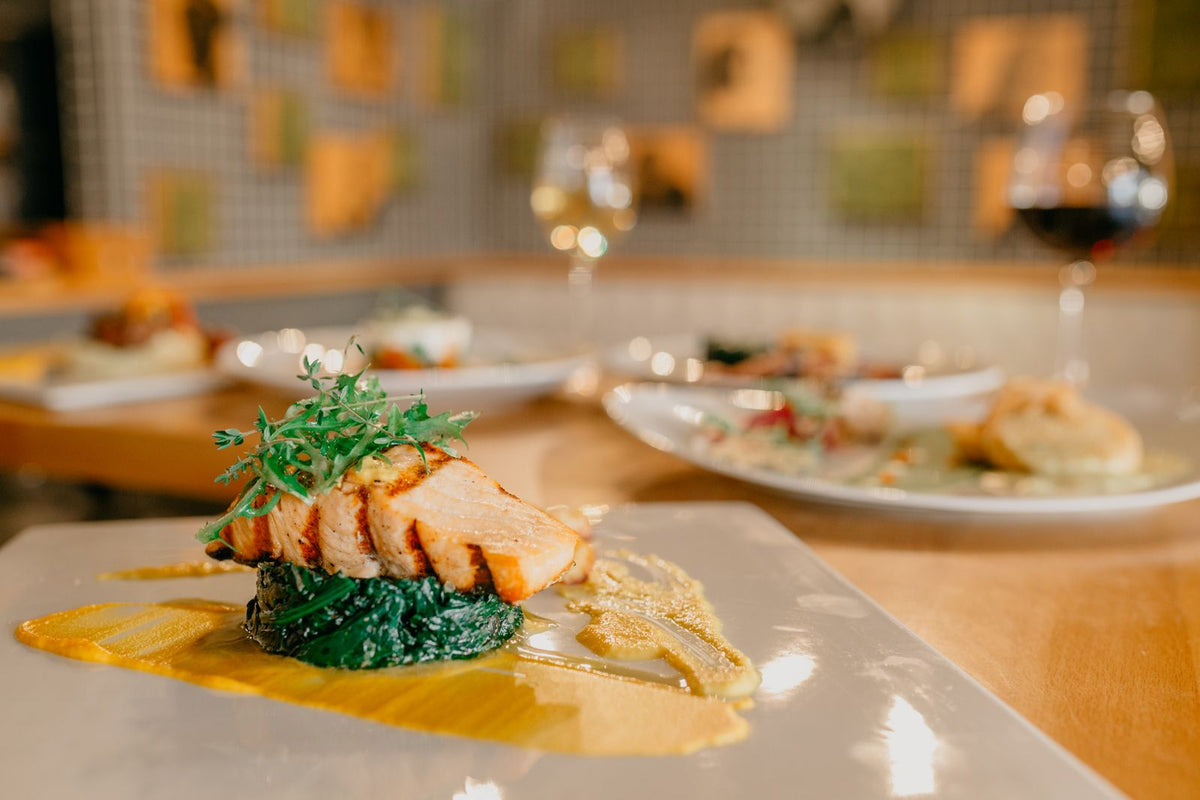
There is no single wine for fish, because fish is not a single thing. Gefilte fish and a seared tuna steak have almost nothing in common on the plate, and the bottle that flatters one will sit badly next to the other.
The old rule was white wine with fish, full stop. It is not wrong so much as lazy. Two things actually decide the pairing: how oily the fish is, and what you put on it. Get those two right and the grape almost picks itself.
The two questions that decide it
How rich is the fish? Tilapia, flounder, branzino and sole are lean and delicate. Salmon, tuna and mackerel are oily and full flavored. Lean fish wants a light wine that will not bury it. Oily fish can stand up to something with more body, and sometimes even a red.
What is on it? Lemon, dill, horseradish, a cream sauce, a soy glaze, a coating of breadcrumbs in hot oil. The sauce is usually louder than the fish, so pair to the sauce. This is the same principle behind pairing wine with chicken, where the cooking method matters more than the bird.
Wine with fish, dish by dish
| The dish | What to pour | Why it works |
|---|---|---|
| Gefilte fish with horseradish | Off-dry white or light sparkling | A touch of sweetness takes the heat off the chrein |
| Baked or grilled salmon | Unoaked Chardonnay or chilled Pinot Noir | Salmon is oily enough to meet a wine with real body |
| Lean white fish with lemon | Sauvignon Blanc or Pinot Grigio | Sharp wine next to sharp lemon, and neither one wins |
| Fried fish or fish sticks | Sparkling or dry rose | Bubbles and acid cut through oil better than anything |
| Seared tuna, soy or sesame | Light red, served cool | Tuna eats like meat, so treat it like meat |
| Lox, smoked salmon, herring | Dry sparkling | Salt and smoke need something bracing to reset the palate |
Gefilte fish: the one everybody asks about
Gefilte fish is sweet, cold and served with horseradish, and it turns up at a lot more Shabbos tables than seared tuna does. The mistake is pouring something bone dry next to it. The sweetness in the fish makes a dry white taste sour and thin, and the chrein finishes the job.
Go slightly off dry, or go sparkling. Pacifica Riesling at about nineteen dollars has just enough sweetness to meet the fish halfway and enough acid to handle the horseradish. If the table is already drinking bubbles, Bartenura Prosecco Brut works too. Our full Riesling selection is worth a look if you want more options in that range, and what Riesling actually tastes like covers why the grape is so good at this job.
Salmon: the fish that can take a red
Salmon is fatty, and fat is what lets a wine with some weight come to the table without flattening the food. An unoaked or lightly oaked Chardonnay is the safe answer. Gamla Chardonnay at about seventeen dollars does it without fuss.
The more interesting answer is a light red, pulled out of the fridge twenty minutes before you pour. Barkan Classic Pinot Noir at around fifteen dollars is the easy version, and Goose Bay Small Batch Pinot Noir is the one to open if the salmon is the centerpiece. Red wine with fish sounds wrong until you try it with salmon, and then it stops sounding wrong. More on the grape in our Pinot Noir guide, or browse the Pinot Noir range.
Lean white fish: keep it sharp
Tilapia, branzino, sole, flounder, halibut. These are quiet dishes, usually finished with lemon and herbs, and they want a wine that adds cut rather than weight.
Sauvignon Blanc is built for it. Carmel Selected Sauvignon Blanc at about fourteen dollars is the weeknight bottle; Goose Bay Sauvignon Blanc from New Zealand is the one with real grassy bite. Pinot Grigio is the softer route if the table finds Sauvignon Blanc too aggressive, and Baron Herzog Pinot Grigio around thirteen dollars is about as easy as wine gets. See the whole Sauvignon Blanc and Pinot Grigio selections, or read how the three big whites differ.
Fried fish: bubbles or rose
Anything that came out of hot oil wants acid and bubbles. That is the whole reason sparkling wine and fried food is a classic combination, and it holds for fish sticks as much as for tempura.
Baron Herzog Rose at about fifteen dollars is the low effort pick, dry enough to do the work and pink enough that nobody argues. For sparkling, the Prosecco selection has plenty in the twenty dollar range. If you are unsure whether a rose will come out sweet, this guide sorts it out before you buy.
Lox, herring and anything smoked
Salt and smoke are the loudest flavors on this list. They need a wine with enough acid to clear the palate between bites, which in practice means dry sparkling. This is also why bubbles are the standard pour at a kiddush where the herring is out.
The one rule if you remember nothing else
Pair to the sauce, not to the fish. A piece of salmon under a sweet teriyaki glaze is a sweet dish, and it wants an off-dry white, not a bone dry one. The same salmon under lemon and dill is a sharp dish, and it wants the opposite. The fish is the canvas; the sauce is the picture.
If you are serving fish and meat at the same meal, which happens most Friday nights, buy for the main course and let the fish course borrow from it. Nobody has ever complained about drinking the Shabbos red a course early.
Mevushal matters more than the pairing
If the wine is going to be poured by a guest or a caterer, mevushal is the practical consideration, and it comes before any question of grape. Here is what mevushal actually means and when it matters, and the mevushal selection covers the whites and reds above.
Still deciding? Our plain guide to wine and food pairing is the short version of all of this, and the white wine range is where most fish nights end up.