
Wine Bottle Sizes Explained: Split to Magnum
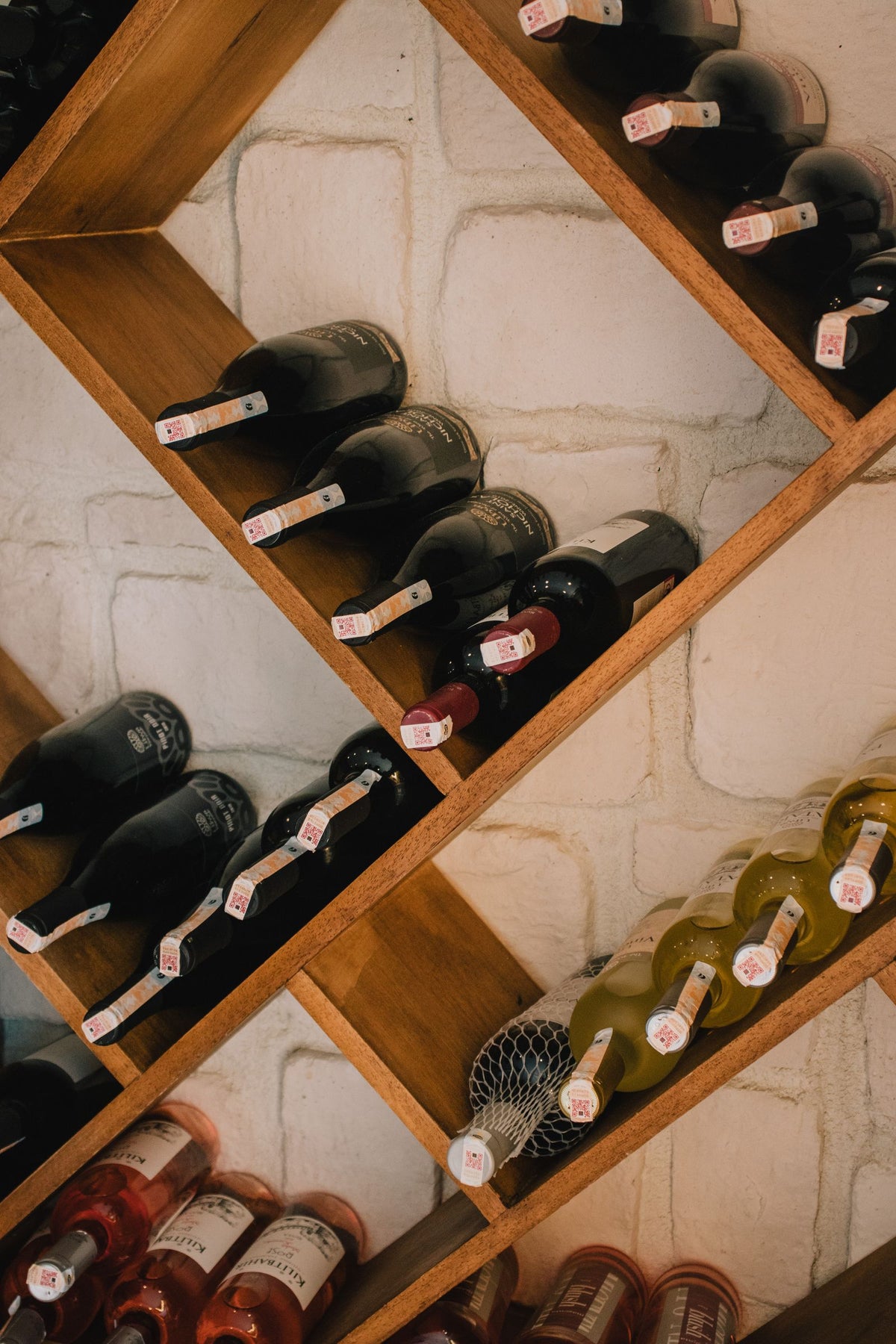
A standard wine bottle holds 750ml, which is about five glasses. Everything else is measured against that: a split is a quarter bottle, a half is 375ml, and a magnum is two bottles in one at 1.5 liters. The bigger names above magnum are mostly biblical, mostly rare, and mostly bought to be looked at.
Bottle size is the most practical thing on a wine label and the least explained. Get it right and a simcha runs smoothly, a Tuesday night does not end with half a bottle going flat, and a gift lands with the weight you intended. Here is the whole chart, plus what to actually do with it.
The complete wine bottle size chart
| Name | Volume | Standard bottles | Glasses (5oz) |
|---|---|---|---|
| Split or Piccolo | 187ml | 1/4 | About 1 |
| Half or Demi | 375ml | 1/2 | About 2 to 3 |
| Standard | 750ml | 1 | About 5 |
| Magnum | 1.5L | 2 | About 10 |
| Double Magnum | 3L | 4 | About 20 |
| Jeroboam | 4.5L | 6 | About 30 |
| Imperial or Methuselah | 6L | 8 | About 40 |
| Salmanazar | 9L | 12 | About 60 |
| Balthazar | 12L | 16 | About 80 |
| Nebuchadnezzar | 15L | 20 | About 100 |
One honest complication: the large-format names are not consistent between regions. In Bordeaux a Jeroboam is 5 liters and in Champagne and Burgundy it is 3 liters. Nobody is going to fix this. If you are ordering something above a magnum, ask for the volume in liters and ignore the name entirely.
Why is a standard wine bottle 750ml?
The honest answer is that it is a historical accident that stuck. Old English glassblowers produced bottles in roughly that range because it was about the volume a person could blow in one breath, and the imperial gallon divided into fifths near enough that the trade settled there. Twelve of them make nine liters, which is why a case of wine is twelve bottles. Once the world standardized in the 1970s, 750ml became law in most markets and the argument ended.
When should you buy a half bottle?
A 375ml is the most underrated size on the shelf, and it solves three real problems.
- Two people, one dinner. Two and a half glasses each, nothing left to go flat.
- A sweet wine you only want a little of. Dessert wine at full size almost always outlives its welcome. Bartenura Moscato in 375ml is the single most sensible bottle in that category.
- Trying something before committing. Half the price, all the information.
The Bartenura Sparkling Rose in 375ml is the version to keep in the door of the fridge. Sparkling wine has a shorter clock than still wine once it is open, so a half bottle is not a compromise, it is the right size.
What about splits and single-serve bottles?
187ml gives you roughly one full glass. Splits earn their place at a seated event where every guest gets their own bottle, on a plane, or in a kiddush setting where you want a controlled pour. Barkan Classic Cabernet Sauvignon in 187ml is the workhorse here, dry and unfussy at a few dollars a bottle.
Do magnums actually age better?
Yes, and this is one of the few pieces of wine folklore that holds up. The amount of oxygen trapped under the cork is roughly the same whether the bottle holds 750ml or 1.5 liters, so in a magnum there is half as much oxygen per unit of wine. The wine matures more slowly and more evenly. A magnum from a good year, properly stored, will usually be fresher at fifteen years than two standard bottles of the same wine.
A magnum also changes the mood of a table. Setting down a Chateau Les Riganes Bordeaux Magnum reads as generous in a way that two separate bottles never quite does. For something with more weight behind it, the Barkan Platinum Cabernet Sauvignon Magnum is built for a long meal.
Large format is also simply cheaper per glass when you are pouring for a room. A Manischewitz American Concord Grape in 1.5L costs less per ounce than the standard bottle and refills far fewer times over an evening.
How many bottles do you need?
The working rule is half a bottle per drinking adult for a meal, and a full bottle each if the evening is long and the wine is the main event. For a crowd, count glasses rather than bottles: a 750ml pours five, a magnum pours ten. Forty guests at two glasses each is eighty glasses, which is sixteen standard bottles or eight magnums. Our guides to how many glasses are in a bottle and how much wine to buy for a simcha do the arithmetic in more detail.
Frequently asked questions
How many glasses are in a 750ml bottle?
Five, at a standard five-ounce restaurant pour. At home most people pour closer to six ounces, which gets you four. Dessert wine is served in two to three ounce pours, so a 375ml of Moscato stretches to five or six small glasses.
Is a magnum the same as a double magnum?
No. A magnum is 1.5 liters, which is two standard bottles. A double magnum is 3 liters, which is four. The names sound like they should differ by a factor of two, and they do, but from a base most people misremember.
Does bottle size affect the price per glass?
Usually, yes, in your favor as the bottle gets bigger. Half bottles carry nearly the same packaging and handling cost as full bottles, so they rarely cost exactly half. Magnums and above are the better value per ounce, when the wine you want is available in that format. See what a bottle of wine costs for the broader picture.
How should I store a magnum?
On its side like any corked bottle, cool and dark, and with a shelf that can take the weight. A full magnum runs close to seven pounds. Standard wine racks often will not hold one, which is a small detail that surprises people the day it arrives. Our notes on storing wine cover the rest.
Why is a case of wine twelve bottles?
Because twelve bottles of 750ml equals exactly nine liters, a clean number that the trade settled on long before the metric standard arrived. Large formats are sold in smaller case counts, usually six magnums or one large bottle in its own wooden box.
Buy the half bottle more often than you think you should. Most wine that goes to waste was simply the wrong size to begin with. Browse the full range in our kosher wine collection or start with Moscato, where the half bottles are best represented.