
What Is Jewish Wine? A Straight Answer
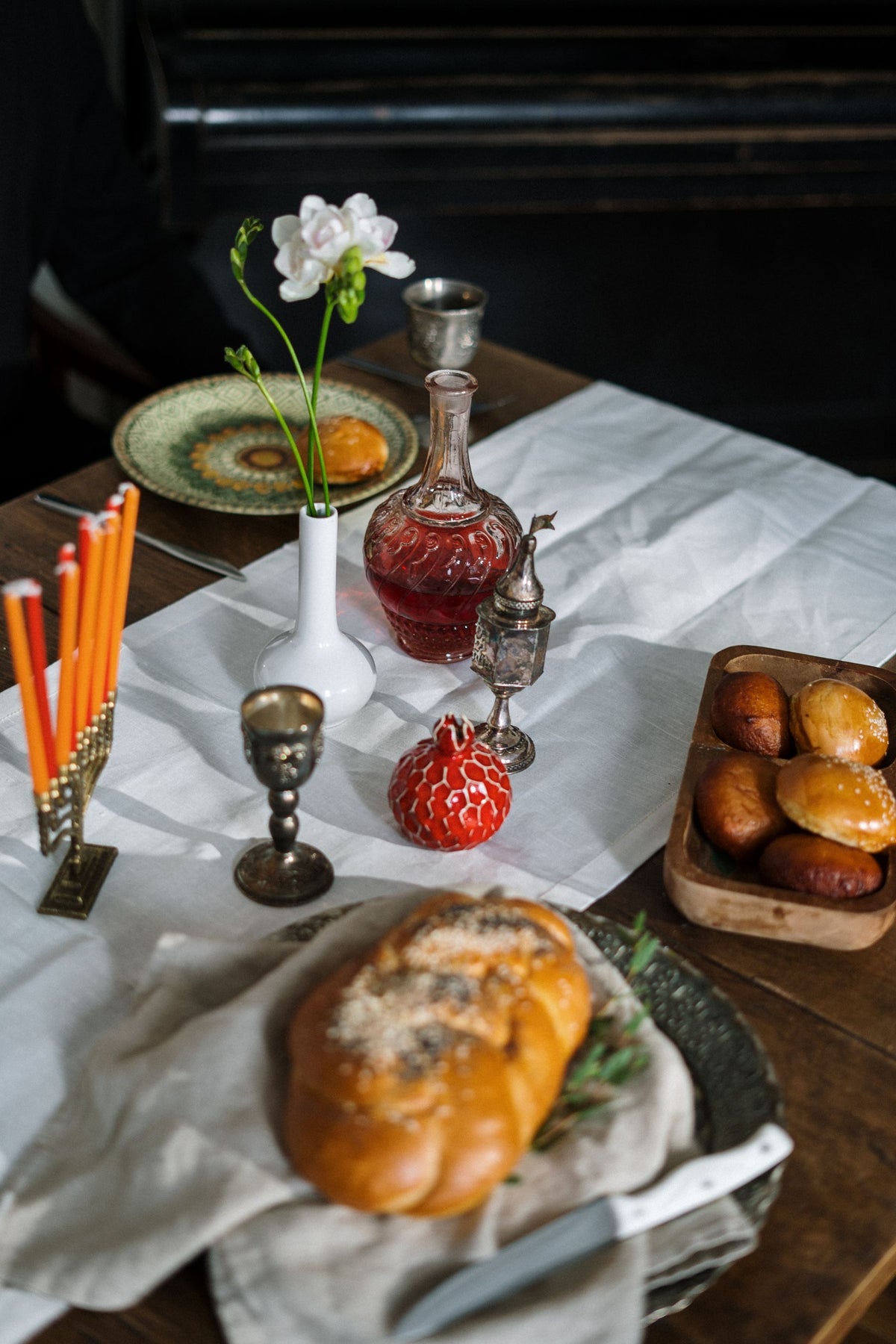
"Jewish wine" is not a wine term. Nobody in the trade says it. But it is what a lot of people type into Google, and what they usually mean is one of two things: the sweet purple wine they remember from a seder table, or kosher wine in general. Those are very different answers, so here are both.
The short version
There is no grape, region or style called Jewish wine. What exists is kosher wine - wine made under rabbinic supervision, from the same grapes and in the same places as any other wine. Israel, France, Italy, Spain, California, Argentina. Cabernet, Chardonnay, Malbec, Moscato.
The sweet purple stuff is a specific American thing, and it is worth understanding on its own, because it is almost certainly what put the question in your head.
Why people picture sweet purple wine
Because of Concord grapes. When Jewish immigrants arrived in the north-eastern United States around the turn of the last century, the grape growing around them was Concord - a native American grape, not the European wine grape. Concord is intensely grapey and harshly acidic, so it was sweetened heavily to be drinkable.
That wine became the wine of American Jewish life for about seventy years, and for a lot of families it is still the taste of Pesach and Kiddush. Manischewitz Concord Grape at $9.99 is the bottle almost everyone means. Kedem Concord Grape in the 1.5L at $14.99 is the other one.
None of that is a criticism. It is genuinely good at what it is for - it is sweet, it is low in alcohol, children get a sip of it, and four cups of it at a seder will not put you under the table. We have written the whole story of that bottle in the Manischewitz guide.
What it is not is the whole of kosher wine, or even a large part of it any more.
What actually makes a wine kosher
Almost nothing about the winemaking changes. The grapes are the same, the fermentation is the same, the barrels are the same. What changes is who handles it: from crush to bottle, the wine is worked by observant Jews, and the equipment and additives are supervised.
That is the whole of it, and it is why a kosher Bordeaux tastes like Bordeaux. We go through it properly in what makes a wine kosher, and the follow-on question - whether you can taste the difference - gets a straight answer in does kosher wine taste different.
The one word you will keep meeting is mevushal. A mevushal wine has been flash-heated, which means it can be poured by anyone without losing its kosher status - which is why it is what caterers and simchas use. Non-mevushal wine has not been. It is a serving question, not a quality one, and mevushal vs non-mevushal is the fuller explanation.
What to drink if sweet purple is not what you want
Start in Israel. Israeli wine is the centre of gravity of modern kosher wine, and it is dry, serious and made from the grapes you already know.
Yarden Mount Hermon Red at $16.99 is the easiest first step - a Bordeaux blend off the Golan Heights, dry, soft, unfussy. Gilgal Cabernet Sauvignon at $22.99 is the next rung and is straightforwardly a good Cabernet.
If you want to know what the ceiling looks like, Yarden Cabernet Sauvignon at $47.99 is a wine that would hold its own on any table anywhere. The whole Israeli red shelf is worth walking, and the best Israeli reds narrows it down.
If you like sweet, keep liking sweet
Plenty of people try a dry red, decide they were happier before, and go back. That is a perfectly good outcome, and there is a middle ground worth knowing about.
Bartenura Moscato at $14.49 - the blue bottle - is sweet, lightly fizzy and made in Italy from Moscato grapes rather than Concord. It is the single most popular kosher wine in America and it is sweet without the grape-juice edge. There is more on the range in the Bartenura guide.
The semi-sweet shelf is the honest halfway house: real wine grapes, dry-ish structure, a bit of sweetness left in. It is where most people who "only like sweet wine" actually land once they try it.
The practical questions
For a seder, you need four cups per person and you need to think about what that adds up to - the four cups guide does the arithmetic.
For a Shabbos table with meat on it, kosher wine and meat is the pairing rundown. And if the budget is the constraint, the best kosher wines under $20 is where most people should start rather than at the top of the red shelf.
So: there is no such thing as Jewish wine. There is kosher wine, it comes from everywhere, and the sweet purple bottle is one small and much-loved corner of it rather than the whole room.
Questions? Reach us through our contact page. We ship anywhere in the country.