
What Is Saperavi? Georgia's Inky Red Grape, Explained

Saperavi is Georgia's great red grape, and the name is a clue to what is in the glass. It comes from the Georgian word for dye. Hold a glass of it up to a window and you will understand why.
Say it sah-peh-RAH-vee. It makes wine that is almost black, bone dry or gently sweet depending on where it was grown, and it has more acidity and more tannin than its price suggests. If you drink Cabernet or Malbec and have never tried it, this is the most interesting twenty-dollar red on our shelf.
Why it is so dark
Almost every red grape in the world has clear juice. The color comes later, from soaking the juice on the skins. Saperavi is one of a small handful of grapes whose flesh is red too, so it comes out of the press already dark. The trade calls these teinturier grapes, and there are only a few that matter commercially.
That is not a party trick. More pigment usually travels with more tannin and more extract, which is why Saperavi can take oak and years in bottle without thinning out, and why it stains the inside of the glass on the way down.
What Saperavi tastes like
Blackberry, black plum and dark cherry up front. Underneath, the savory part: dried herbs, iron, cured meat, sometimes a violet note on the better bottles. It is full-bodied, the tannins are firm but ripe rather than drying, and there is a real seam of acidity holding the middle together.
That acidity is the thing to understand. Plenty of dark, full reds go flat and jammy. Saperavi stays upright, which is why it works next to fatty meat instead of surrendering to it.
| If you like | Saperavi gives you | What is different |
|---|---|---|
| Malbec | The same inky color and dark plum fruit | More acid, more grip, less sweet-fruit roundness |
| Cabernet Sauvignon | The same structure and tannin for a meat course | Black plum and iron instead of cassis and cedar |
| Syrah | The same savory, meaty edge | Herbal and mineral rather than peppery |
If firm tannin is not something you enjoy, read what tannin actually is first and then start with one of the semi-sweet bottlings further down, where the sugar softens the whole frame.
Saperavi vs Kindzmarauli: grape, not place
This is the single most common mix-up on a Georgian shelf, and it is worth two minutes.
Saperavi is the grape. Kindzmarauli is a place. Kindzmarauli is a small protected appellation inside Kakheti, and the wine it produces is a semi-sweet red made from Saperavi. So a bottle of Kindzmarauli is Saperavi. A bottle labeled Saperavi is usually the dry version from somewhere less specific. Same grape, different address and different sweetness.
Once you know that, most of the Georgian shelf decodes itself, because nearly all of these names are places:
| Label says | Style | Grape |
|---|---|---|
| Saperavi | Dry red | Saperavi |
| Kindzmarauli | Semi-sweet red | Saperavi |
| Mukuzani | Dry red, oak-aged | Saperavi |
| Pirosmani | Semi-dry red | Saperavi |
| Alazani Valley | Semi-sweet red | Mostly Saperavi |
| Khashmi | Dry red, single micro-zone | Saperavi |
The sweetness in the semi-sweet bottles is the grape's own sugar, left behind because the fermentation was stopped cold before the yeast finished, not sugar stirred in afterward. That is why a good one tastes like black cherries rather than syrup, and it is also why they still have acidity behind the sweetness. The wider category is covered in semi-dry wine explained and the best semi-sweet reds. For the whole country, grape by grape and region by region, go to our Georgian wine guide.
Which Saperavi to buy
Three dry bottlings, three different jobs.
| Bottle | Price | Alcohol | Mevushal |
|---|---|---|---|
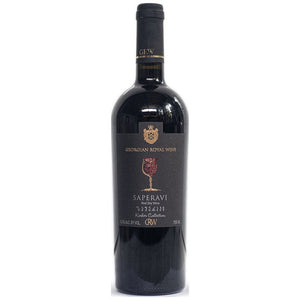
| GRW Saperavi | See today's price | 12.5% | Yes |
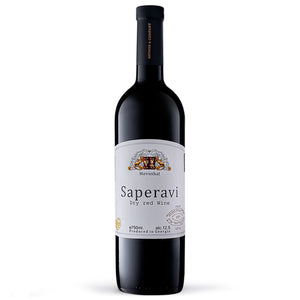
| Shimon & Co Saperavi | See today's price | 12.5% | Yes |
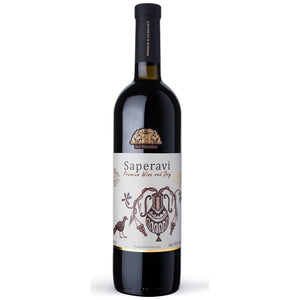
| Shimon & Company Saperavi Khashmi | See today's price | 14.5% | No |
Start with GRW Saperavi. Kakheti fruit, vinified clean, OU certified, mevushal and kosher for Passover. Black cherry, dried herb, leather and violet, full-bodied with firm tannin. If you only ever try one Georgian red, try this one.
Shimon & Co Saperavi is 100% Saperavi from Kakheti and also mevushal. A little plummier and softer than the GRW, with dark chocolate on the back. A mevushal Georgian dry red under twenty dollars is a combination that barely exists anywhere.
Saperavi Khashmi is the serious bottle. Khashmi is a micro-zone inside Kakheti where the fruit concentrates hardest, and Shimon & Company is the only kosher winery in Georgia. Blueberry, black plum, iron and cured meat, dense and mineral at 14.5%. Decant it thirty minutes. This is the one for a table that will notice.
Two of the three being mevushal matters if the wine is being poured at a simcha by a waiter. If that distinction is new, we explained it in mevushal vs non-mevushal.
The other routes in
Want oak on it? GRW Mukuzani is oak-aged Saperavi at 13.5%, the appellation that put dry Georgian red on the map. Want it sweet? GRW Kindzmarauli is the classic, and GRW Pirosmani sits just off the dry line for a mixed table. Want the cheapest way in? Palavani Kakheti Blend is half Saperavi and half Merlot at 14%, softer and rounder than the straight varietal.
What to eat with it
Saperavi was built for the kind of food that defeats lighter reds. Brisket. Lamb. Dry-aged steak. Cholent on a Shabbos afternoon. Hard aged cheeses. The acidity cuts fat and the tannin handles char, so grilled and slow-braised meat both work.
Serve the dry bottles at cool room temperature, around 62 to 65 degrees, which for most kitchens means twenty minutes in the fridge before the meal rather than straight off the counter. The semi-sweet ones take more of a chill and are better for it.
For the full pairing picture there is what wine goes with steak and what wine goes with cholent.
Where to browse
Everything Georgian we carry lives in the kosher Georgian wine collection, with the GRW range in Georgian Royal Wine and the premium end in Shimon & Company. Or work through the wider kosher red wine shelf.
Free shipping on orders $150+ in the lower 48.