
What Wine Goes With Cheese?
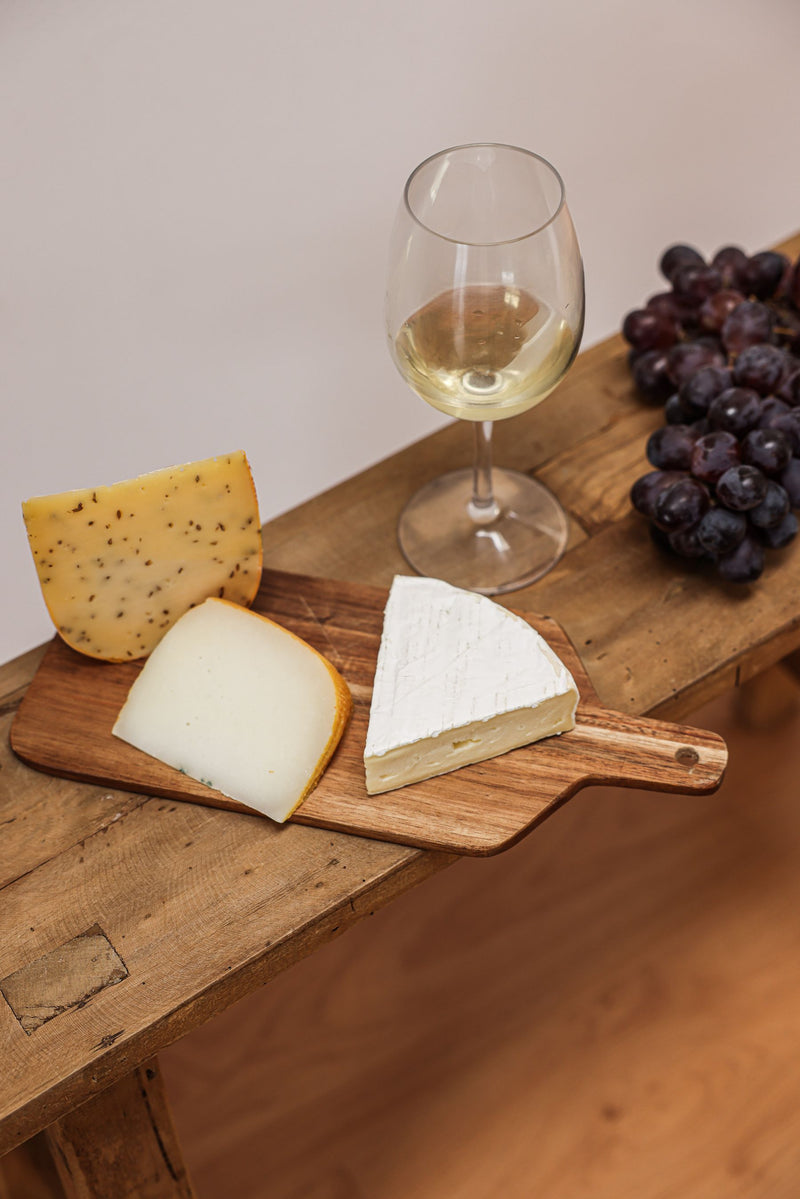
Wine and cheese is the most famous pairing there is, and most of the advice written about it is useless to a kosher kitchen. It is written for a French cheese trolley, built around washed-rind and blue cheeses that are hard to find with a hechsher, and it assumes cheese arrives at the end of a meal that started with meat.
On a kosher table none of that holds. A cheese board is not a course. It is a dairy meal, which makes it its own event: a Motzei Shabbos spread, a melave malka, a Shavuos table, a quiet Sunday night. And the kosher cheese shelf is mostly fresh and semi-hard, which actually makes the pairing easier, not harder.
Three rules that actually work
White wine beats red more often than people expect. This is the single most useful thing to know, and it surprises everyone. Red wine has tannin, cheese has fat and salt, and the two together often turn metallic and bitter in your mouth. White wine has acidity instead, and acidity and fat are a classic match. If you are buying one bottle for a cheese board, buy a white.
Sweet handles salt. Salty cheese plus an off-dry or sweet wine is one of the oldest pairings in Europe, and it works because sugar rounds off the sharp edge of salt. This is why the feta and the Moscato get along.
Bubbles cut fat. Sparkling wine resets your mouth between bites. Against something rich and creamy it does more work than any still wine will.
Pair to texture and salt, not to country
Forget matching the wine's region to the cheese's region. The thing that decides whether a pairing works is how fatty the cheese is, how salty it is, and how hard. Here is the whole board.
| Cheese | What it is like | Pour |
|---|---|---|
| Fresh: mozzarella, ricotta, cream cheese | Mild, milky, wet | Sauvignon Blanc or Prosecco |
| Soft and tangy: goat cheese, labneh | Sharp, lactic, chalky | Sauvignon Blanc |
| Semi-hard: muenster, havarti, gouda, mild cheddar | Buttery, mellow | Chardonnay or a light Pinot Noir |
| Sharp aged cheddar | Crumbly, intense, a little bitter | Off-dry Riesling |
| Salty and briny: feta, halloumi, bulgarian | Very salty, firm | Moscato or sparkling rosé |
| Washed-rind and strong | Pungent, meaty | Gewürztraminer |
Sauvignon Blanc is the workhorse
If the board is mostly fresh cheese, which most kosher boards are, Sauvignon Blanc is the answer and you can stop reading. It is bone dry, high in acid, and it carries grapefruit, gooseberry and a green, grassy note that makes it the classic partner for goat cheese specifically. That pairing is not marketing; it is a real regional tradition from the Loire, where the cheese and the wine come from the same few miles of river.
Barkan Classic Sauvignon Blanc at $14.49 and Carmel Selected Sauvignon Blanc at $13.99 are the everyday bottles. Goose Bay Sauvignon Blanc and O'Dwyers Creek Sauvignon Blanc are both $24.99 and both from Marlborough in New Zealand, which is the loudest, most tropical style of the grape and very hard to miss on a board.
More at what is Sauvignon Blanc and the Sauvignon Blanc collection.
Chardonnay for the buttery middle of the board
Once you move from fresh cheese to semi-hard, muenster, havarti, gouda, a mild cheddar, the fat content climbs and the flavor turns buttery and nutty. Chardonnay is the match, because a lightly oaked Chardonnay has the same creamy, nutty register. Like goes with like.
Chateau Josephine Chardonnay at $12.99 and Baron Herzog Chardonnay at $13.99 are the easy ones. Yarden Chardonnay at $32.99 is the full barrel-fermented version, and it is the bottle for an aged gouda. See what is Chardonnay and the Chardonnay collection.
If you are not sure which white you actually like, Sauvignon Blanc vs Chardonnay vs Pinot Grigio lays the three side by side.
Riesling for sharp cheddar, Gewürztraminer for the strong stuff
Sharp aged cheddar has a bitter edge that fights dry wine. An off-dry Riesling solves it: the small amount of sugar softens the bitterness, and the acidity keeps the pairing from going flabby. Pacifica Riesling at $18.99 and Koenig Riesling at $19.99 are both right for this.
Gewürztraminer is the specialist bottle for anything pungent. It is intensely aromatic, lychee and rose and baking spice, with enough body to meet a strong cheese without being flattened. Yarden Gewürztraminer at $21.99 is the one, and Cape Jewel Gewürztraminer at $24.99 is a good second.
Salt wants sugar
Feta, halloumi, bulgarian cheese: these are very salty, and salt plus dry wine tastes harsh. Sweet wine is the fix, and it is the pairing people are most skeptical of until they try it.
Bartenura Moscato at $14.49 is the obvious bottle and probably already in your fridge. It is low in alcohol, lightly fizzy and openly sweet, and against a salty cheese it stops reading as sweet at all. Bartenura Sparkling Rosé at $16.99 does the same job with bubbles. Is Moscato sweet has more, and there is a lot more in the Moscato collection.
For a dessert cheese at the end, Herzog Late Harvest White Riesling at $22.99 is a proper sweet wine rather than a light fizzy one, and it is the bottle for anything blue.
Bubbles are the safe answer for a crowd
If you are putting out a board for ten people and you do not know what is on it, open sparkling wine. It goes with fresh cheese, it goes with hard cheese, it goes with the crackers and the grapes and the olives, and it is the only category that never actively clashes.
Bartenura Prosecco Brut at $19.99 is the default. Elvi Cava Brut at $21.99 is drier, with a bready, toasty note that is very good against aged cheese. The sparkling collection has the rest, and the kosher Prosecco guide explains what separates them.
The red that does work
If someone at the table will only drink red, do not reach for the Cabernet. Reach for a light, low-tannin red. Pinot Noir is the one: pale, soft, cherry-fruited, with almost none of the grip that makes red wine and cheese go wrong.
Barkan Classic Pinot Noir at $14.99 and Branizzi Pinot Noir at $14.99 are both soft enough for a semi-hard cheese. Serve them cool. A warm red against cheese is noticeably worse than a cool one, and do you refrigerate red wine explains why.
Building a board for a crowd
Three or four cheeses is plenty, and you want them different from each other rather than four versions of the same idea. One fresh, one semi-hard, one sharp, one salty. Then two bottles: a Sauvignon Blanc and a sparkling will cover all four without anybody needing a second glass of something else.
Take the cheese out of the fridge an hour before people arrive. Cold cheese tastes of almost nothing, and half of what you paid for is in the aromatics that only come out at room temperature. The wine goes the other way: keep it cold.
Free shipping on orders $150+ in the lower 48.
For the rest of the table, wine and food pairing basics covers the general rules, and what wine goes with fish is the other big dairy-meal pairing worth knowing.